
Fooocus hides the sampler and leaves you a prompt box
Summary
Built entirely on SDXL with the sampling parameters tucked behind presets. A GPT-2 prompt engine runs offline to fill in the details, so one short sentence is enough to get four finished pictures.
Recommend- Name
- Fooocus
- Version
- 2.5.5
- Pricing
- Free
- Open source
- Open source
- Operating system
- WindowsLinuxmacOS
- Updated
- 2026-10-06 22:38
The hard part of local image generation is rarely installing, it is tuning. Sampler, steps, CFG, resolution, denoise strength - a screen of parameters whose relationships take a weekend to absorb, and the result may not repay the effort. Fooocus starts from the other end: that whole layer sits behind presets, leaving one prompt field and one generate button. The official demo is concrete - type only forest elf and four finished portraits come back.
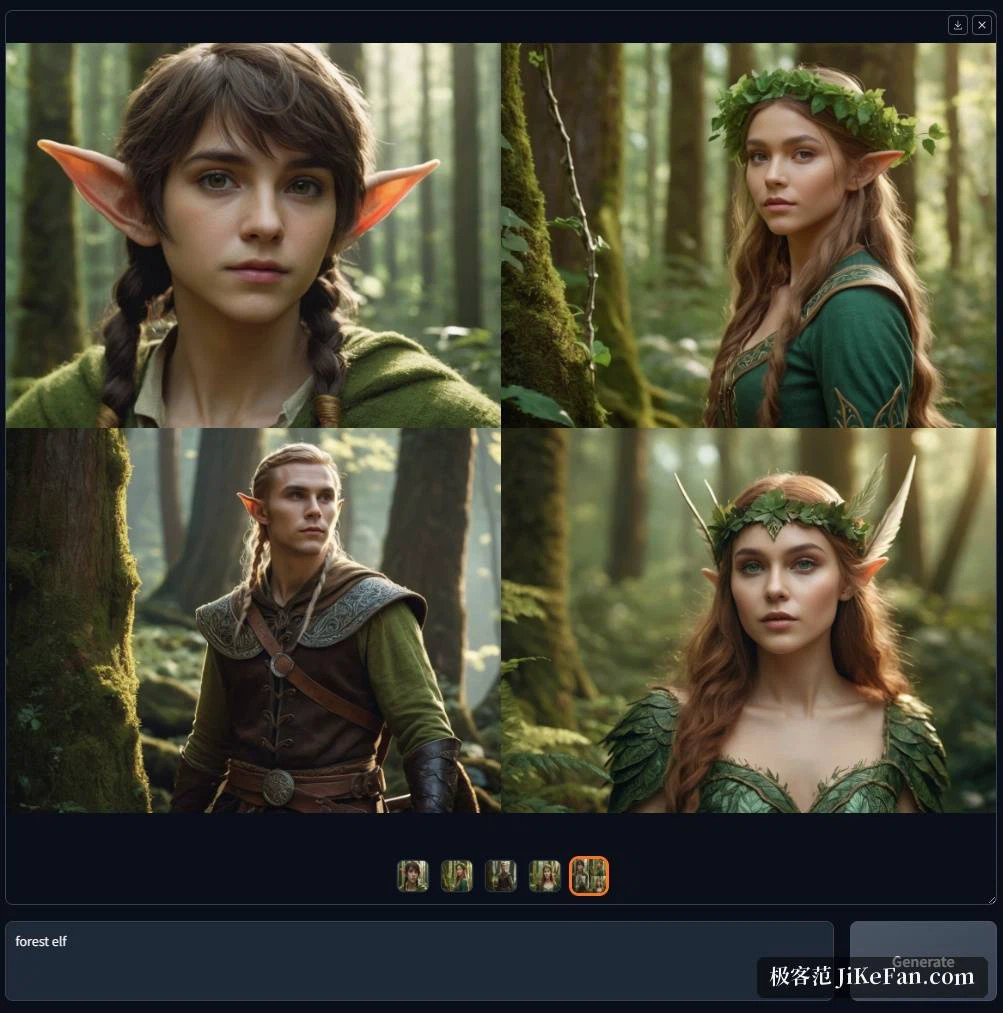
The project is built entirely on Stable Diffusion XL and released under GPL 3, free to download, fully offline, with no per-image fee. In spirit it behaves like an online generator: watch the prompt and the picture, not the sampler. One warning up front - there is no official website, most same-name sites a search turns up are fake, and the repository is the only source of truth.
What makes the no-tuning claim work is a prompt engine bundled inside, running offline on GPT-2 and exposed as the Fooocus V2 style. Write a house in a garden and it fills in the missing style, light, material and composition before the model draws. Long prompts work as well, with the documented range running from a single sentence up to a thousand characters. Style choice needs no guesswork either: the repository ships a sample for every built-in style, more than two hundred of them, from photorealism and cinematic looks to anime illustration.
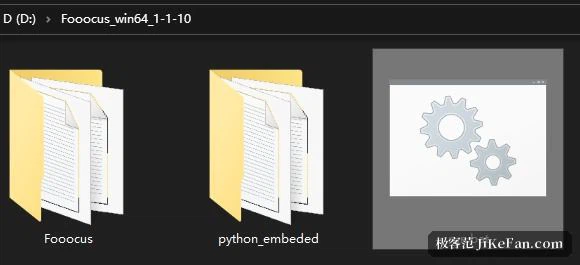
On Windows the download is an integrated package with its own Python inside: unzip anywhere, double-click the batch file, and the first launch pulls the default SDXL checkpoint into the models folder. The official claim of going from download to first image in three mouse actions matches how the flow actually behaves.
To change models, drop an SDXL checkpoint into the checkpoints folder and it appears in the interface after a restart. Besides the general preset, two separate launch scripts ship for anime and realistic work, each with its own default model.
The stated floor is an Nvidia card with 4 GB of video memory and 8 GB of system memory, with older cards advised to have 8 GB of video memory. That is low for this category, and the official demo finishes images on a laptop card with 6 GB while task manager shows the footprint squeezed into a small band.
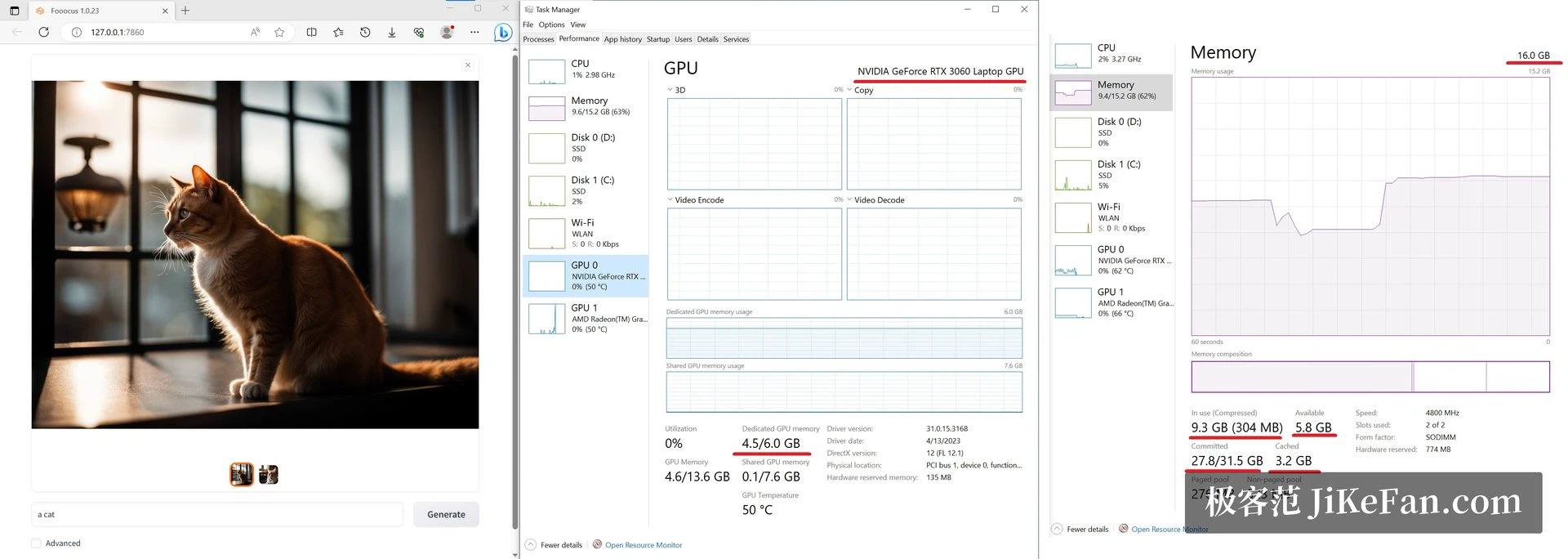
System memory deserves more attention than the card. The documentation devotes a section to setting virtual memory, because when memory runs tight it borrows the paging file on disk; if paging is switched off or the file is too small, generation simply fails. That is the trap beginners hit most often, so turning virtual memory on at setup time saves a pile of inexplicable errors.
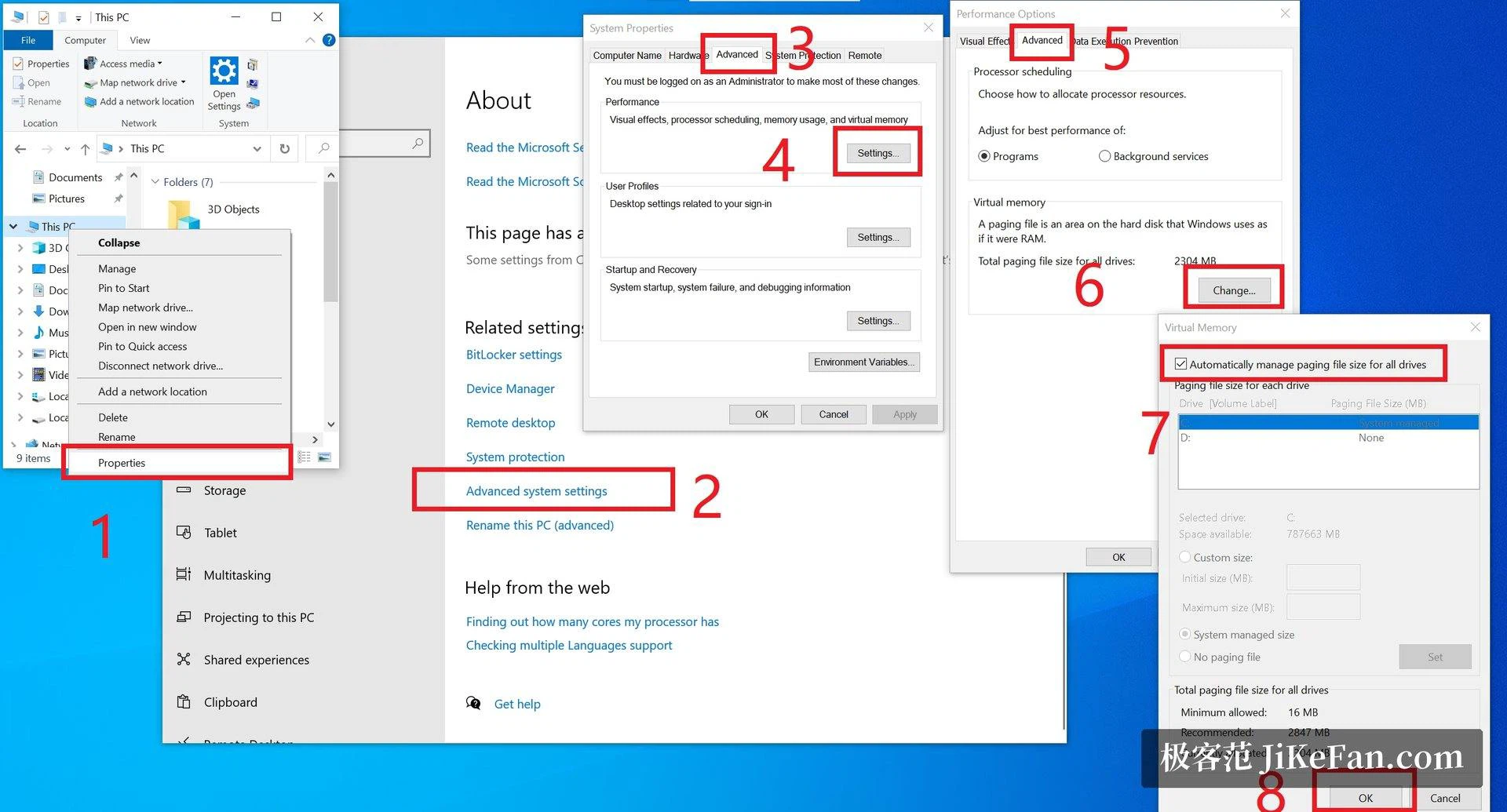
Image-to-image, repaint and outpainting are all built in. After loading an image you can choose upscale or variation, in subtle and strong versions, plus one and a half times and twice enlargement. Local repaint uses the project's own algorithm and model, outpainting works up, down, left and right, image prompts let a reference steer style and content, and face swapping is a built-in item rather than an environment you have to assemble.
The repository carries a section on project status: Fooocus is in limited long-term support, fixing bugs only, entirely on SDXL. The authors consider the feature set essentially complete, expect future work to deal with problems as they appear, and have no plan to move to a newer architecture, though a community convergence in some direction could change that. Saying it plainly helps: once installed, no new release will push you around every week. And once more - when searching, trust the repository and nothing else.
In one line: the mature SDXL road made as hassle-free as it can be. It does not chase new models, but type a sentence and get a good picture stays stable and predictable, and the bug-fix-only status spares the interruptions of frequent upgrades. For anyone who wants to start right now on a card that is not top of the line, it is the choice least likely to go wrong.