
-
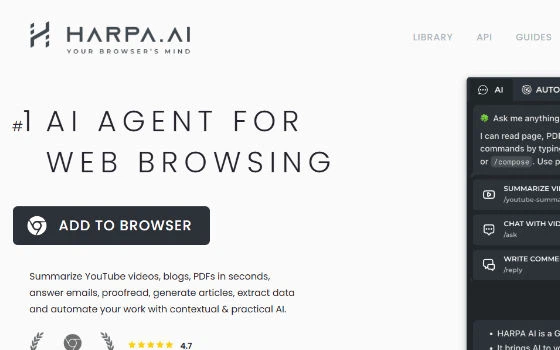
Harpa AI review: it summarises video and answers mail, and bills by the million tokens
One shortcut calls several frontier models onto any page, and the engine underneath is what turns them into page-aware commands, mail drafts and scheduled automation. The meter runs on tokens, so the tier you pick decides how much work you can hand over.
-
Sider review: one sidebar, three jobs, and a cloud machine on the top tier
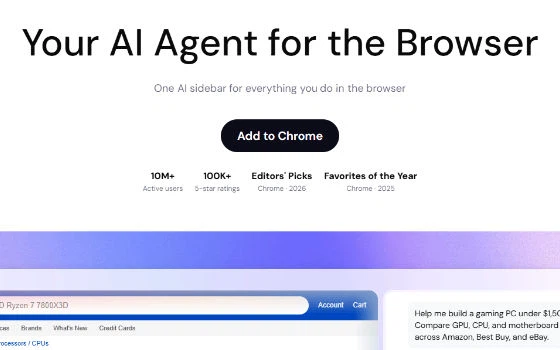
Chat reads what you are looking at, Hand walks across sites doing the errand, Code rewrites a page in plain language. All three live in one sidebar, and the dearer tiers throw in a small cloud machine so the errand can keep running after you close the laptop.
-
Monica review: an assistant that sits in the browser sidebar you already have
It asks for neither a new app nor a new tab. The assistant is a sidebar over whatever page you are reading, select text and it explains, translates or summarises, and the model behind the answer is picked from a dropdown. The pricing is where the interesting part sits.

-
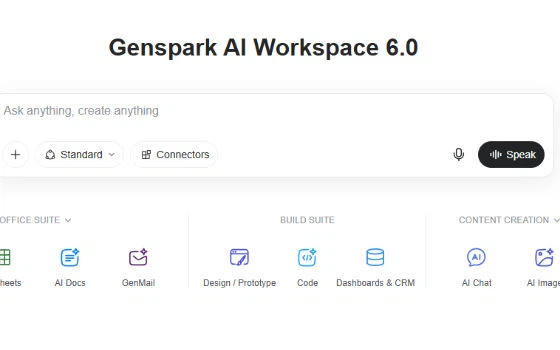
Genspark review: one workbench holding slides, sheets and mail
One prompt box in the middle, a ring of applications around it, and four layers underneath: a memory layer, an agent engine, three suites of tools and a collaboration surface. The breadth is real; the depth is the thing to test.
-
Tiangong grew from an AI search box into a task-taking agent workspace
Search is now one entry in a wider workspace: an all-round assistant takes a described task, picks skills or experts to run it, schedules it, and can be wired into a chat tool so the work happens unattended.

-
Metaso answers a query with a cited outline instead of a page of links
No ads, straight to the result: pick one of three depths, search across the web, a document library, academia, images, video or podcasts, and get an answer broken into sections with a source marker on every claim.

-
NotebookLM answers only from your own sources, then turns them into a podcast
Upload PDFs, sites, videos or audio, and every answer stays inside that material with an in-text citation you can click back to. The same sources can be reworked into a study guide, a briefing, a mind map or a two-host audio discussion.

-
LocalAI: engines pulled on demand, a model running without a card
One binary and one compatible endpoint: point the client at it and the code does not move while the model comes home. Engines arrive only when a model needs them, every feature has a path that runs on the processor, and a second machine becomes more capacity.

-
vLLM: serving a model by managing video memory like an operating system
Cutting the key-value cache into blocks instead of reserving it whole lifts memory use from three or four tenths to above nine, and the same card then serves two to four times as many requests - which is the difference between a demo and a service.
-
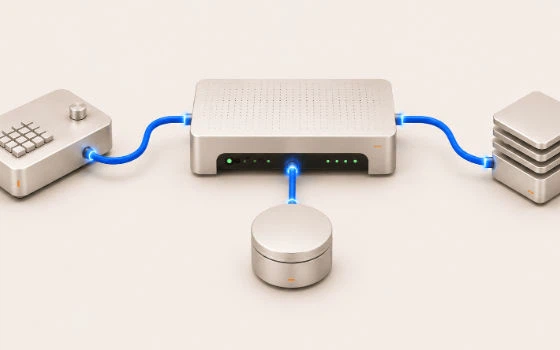
Msty: local and hosted models in a single window
Two engines inside one window run an open model after a click, more than 12 hosted providers can be added with your own key, and a conversation may change models halfway through - or split into panes and answer the same question twice.
-
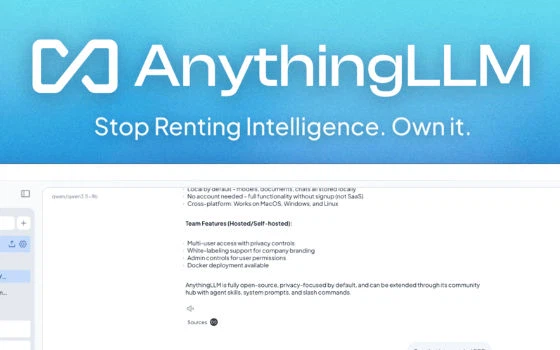
AnythingLLM: a private AI workbench that stays on the desktop
Drag PDFs, word-processor files and tables into a workspace and you get an assistant that has read everything you own, with a citation under every answer - and the model, the vector store and the storage all live on the machine by default.
-
llama.cpp: the engine that runs a model on a bare processor
Written in plain C with no dependencies, it set the file format that made quantised models small enough for ordinary laptops, and it is the layer several familiar desktop tools quietly build on.
-
GPT4All: a local model on a computer without a graphics card
No discrete card, no account, no command line: a quantised open model runs on an ordinary processor, and a folder of your own paperwork becomes a question-answering collection that never leaves the machine.

-
Jan: a local assistant whose source you can actually read
Every line of the chat window, the model manager and the local server is published under a permissive licence, so the conversation can run with the cable pulled and nobody has to take the privacy claim on faith.

-
LM Studio: local models handled like a hosted assistant
No terminal, no parameters to mistype: a browser window lists models by size and by whether they fit your card, one click downloads, and the chat box behaves like the hosted assistants while the conversation never leaves the machine.
-
第 1 / 3 页