
Flux folds generation and editing into one set of weights
Version flux.2
Summary
The compact member of the second generation does text to image, single-reference editing and multi-reference composition with the same weights, opens fully for commercial use, and runs on a mid-range gaming card.
Recommend- Name
- Flux
- Version
- flux.2
- Pricing
- Free
- Open source
- Open source
- Operating system
- WindowsmacOSLinux
- Website
- https://bfl.ai/
- Updated
- 2026-10-06 16:25
Flux is a family of image models rather than a single checkpoint. It started from a first generation in 2024, grew a dedicated editing branch along the way, and now sits at the second generation. The open member you can actually run on your own hardware is the compact one of that generation, published in January 2026. Its brief is narrow and clear: press generation latency down to something interactive, and put the weights out so people can host it themselves.
One model for making and for mending
The compact build folds generation and editing into one architecture. Text to image, editing from a single reference and composition from several references are all done by the same set of weights, so nothing has to be swapped between models. For anyone using it the difference is concrete: write a prompt and get a picture, drop in a reference and change part of it, or take elements from two or three images and build a new frame — all three run through one pipeline, and no separate editing model has to be fetched for the third case.
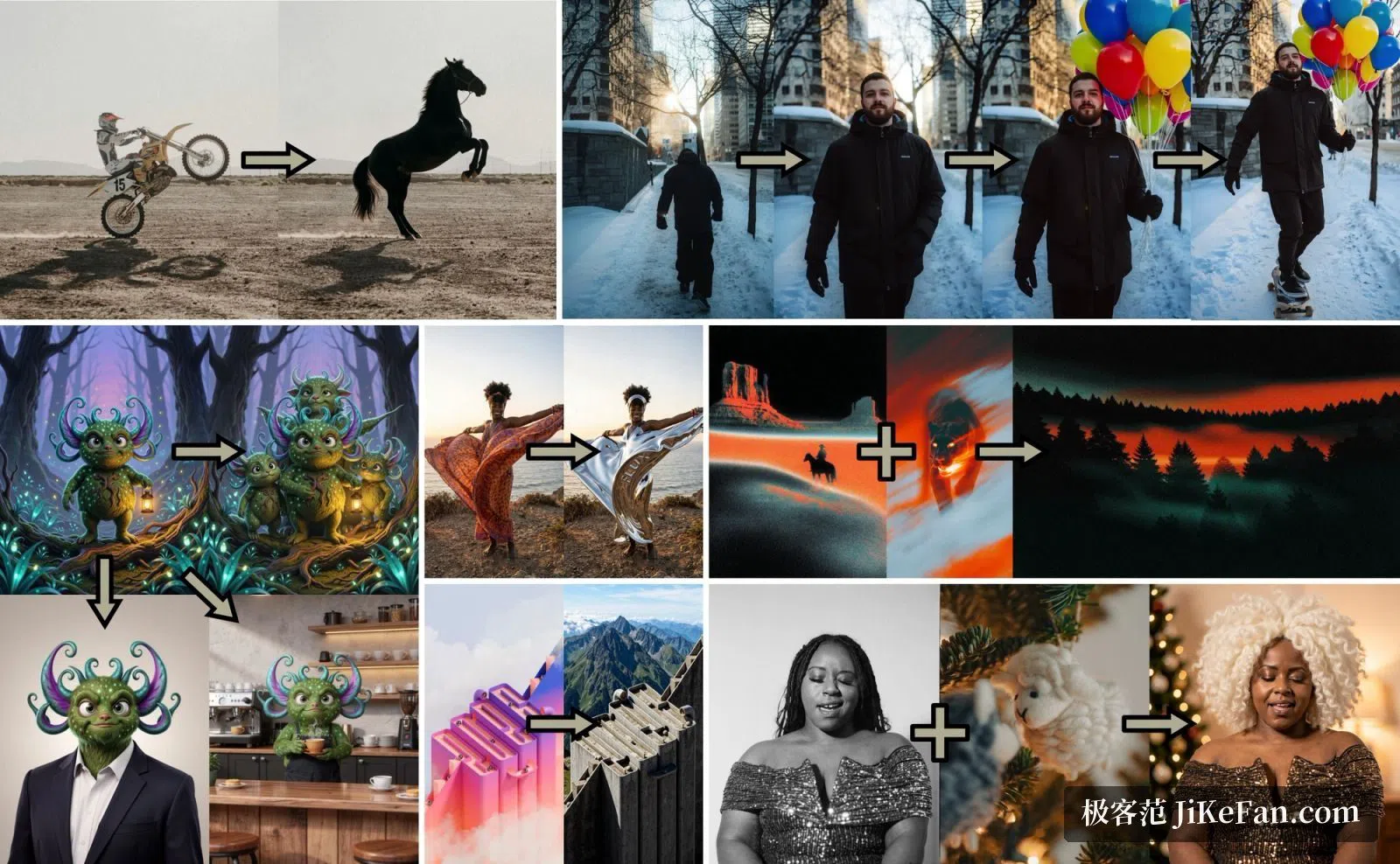
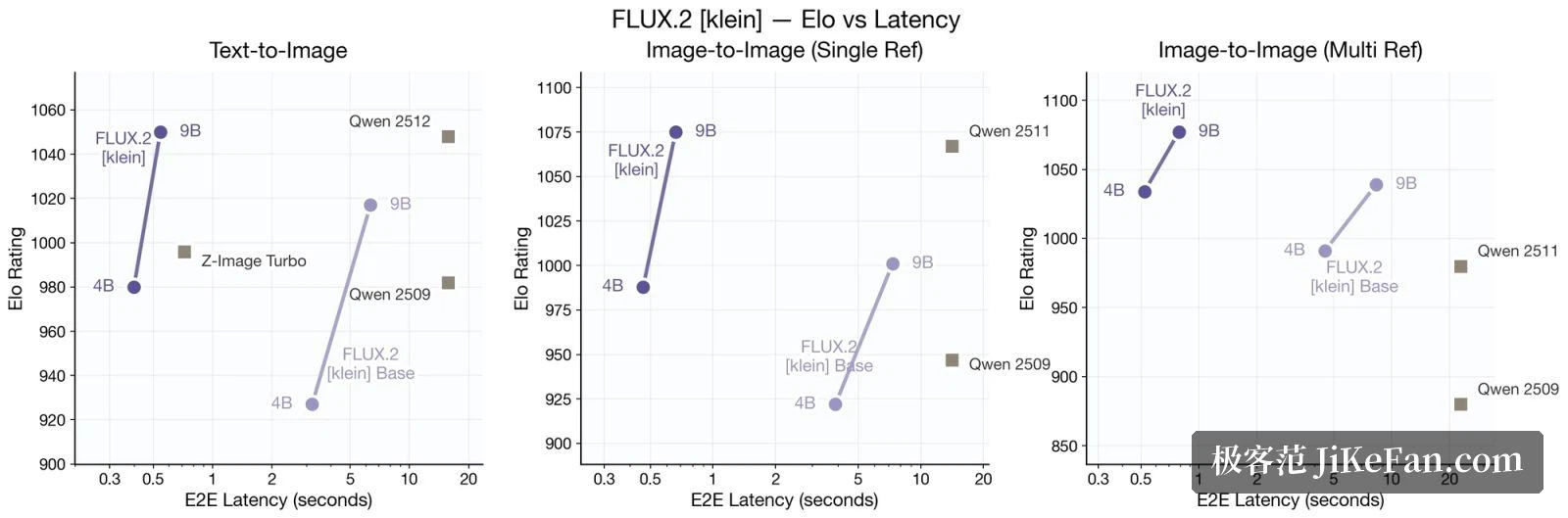
The name comes from German for small, and it points at size and latency rather than at a cut-down capability. The published figure for end-to-end inference reaches the sub-second range. The larger of the two sizes is built from a nine-billion parameter flow model paired with an eight-billion parameter text encoder, and after distillation it runs four sampling steps. Compressing the step count to a single digit is exactly what puts it an order of magnitude ahead of a conventional diffusion setup.
Two sizes, two licences
The family ships in a nine-billion and a four-billion size, and the deciding factor is the licence more than the picture quality. The small one is fully open under Apache 2.0: commercial use, modification and redistribution all come without strings, which makes it the version aimed at local development and at deployment on the edge. The large one is the flagship of this small class, stronger in quality, but its open weights sit under a non-commercial licence, and using them commercially means negotiating separately. Beyond the distilled builds there is an undistilled base that keeps the full training signal, which is what you want for fine-tuning, adapter training and custom pipelines, and it produces more varied output than the distilled version.

The memory floor and the quantised builds
The four-billion version is listed at roughly thirteen gigabytes of video memory, which puts it within reach of a mid-range or better gaming card from the last couple of generations; the nine-billion version asks for noticeably more. Working with a graphics vendor, the lab released a complete set of quantised builds in two reduced precisions. On the two most recent generations of high-end cards, at a square output of 1024 pixels on a side, the published numbers are: the first format up to one and a half times faster with memory use down by up to forty percent, the second up to nearly three times faster with memory down by up to fifty-five percent. The quantised builds carry the same licence as the originals, with the same capability in a smaller footprint.
How people actually run it
The weights are published openly on a model hosting service, and a reference implementation ships with the sampling code, which is the place to start if you intend to work at the code level. Two routes cover most day-to-day use: a node-based front end that is popular in the community, and the standard Python diffusion library, where a dedicated pipeline class loads the model and memory offloading brings the peak down — the published model card demonstrates exactly that. Anyone who would rather not wrestle with a graphics card can call the hosted endpoint instead, in either size, billed by the megapixel of output.
What to keep in mind
The model card is candid about the limits. The model is not meant to supply factual information. It can render text, but lettering comes out distorted often enough to matter. And as a statistical model its weights reflect the biases present in the training data.
The small size is also, by definition, a compressed one: on lettering and on photoreal detail it trails the larger size and the bigger members of the family, so anyone with a quality bar should step up. One point of timeline is worth knowing as well. A third generation arrived in July 2026, multimodal, spanning images, video, audio and motion prediction, but its image capability sits in early access and the open-weight release is listed as something still to come. For the moment, if you want weights you can download and run yourself, the compact second-generation model remains the newest open option in the family.
To sum up: for a model that fits on a consumer card, comes with a clean licence for commercial work, and handles generation and editing without a model swap, the small version is the least troublesome choice going. If quality leads and commercial use is not in the picture, look at the larger one.