
Strawberry: a music player built for people who keep their own files
Summary
Anyone still collecting local music in the streaming era cares about two things, sound quality and order. Strawberry plays lossless files without complaint and organises a library by album, artist, genre and year, however many thousands of records it holds.
Recommend- Name
- Strawberry
- Version
- 1.2.30
- Pricing
- Free
- Open source
- Open source
- Operating system
- WindowsmacOSLinux
- Updated
- 2026-10-07 17:48
Two things still matter in a streaming world
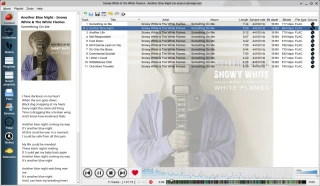
People who keep their own music files instead of renting a catalogue tend to care about exactly two things: how it sounds and how it is organised. Everything else is negotiable. Strawberry is built for that pair of concerns and does not pretend to be a social network. Lossless formats, FLAC and WavPack among them, play without complaint, and the library is treated as a collection rather than a feed: album, artist, genre and year are all first-class views, so a few thousand records remain navigable instead of turning into an endless scroll.
Its lineage helps. The player descends from a well-known classic, and people arriving from that ancestor find their habits intact, the same layout, the same shortcuts, the same idea of what a library is. What has changed is the pace: this branch is maintained far more actively than the original, with releases arriving often instead of annually, which for a local player is the whole difference between a tool and a relic.
The quiet work that happens before playback
Half of the value sits outside the play button. A tag editor corrects album information across a whole selection at once, which is the difference between an evening of typing and one action. Cover art is fetched automatically to fill the gaps, so the grid view stops being a wall of grey squares. Smart playlists rebuild themselves from rules, meaning a list defined as everything from a decade that you have not played in a year stays true without maintenance.
Playback history and statistics accumulate into something quietly satisfying over time: a listening report that is yours rather than a platform's, drawn from your own habits. Scrobbling to Last.fm keeps a decade of listening data continuous when you change machines, and internet radio and podcasts sit alongside the local files rather than in a separate program. All of it is open source and free, on the three desktop platforms, with the community shipping versions on a steady rhythm. A release landing as recently as this September is the sort of proof of life that matters when you are deciding whether to trust a program with your library.
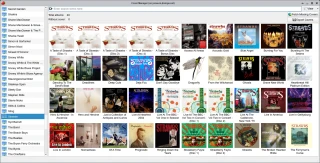
There is a practical reason to keep the library tidy beyond aesthetics. A collection organised by four axes can be searched in four directions; one organised by nothing can only be scrolled. When you remember a record by the year it came out rather than the artist, or by the genre you were in the mood for rather than the name, the views are what let you find it in seconds instead of giving up and playing something else. That is the difference a player makes to a collection that already exists, and it is the reason the ordering work at the start pays for itself long before the statistics mean anything.
Strawberry defends a different idea of music in the streaming age: the tracks are your assets and the library is a collection of time. Arranging it is not admin, it is part of listening.
Making the library behave
Unify tags and file naming before the first import. This is the one piece of advice that changes everything downstream: the order you establish at the start decides what every later view, search and playlist can do, and repairing a messy library after the fact costs ten times what cleaning it on entry costs.
For a lossless collection, put the files on a separate drive from the system. The collection will outlive several computers, and storage is cheap enough that there is no reason to make it fragile. Back up the statistics and the saved playlists too, not only the audio: the audio can often be re-ripped, the years of listening history cannot.
If what you want is a player that does not ask you to renew anything, does not recommend songs you did not ask for, and lets you decide what your collection looks like, this is the quiet companion for the job. It will not chase you. It will simply be there, holding the records in the order you chose.