
Monefy: over 150 currencies and 25 languages, with the core free
Summary
The core of Monefy costs nothing and the official figure puts its users above eleven million: more than a hundred and fifty currencies and over twenty languages, with data kept on the device or in the user's own cloud rather than behind a bank login.
Recommend- Name
- Monefy
- Version
- 1.10.10
- Pricing
- Free
- Open source
- Proprietary
- Operating system
- AndroidiOS
- Website
- https://www.monefy.com/
- Updated
- 2026-10-11 11:19
Expense tracking rarely fails because of arithmetic. It fails because writing one entry is too much trouble, and by the third day the app has stopped being opened.
Two taps, then a picture
Monefy is an expense tracking and budgeting app published by Reflective Technologies ApS. The official site calls it a very fast way to log spending: any purchase can be recorded in two taps, and the answer to where the money went appears immediately. That orientation runs through the product, with the main screen showing the distribution of spending as coloured shapes, so a category that has grown too large is visible at a glance instead of requiring a dense table to be read first.
Its own statement of purpose is equally plain: help people record spending, put money aside, and reach financial goals more easily. Those three actions come in order, and the first one is exactly where most attempts collapse. Push the cost of recording close to zero and the analysis and adjustment behind it at least have a chance to happen.
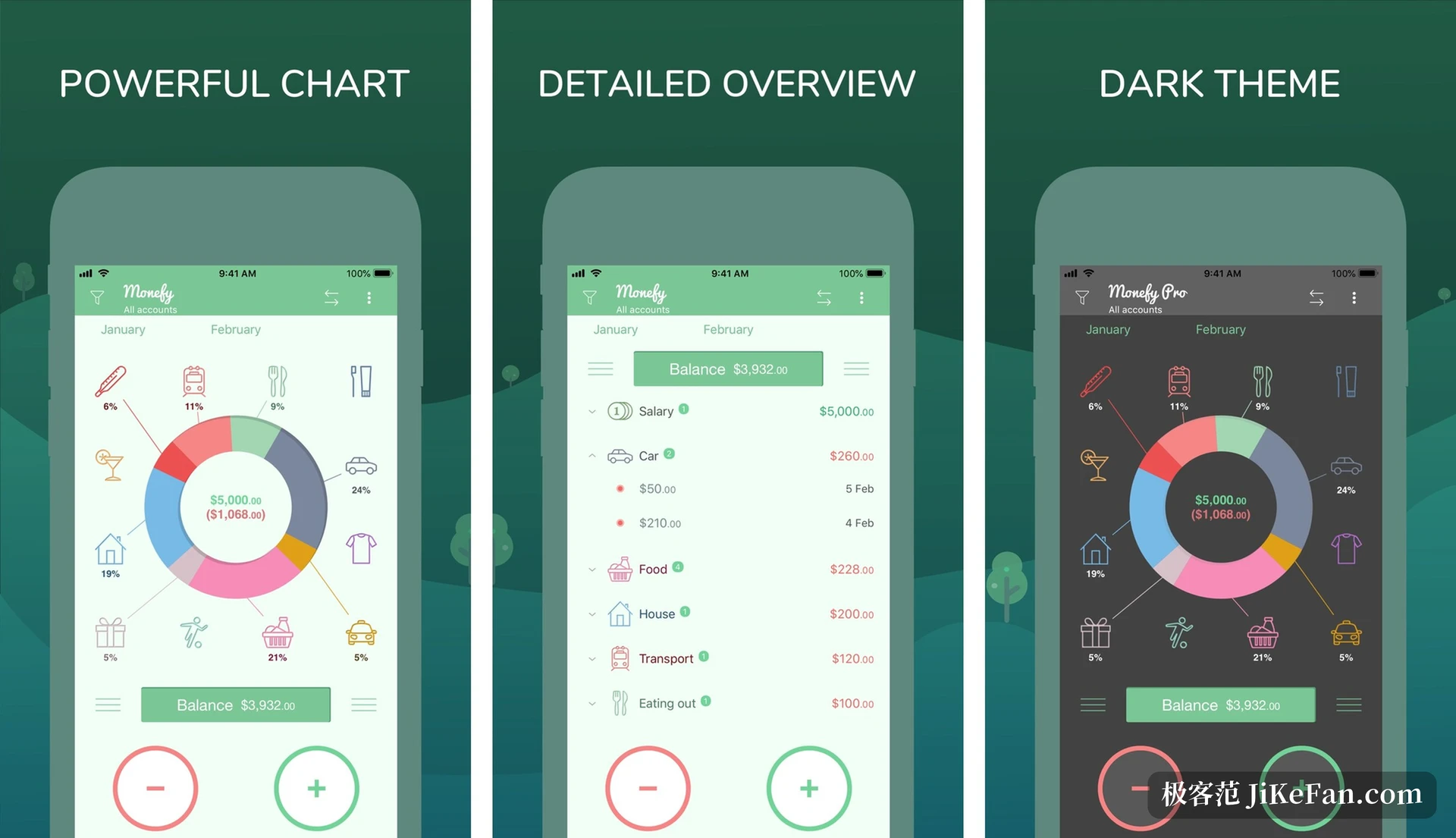
Who holds the money data
An expense tracker cannot avoid a question of trust: does the ledger go to somebody else's server. Monefy answers with a local approach, stating that all data stays on the device or in the user's own cloud drive, and that synchronisation borrows an account the user already has, through built in integration with the common cloud drives. Budgets stay current across every device the user owns, can be shared with a partner, and work across both mobile systems. Read it as your data in your own place, with the app supplying the reading and writing tools, and the picture is close to reality.
Two arrangements go with that. There is no bank account to link: the site says statements can be imported by hand and an expense entered within seconds, which keeps the exposed surface on the device. And there is an optional passcode with biometric locking, one more layer for the moment a device is handled by someone else.
Item | Official description |
|---|---|
Cost | Core app completely free |
Upgrade adds | Unlimited accounts, recurring entries, advanced filters |
Currencies and languages | 150+ currencies, 25+ languages |
Data location | On device or in the user's own cloud |
Sync route | Built in cloud drive integration |
Bank link | Not required, statements import by hand |
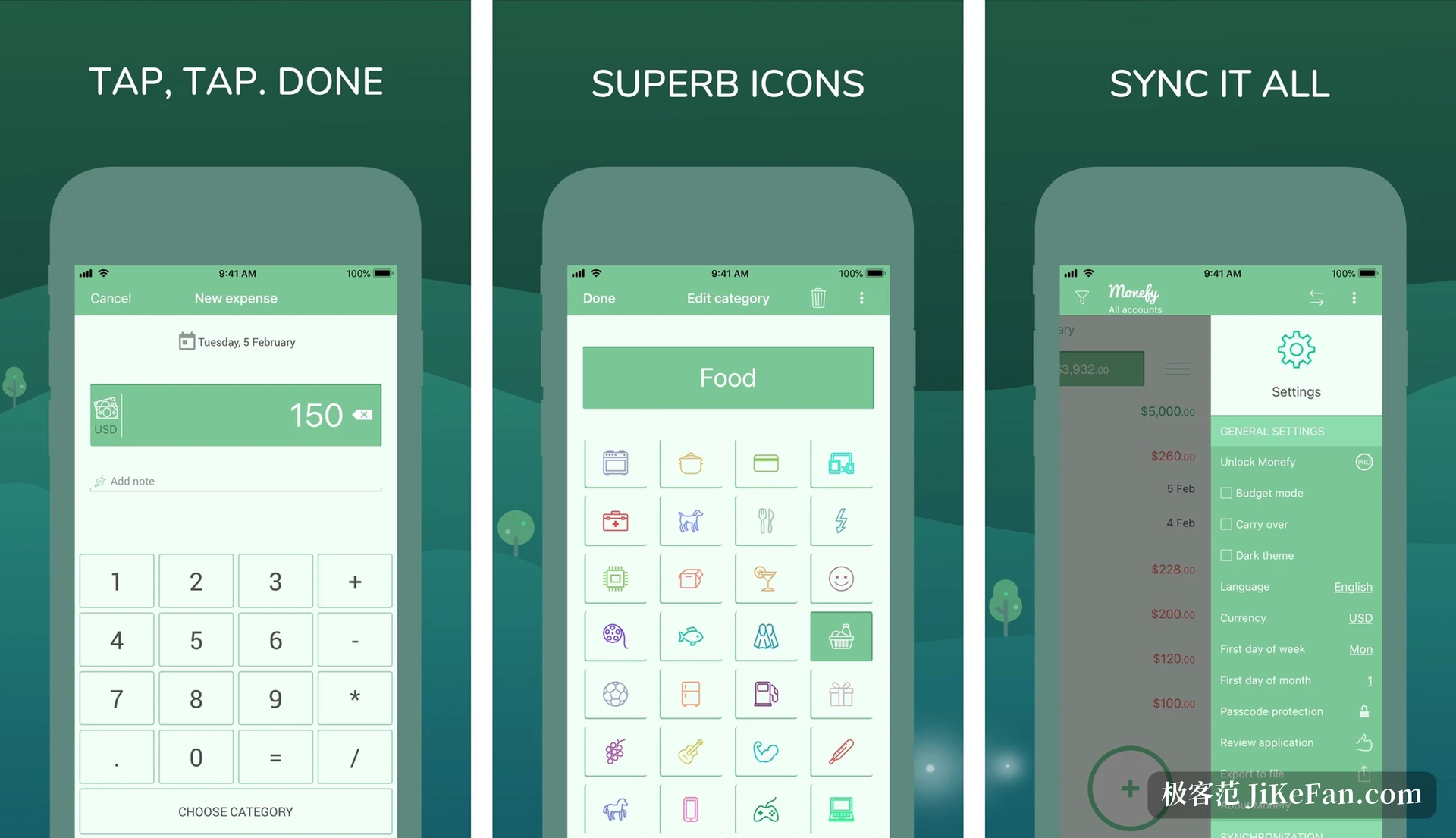
What sits between free and paid
The official questions draw the line plainly: the core app is completely free, and a deeper budgeting experience can be unlocked, bringing unlimited accounts, recurring transactions and advanced filtering. In other words recording an entry and seeing the shape of spending belong to the free range, while paying is aimed at people whose accounts are more complicated, say cash, a bank card and several wallets at once, or who want fixed subscriptions and rent handled automatically.
The multi currency side is worth a mention. The site claims more than a hundred and fifty currencies and over twenty languages, so budgets can be kept in a familiar currency wherever someone lives. This is not only about number formats: while travelling, on a business trip or holding income in another currency, entries need not be converted into a single currency first, and summaries can be read per currency. The site also puts its worldwide users above eleven million, with the footer noting copyright held by Reflective Technologies ApS.
The real threshold for a tracking tool was never the number of features, but whether logging one entry is cheap enough to repeat every day.
How to use it well: set only a few large categories so no time is wasted deciding where an entry belongs; hand recurring fixed costs to repeating transactions instead of entering them again; and configure synchronisation at the start, before changing devices, so no history is lost.