
MyFitnessPal: eighteen million foods, recording starts on the free tier
Summary
MyFitnessPal is a nutrition tracking app whose official figure puts the food database above eighteen million items, reachable by search, barcode, camera or voice; a free account already logs meals, exercise and weight.
Recommend- Name
- MyFitnessPal
- Version
- 26.40
- Pricing
- Free
- Open source
- Proprietary
- Operating system
- iOSAndroidWeb
- Website
- https://www.myfitnesspal.com/
- Updated
- 2026-10-11 11:21
The obstacle in a food diary was never the analysis. It is the entry: a single meal demands a dozen fields, and three days of that is usually where a habit ends.
First, make it recordable
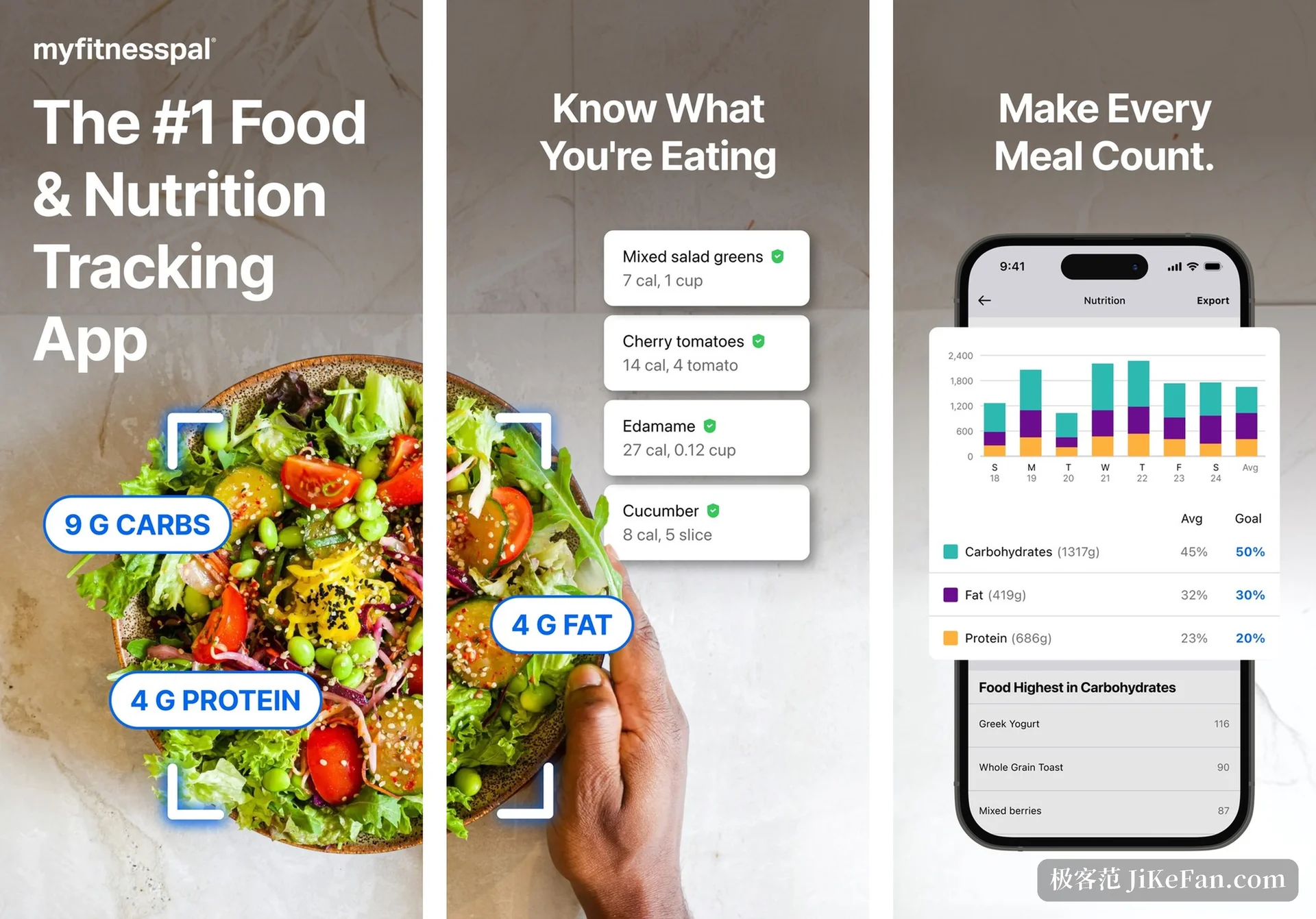
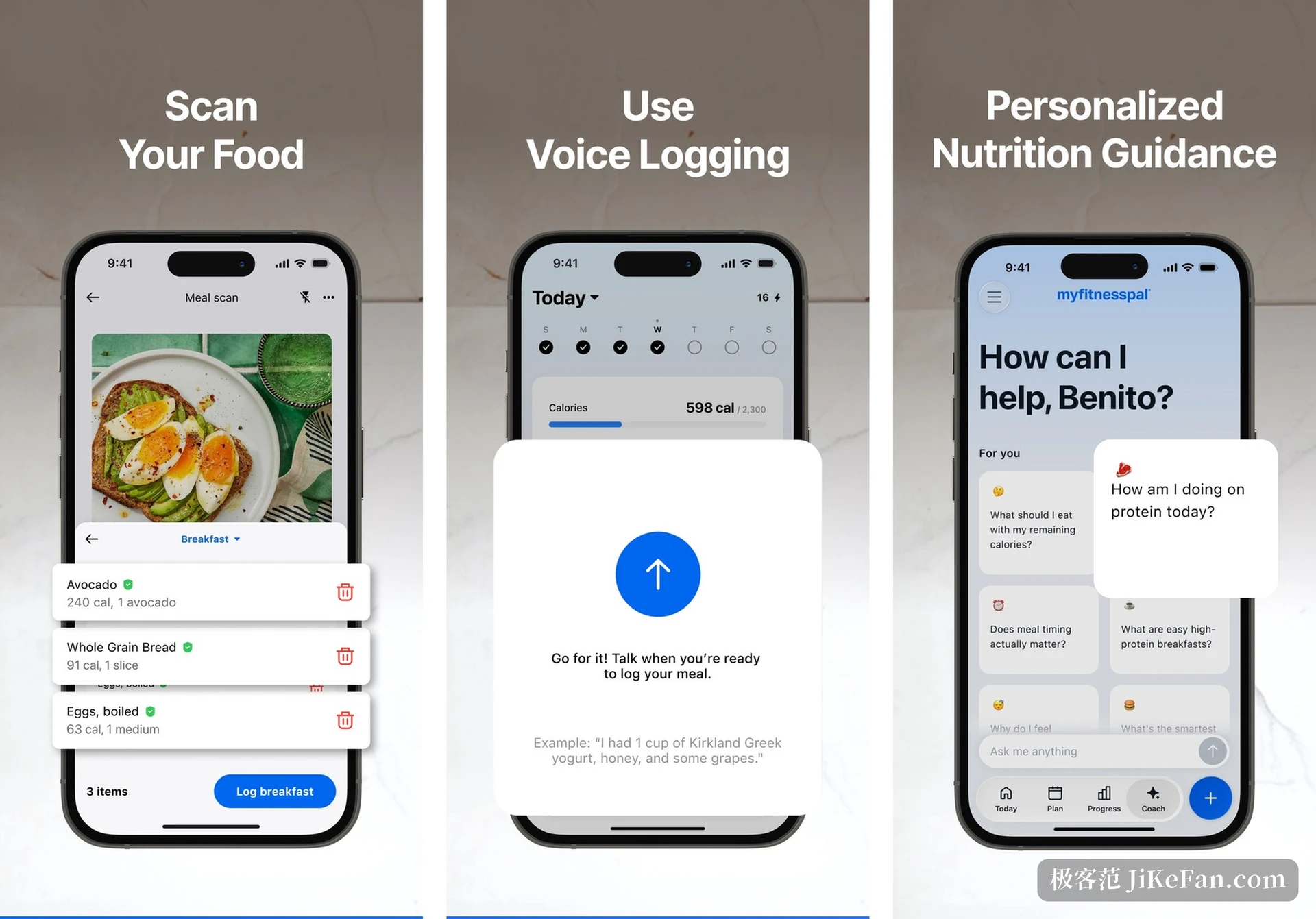
MyFitnessPal is a nutrition tracking app, and its official user figure is above two hundred and eighty million. The tension it works on is plain: writing down honestly what was eaten in one meal is itself enough trouble. So several routes are offered: search, barcode scanning, camera recognition, and simply saying out loud what was eaten. Barcode scanning targets packaged food, giving accurate nutrition and finishing the entry within seconds; camera recognition handles the situation after plating, where nothing can be scanned, matching calories, macros and portion from a photograph of the plate.
All of it rests on one condition, that the item can be found. The official description puts the food database above eighteen million items worldwide, covering fresh ingredients, packaged goods, restaurant dishes, and foods and recipes the user has saved, a scale the site describes as among the largest of its kind. The larger the database, the fewer times the answer is not found so it has to be made up, and the more reliable a long record becomes.
What to look at afterwards
The dimensions recorded are wider than calories. The site says the app does far more than count them: macros, vitamins and other micronutrients can be logged too, and the user can see how what was eaten supports a goal. The breakdown is offered on several time scales, per food item, per meal, per day and per week, which makes it possible to review the shape of a diet at different granularities. The dessert that looks minor inside one day becomes a pattern once a week is in view.
Everyone can track weight goals, exercise and water alongside calories and nutrients. That point matters: it is a complete account of what comes in and what goes out in one place, instead of two separate ledgers. Device links then cut down manual carrying, with over forty apps and devices supported so steps, weight and workouts arrive by themselves.
Item | Official description |
|---|---|
Food database | Over 18 million foods worldwide |
Entry routes | Search / barcode / camera / voice |
What is logged | Calories, macros, vitamins, micronutrients |
Time scales | Per food, meal, day and week |
Device links | Over 40 apps and devices |
Where free stops
The official questions state the line directly: every user can track weight goals, exercise and water, and a free account can start logging food right after registration; the convenience tools such as barcode scanning and camera recognition belong to the paid range, with a seven day trial offered. In other words, what is being bought is entry efficiency. Anyone willing to search by hand each time can build a complete record on the free account.
The nutrition coach is a separate thread. The official text says an AI coach gives personalised suggestions based on the user's records and goals, backed by twenty years of expertise and nutrition data. For someone starting to change how they eat, the value of such advice is turning a vague hesitation about what to eat into a concrete prompt grounded in existing records. One caveat: the record still depends on the user's honesty, and what went unlogged appears in no analysis at all.
Writing one meal down honestly, kept up over months, comes closer to a goal than any single strict diet plan.
How to use it well: start with the dozen foods eaten most often so a quick logging habit forms, instead of filling in every category at once; use barcodes for packaged goods to reduce error; and review the summary once a week, which surfaces structural problems more readily than watching the numbers daily.