
LobeHub: from a chat front end to an AI team you can schedule
Summary
Describe what you need in one sentence and the agent configures itself, groups form on demand for a task, work runs on a schedule while you are away, and memory stays readable and editable rather than opaque.
Recommend- Name
- LobeHub
- Version
- 2.2.17
- Open source
- Proprietary
- Operating system
- WindowsmacOSLinuxWebiOSAndroid
- Website
- https://lobehub.com
- Updated
- 2026-10-28 22:00
It used to be described as the best-looking open front end for a chat model. The positioning has changed: the work is no longer organised around a single conversation but around a team of agents that stays online.
Renaming was not a reskin, it was a different product
In January 2026 LobeChat announced the new name, and the repository moved to a fresh home under it. The official account is blunt: for two years they built an interface for using different models, collecting tens of thousands of stars and millions of users along the way, but an agent should not be a passive tool summoned inside one exchange — it should be a work unit that is always there and can act in groups.
In the product that shows up as several turns. The entry point widens from a single thread to agent teams; interaction goes from question and answer to several agents working in parallel; the time axis stretches from while you are online to scheduled dispatch; memory moves from a vague global context to something structured, editable and inspectable; and distribution is no longer limited to a web interface, because a gateway puts agents into the chat tools you already have open.
Put another way, the old product answered how do I talk to a model, and this one answers how do I run a team of them.
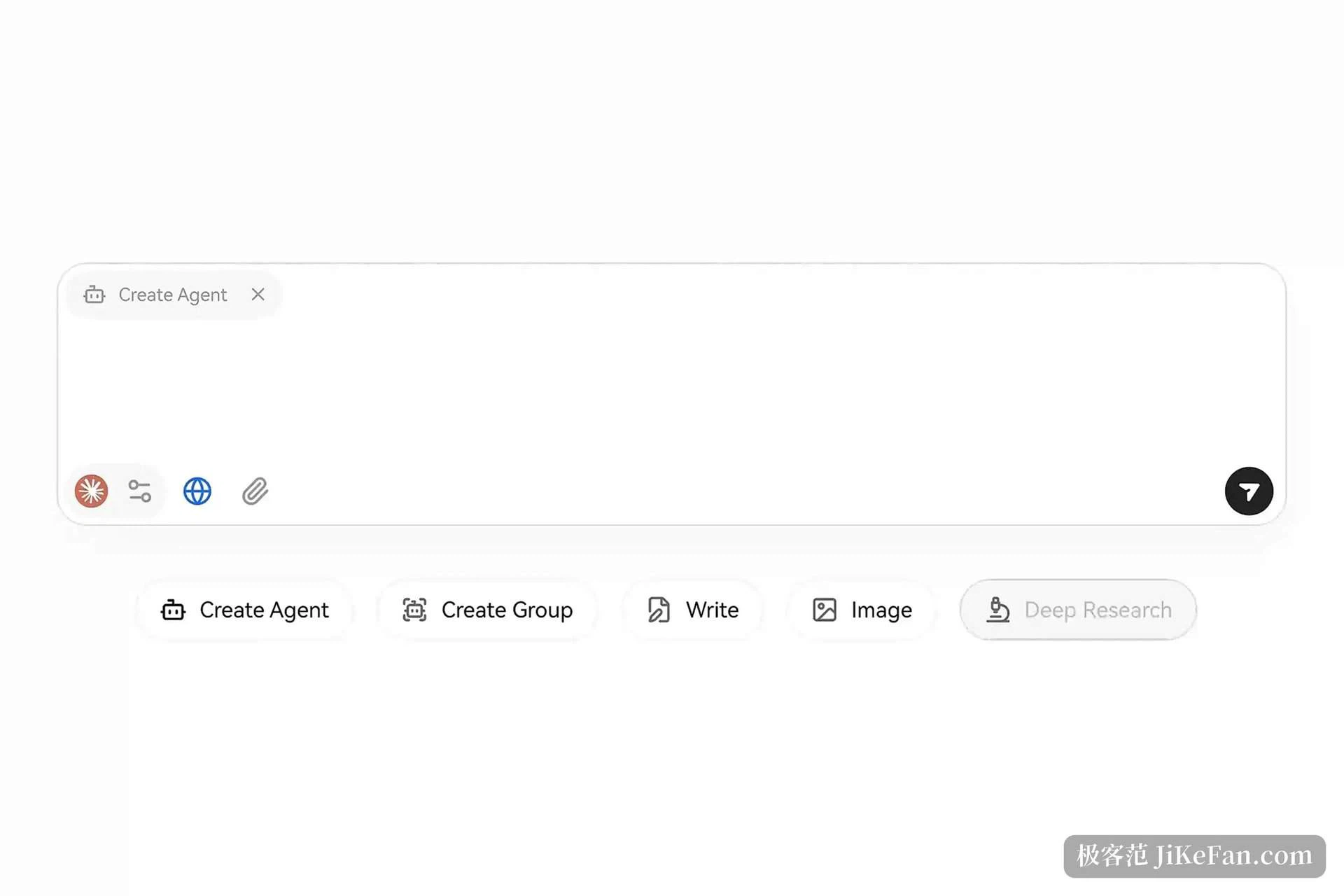
One sentence, and the agent configures itself
Onboarding is short: describe what you want in a sentence and the builder fills in the name, role, skills and behaviour, ready to use without working through a form of parameters first. Lowering that step is the premise of the whole team idea — if creating one agent costs half an hour, forming a group never happens.
After that comes scheduling. Agents can carry timed jobs and run batches on plan while you are away, then summarise the results into a report. The example on the front page is telling: five hundred unresolved issues handed to a team overnight, with a person reading the outcome over coffee. Long, background-capable work is exactly where a single conversation does worst.
Groups form themselves around the task
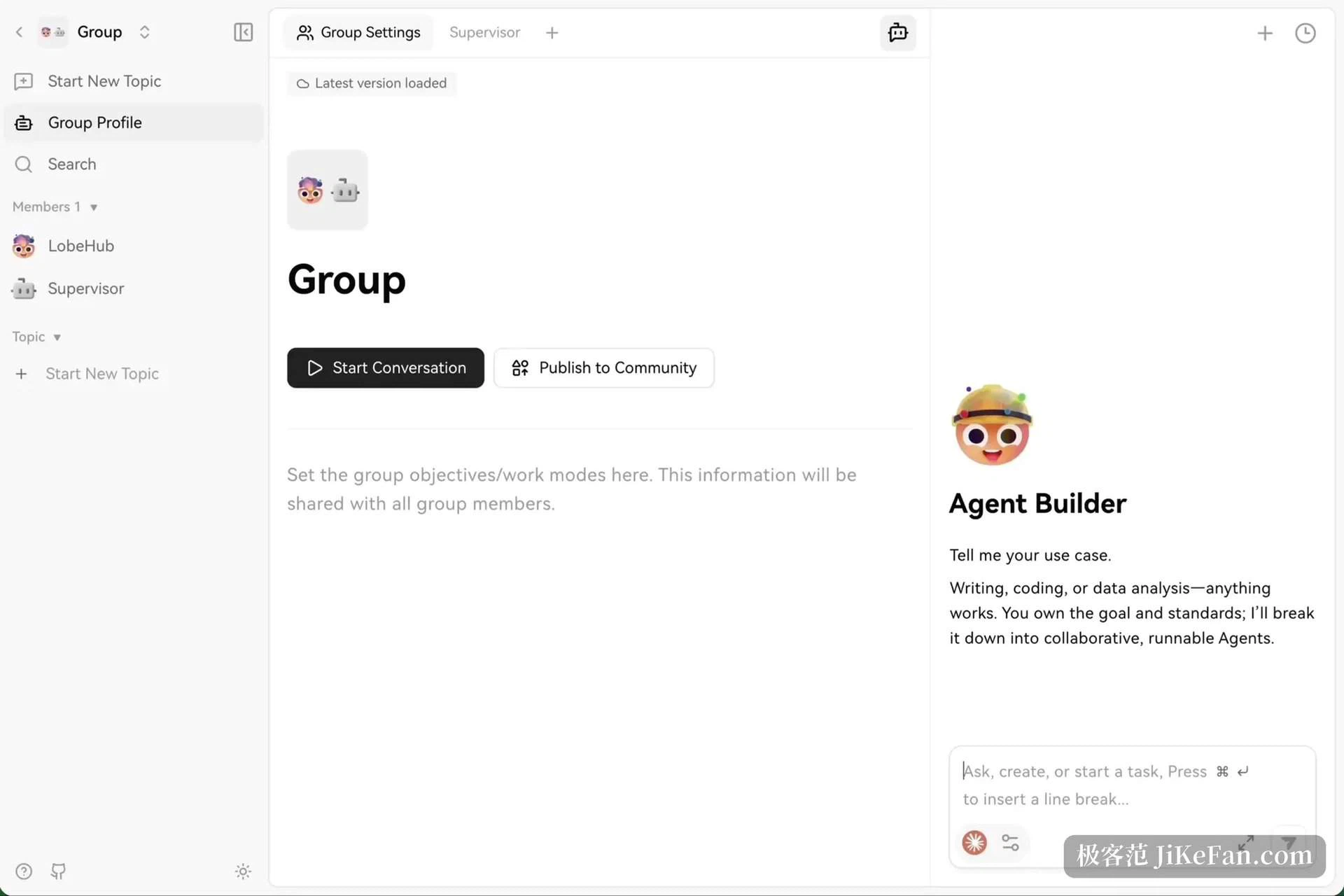
A single agent always has a narrow view, hence agent groups. You throw in a task, the system decides which roles should take part, assembles them, and picks a way of collaborating to match: sequential for a linear flow with clear handovers, parallel for independent subtasks, iterative for output that needs polishing, and debate where an advocate, a sceptic, an analyst and an arbiter each hold a seat so disagreement is laid out before it converges.
Every group contains an orchestrator whose job is to understand the goal, divide the work, sequence the speaking and distil the conclusion — you do not have to be the dispatcher yourself. Combined with the scheduler, that is where the around-the-clock story becomes real: you set the strategy on the day shift, it runs the night shift.
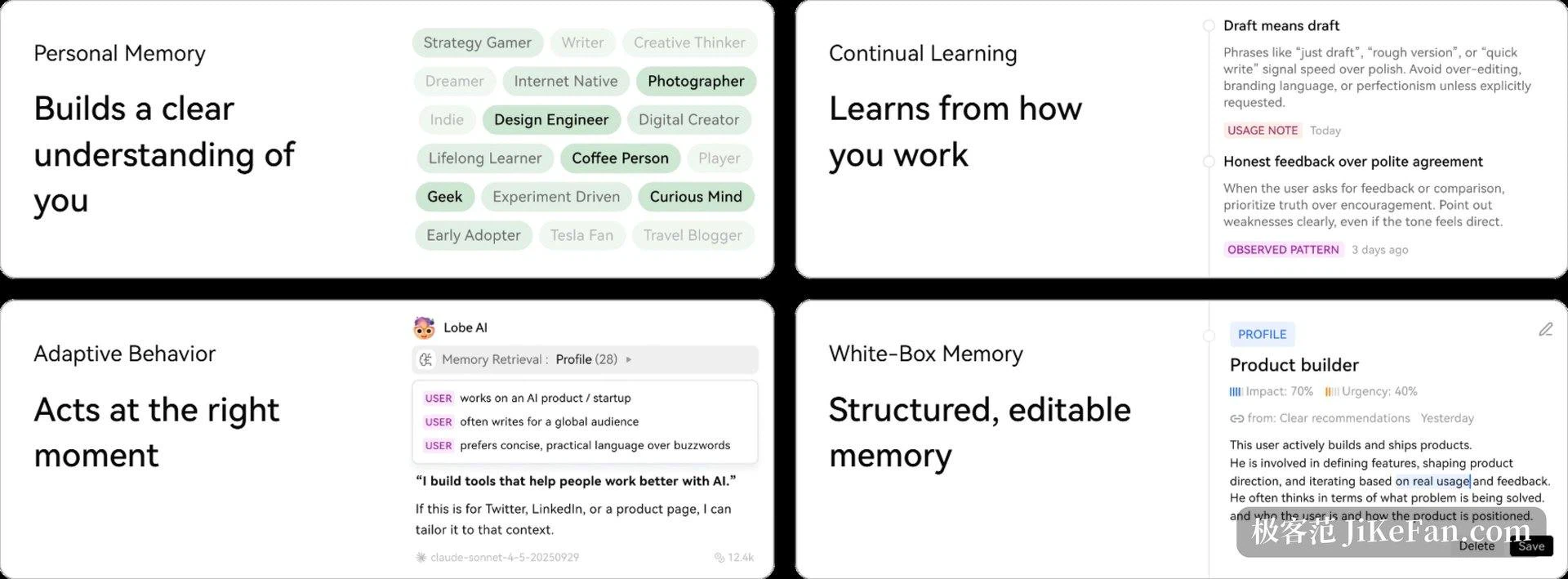
Memory has to be auditable before it goes into production
Multi-agent work runs into a practical question: what did they remember and what did they forget, and can you say. Memory here is a separate structured, editable module — content you can open and change rather than an opaque lump of context. For an individual that is controllability; for anyone putting this into a business process it is the difference between passing a review and not.
Skills and MCP decide how much it can actually do
A team is not enough on its own; it has to be able to act. The extension surface has two layers: a skill system that wraps looking things up, reading documents, drawing charts or running code into mountable abilities you attach to a given agent, and MCP connections that bring outside tools and data sources in as hands and feet. Together they decide whether your team only offers advice in a text box or actually finishes a process. Recent desktop versions lean the same way — editing code from a local file entry, checking a table in a reordered view, publishing a local web page as something shareable.
Command it from the window you already have open
The messaging gateway is the least discussed part and the one that changes habits: agents can be attached to team chat and instant messaging tools, so the window where you talk to colleagues is the window where you hand out work. Recent releases keep filling this in — reading documents from a workspace tool, waking a bot as a guest, making replies more reliable.
Swap models freely, local ones included
Model access is the old trade: dozens of providers, cloud interfaces and local inference mixed freely. Running your own model through a local inference service is supported in the documentation, and the blog spells out two routes to a personal assistant at no model cost — a graphical local service paired with a cloud client so you never start a service yourself, or model and client both on your own machine with no outside interface touched. On the desktop the three platforms are covered, alongside web, iOS and Android.
Open source, self-hostable, data not handed over
The source is public and can be deployed and run yourself; the hosted service is one option rather than the only path. Self-hosting means conversations and knowledge bases sit on your own machine or server, with your own key for the model side. A container orchestration file is ready in the repository, and deployment in a single step works on several common hosting platforms. The hosted version offers a free allowance and paid subscription: the free account gets a monthly pool of compute credits, the paid tiers buy more of them and more storage, which suits people who would rather not touch an environment; bringing your own key consumes no credits, which is friendly if you already hold a model allowance.
As of September 2026 the project has passed eighty thousand stars, with the stable release tracking one line of numbering.
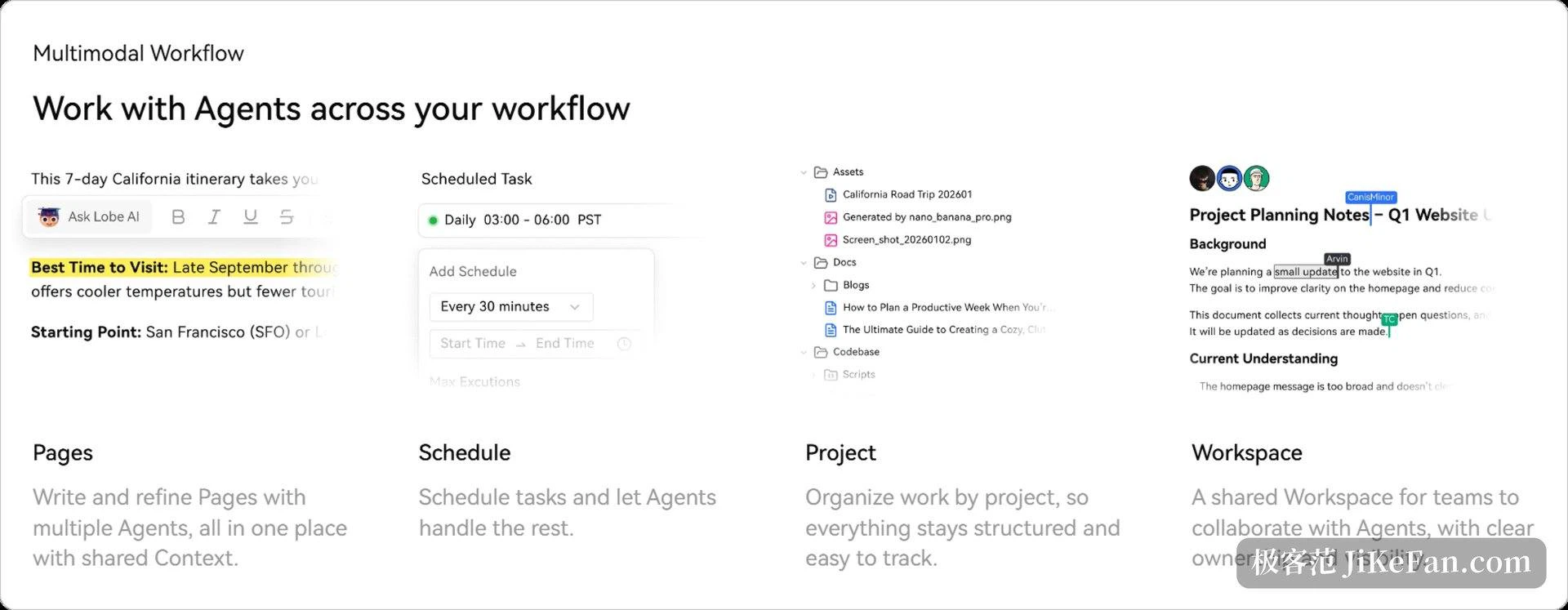
If what you want is a good-looking client that swaps models at will, this still does that job. What deserves attention now is the other half: gathering a pile of separate AI conversations into a team that has a schedule, a division of labour, a memory, and can be stopped from the chat window you are already sitting in.