
Kolors writes Chinese characters correctly and opens code and weights
Summary
A text-to-image model that draws Chinese hanzi correctly instead of producing gibberish, releases its code and weights, and plugs into an existing generative workflow — while the consumer entry now lives on another platform.
Recommend- Name
- Kolors
- Version
- 2.1
- Pricing
- Free
- Open source
- Open source
- Operating system
- WindowsmacOSLinuxiOSAndroid
- Website
- https://klingai.kuaishou.com/
- Updated
- 2026-10-06 18:18
Most image models in this wave are either open or usable, rarely both in a satisfying way. Kolors is an odd and useful case: the model itself is opened up thoroughly — the code, the weights, the supporting toolchain are all obtainable — while the stand-alone consumer site was shut down on 23 August 2024 and the image generation entry moved into the Kling AI platform. Anyone who just wants a picture should go there. Anyone who wants to tinker can pull the weights and run them at home.
First the hard part: getting the characters right
The official repository states a significant advantage in rendering Latin and Chinese characters, and lists text rendering among the capabilities it puts forward, with the model able to produce correct Chinese hanzi. That has long been the sore point of domestically built models: plenty of them draw portraits and scenery well, then produce gibberish the moment characters appear in the frame. In the official samples, the phrase on a vine-covered sphere is drawn by the model itself, not pasted in afterwards.

Chinese motifs and realistic portraits
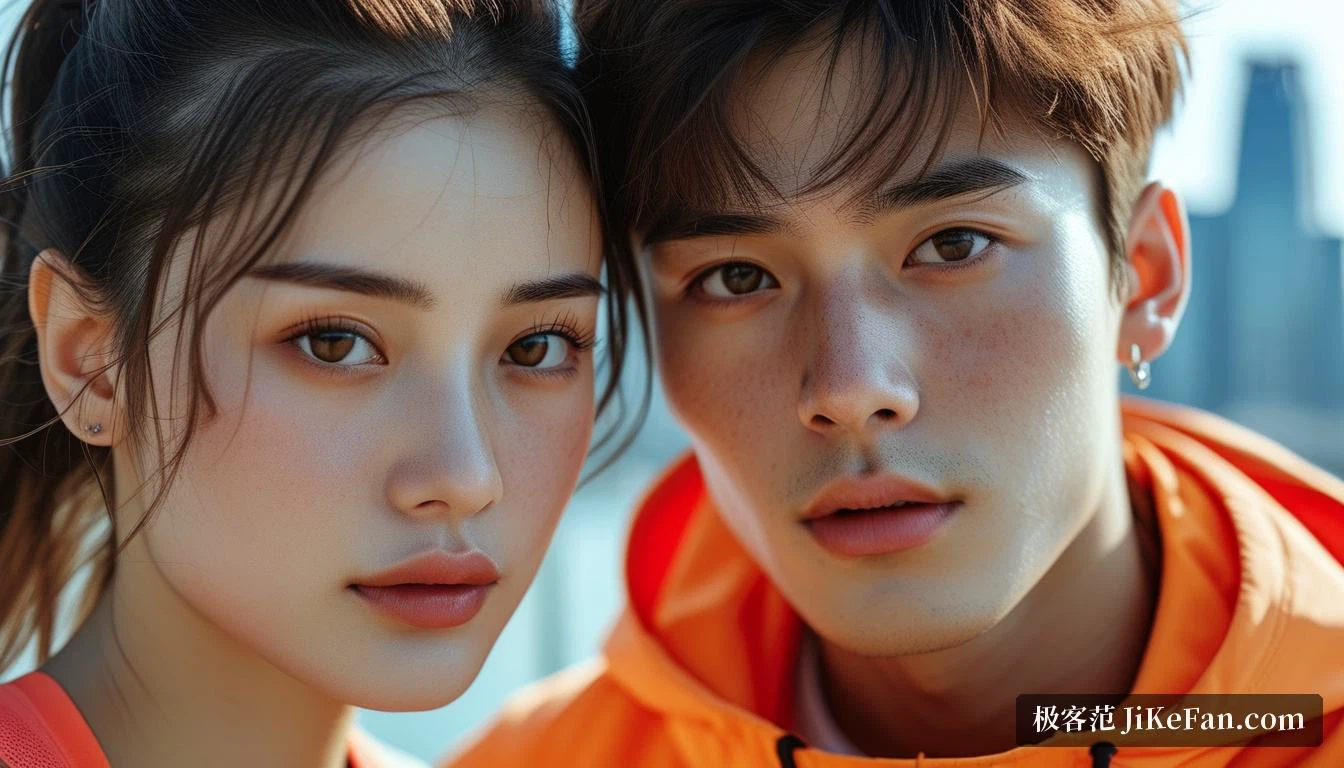
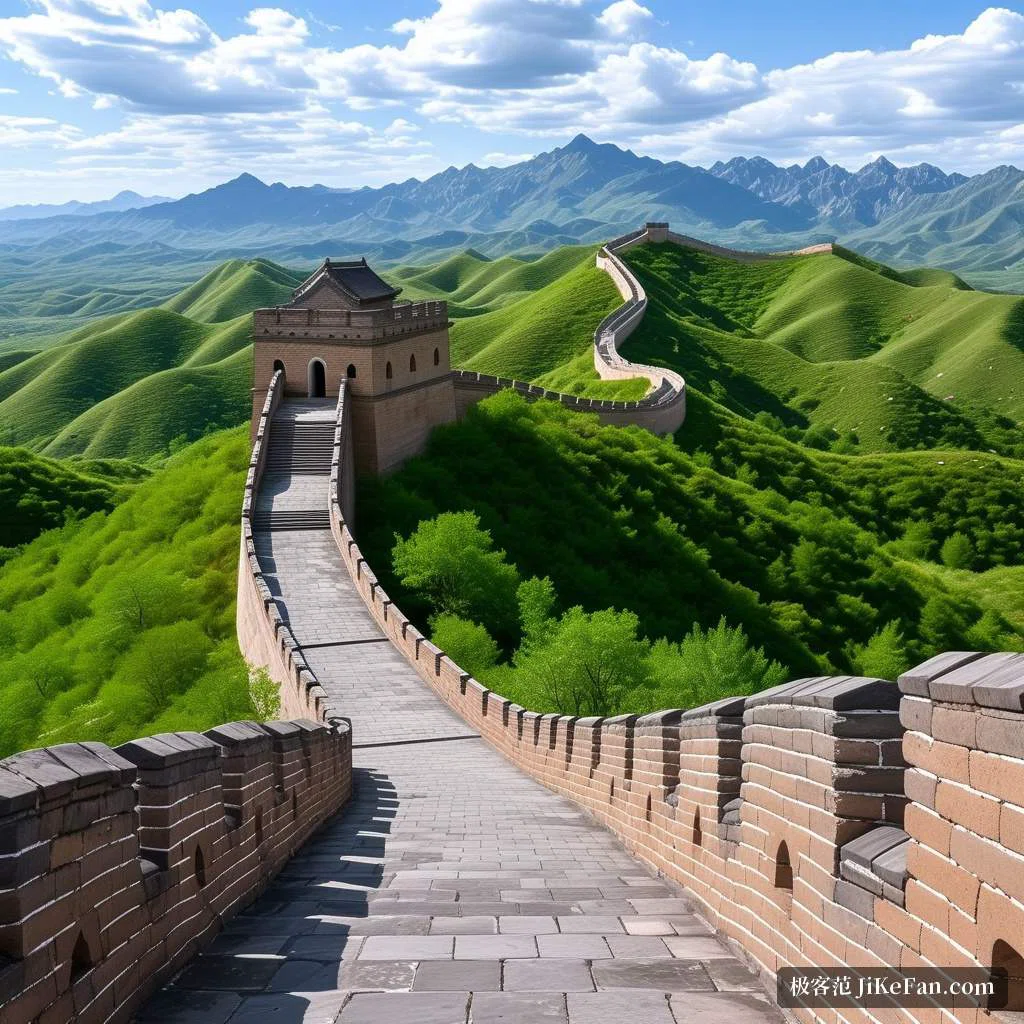
The samples are grouped into four kinds: high-quality portraits, Chinese motifs, complex semantic understanding and text rendering. The motif work covers the Great Wall, classical architecture and city skylines; the portrait work goes for natural skin and cinematic light. Those two are precisely what Chinese-language creators reach for most — national-style illustration, festival posters, commerce portraits — and the official material supplies ready references for all of them.
The technical account
The technical material says the model is built on latent diffusion and trained on billions of image-text pairs; the text side accepts both Chinese and English, with a context length of 256 tokens. The team also built its own evaluation set, more than a thousand prompts spanning fourteen categories and twelve scoring dimensions, assessed by both humans and machines. On 3 July 2024 the model placed second on the multimodal text-to-image leaderboard run by FlagEval, and first in subjective quality for Chinese and English.
How open it actually is
This is the distinctive part. The repository states that the project code uses the Apache licence, that the model weights are fully open for academic research, and that commercial use requires registration with the team. Beyond the main model, the usual additions — an adapter for style references, control networks for edges, depth and pose, inpainting, and low-rank fine-tuning — are open too, and the model already works with a node-based front end, a simple browser interface and the standard Python diffusion library. It can therefore join an existing generative workflow instead of living only inside a closed web page.
Where to use it now
The notice on the old site is explicit: image generation continues through the Kling AI platform, and the original site closed on 23 August 2024. The creative tools and the avatar customisation were folded in. In April 2025 a second-generation image model arrived there, and version 2.1 followed on 10 July of the same year. One thing to note: the migration does not preserve past creations, so anyone with old work on the original site needs to save it themselves.
The boundaries, stated
Two things are worth knowing first. Kolors is no longer a stand-alone product in operation, and plenty of older tutorials still point at an address that has closed; the live entry sits on the other platform. And open source does not mean unrestricted: the weights are open for research, commercial use needs registration, and the team notes that generative models are stochastic, so the accuracy and safety of output cannot be fully guaranteed. Neither is a trap, but both belong in the cost calculation before choosing.
To sum up: the value here is not another image website. It is a Chinese-language text-to-image model that writes characters correctly, opens its weights, and plugs into an existing workflow. For everyday pictures, go to the hosted platform. For serious work, pull the weights and run them. Both roads are open.