
Jan: a local assistant whose source you can actually read
Summary
Every line of the chat window, the model manager and the local server is published under a permissive licence, so the conversation can run with the cable pulled and nobody has to take the privacy claim on faith.
Recommend- Name
- Jan
- Version
- 0.8.4
- Pricing
- Free
- Open source
- Open source
- Operating system
- WindowsmacOSLinux
- Website
- https://jan.ai
- Updated
- 2026-10-06 13:25
Anyone who has pasted a contract clause, a patient note or a private function into a hosted assistant knows the small hesitation that follows: where did that text actually end up? The bill arrives every month, the privacy terms are rewritten every year, and people in regulated trades are usually shut out before the question can even be asked. Running the model on your own hardware settles it at the root, except that nearly every guide to doing so opens with a page of terminal commands, and that is where most people quietly give up.
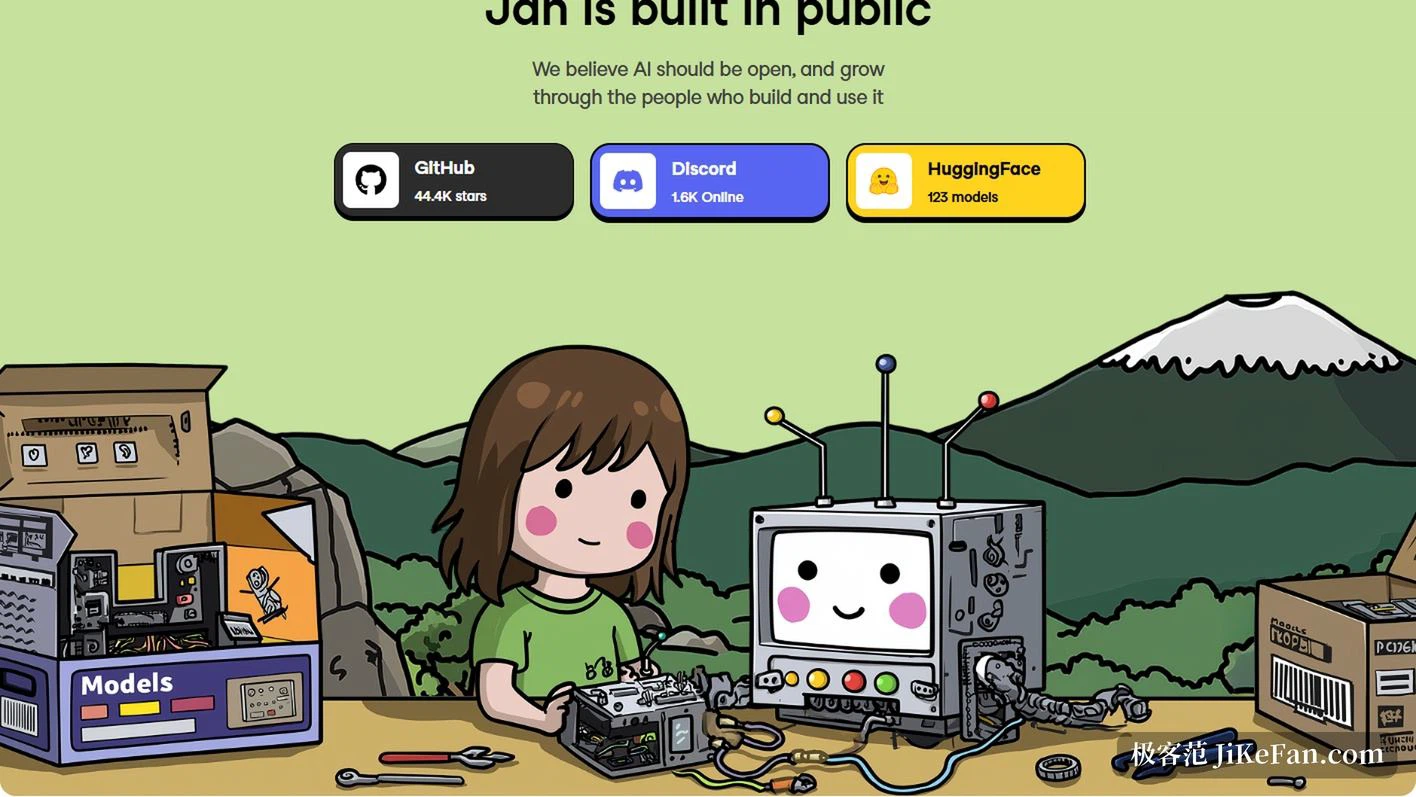
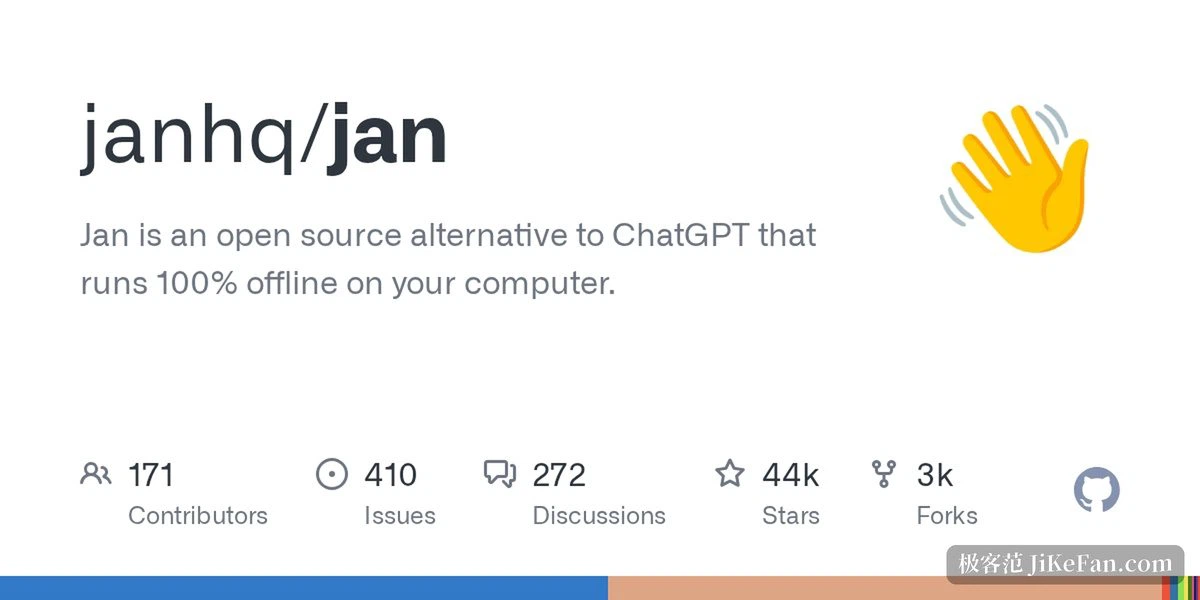
Jan is the most uncompromising answer on a rather short shelf. The desktop program comes from a small team in Singapore and has been published under a permissive open licence since 2023: the chat window, the model manager and the local server are all readable line by line. More than forty thousand people have starred the repository and installations have passed five million. The licence is not decoration here. You can follow the code that touches your text, and you can satisfy yourself that nothing is quietly calling home.
Working with the network unplugged is the part that matters most. Once an open model has been pulled from the built-in catalogue, conversation, questions about long documents and the local server all keep running with the cable out; the transcript is written to disk as ordinary files and the arithmetic happens on your own processor and graphics card. On a locked-down network, on a train, or simply in a household that would rather keep its notes at home, that turns a convenience into something you can depend on.
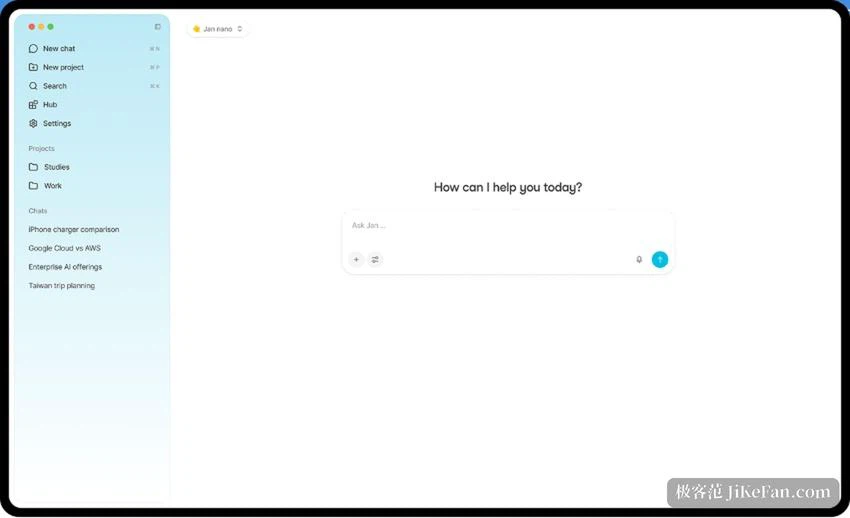
What the interface hides is how much machinery sits underneath. A model centre lists the well-known open families and tags each entry with how well it fits the machine in front of you; one click starts the download, which can be paused and resumed. Sessions occupy the left column and the sampling controls the right, roughly the layout of any chat app. Nothing forces you to stay local either: credentials for the large hosted providers can be pasted in, and a private model and a very capable remote one share the same window, switched as the task changes.
For people who write code, the same program turns into plumbing. Its local server exposes an endpoint that accepts the request format of the major hosted providers and listens on port 1337 by default, so an existing script usually needs nothing more than a new address. Support for MCP lets a model reach outside itself, driving a browser or a code runner, which is the road towards agent-style work. The 2026 releases came quickly: prediction of several tokens at once, message branches that keep two replies to the same prompt, support for a second vendor's compute stack on the free operating system, and in the newest build a built-in web search and page fetcher so that a local model can still see today's news.
The limits deserve the same honesty. Speed and quality are whatever your hardware can deliver; 16 GB of memory is a realistic floor, and larger models want a serious graphics card or a great deal more memory. On hard reasoning the distance to the best hosted models is easy to notice. There is no phone app. And while the application itself is open, a few extras sit behind an optional paid tier - the core local use has stayed free throughout.
As AI turns into something closer to public infrastructure, the question of who holds the data stops being abstract. Jan's answer is blunt: the code is public, the model is on your desk, the traffic never leaves, and pulling the cable changes nothing. It is probably not the most capable assistant you can install. It may well be the one you are least uneasy about telling your secrets to.
Real privacy is not a promise, it is a structure. When the source can be read, the model sits locally and the cable can be unplugged, trust finally has something solid to stand on.