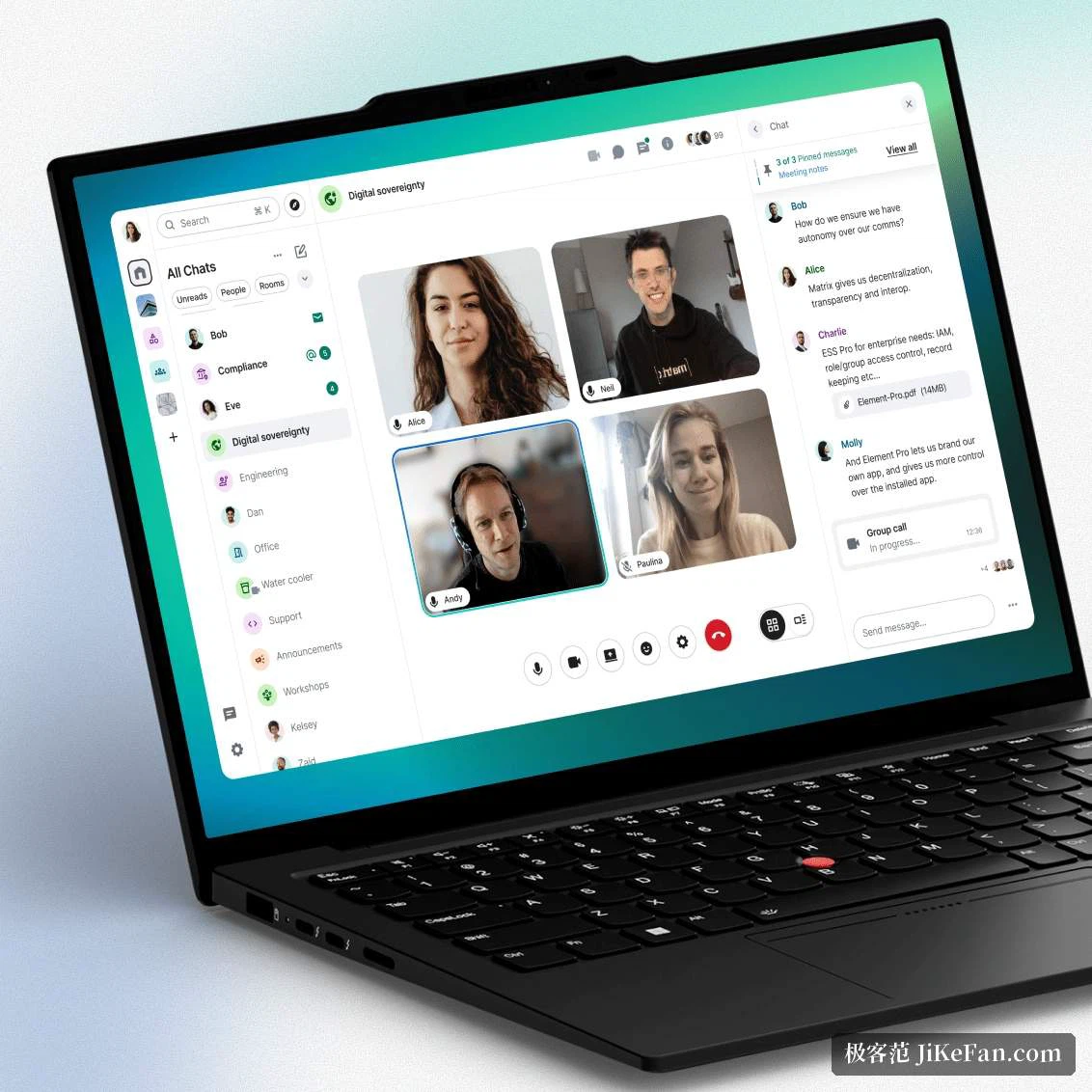
Element: open source encrypted chat on the Matrix protocol, with a server you can host yourself
Summary
A chat client built on the open Matrix protocol, with end to end encryption, servers you can run yourself and federation between them, and Spaces for organising rooms. The client is free and open source, and the current version is 1.12.28.
Recommend- Name
- Element
- Version
- 1.12.28
- Open source
- Open source
- Operating system
- WindowsmacOSLinux
- Website
- https://element.io/
- Updated
- 2026-10-06 07:37
Keeping the conversation in your own hands
Most messaging tools stand on servers owned by the company that wrote them, and the account, the messages and the member list all live there; moving to another service means starting again. Element takes the other road. It is built on the open Matrix protocol, so a server can be run by yourself or borrowed from a public one, and servers talk to each other the way mail servers do. Nobody has to hand over a whole address book. An organisation can hold an internal conversation and still stay reachable for contacts sitting on other servers, and a provider going out of business no longer takes the history with it. The client itself is open source, it supports end to end encryption, and the current version is 1.12.28.
Chat and calls in one client
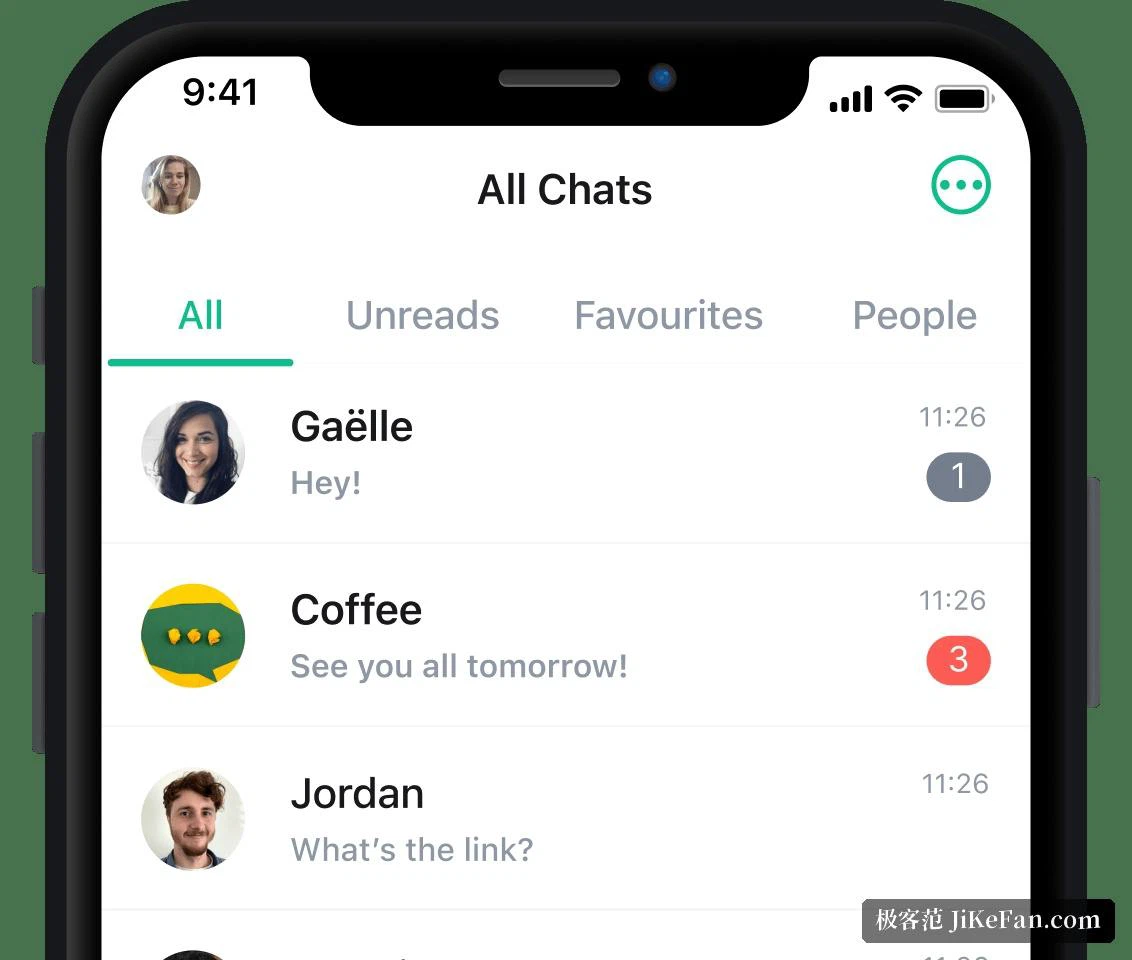
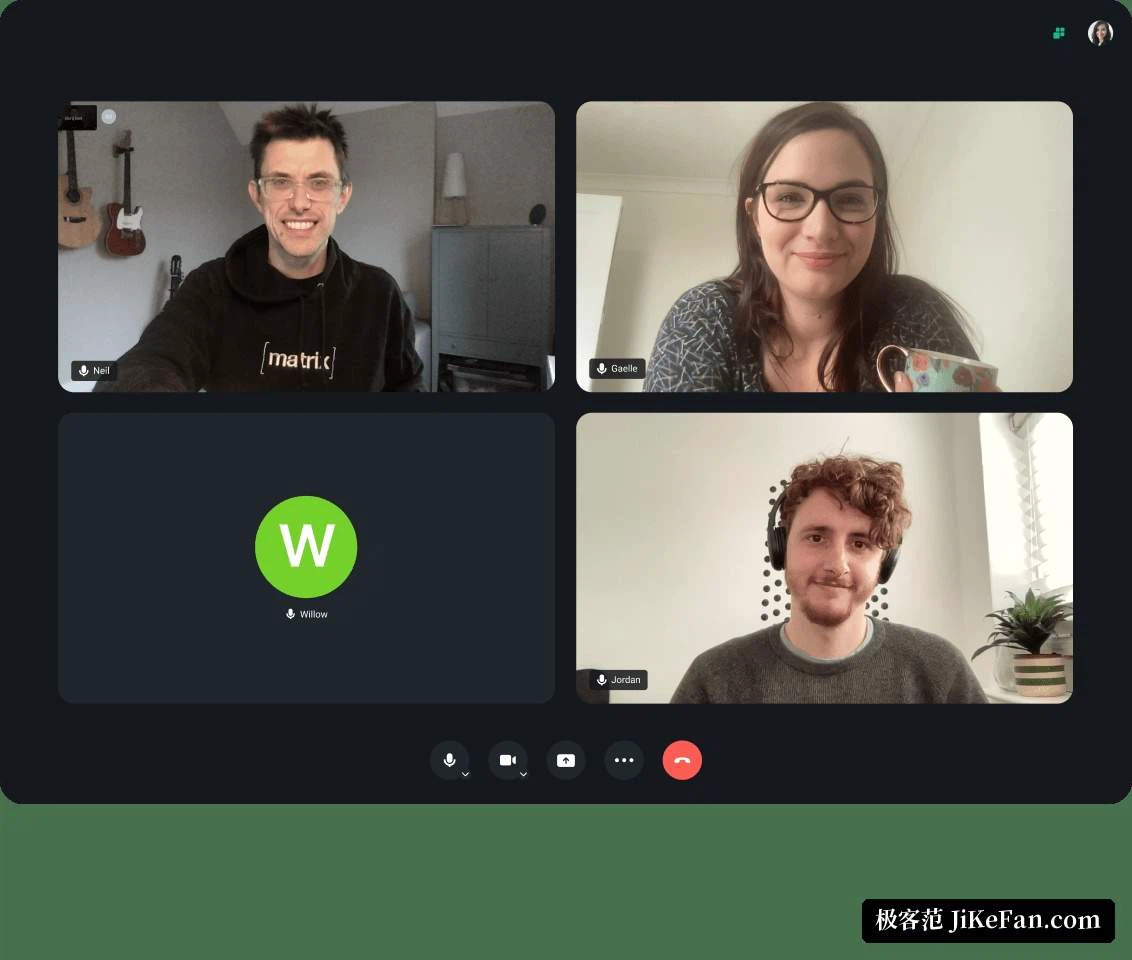
As a chat tool it is not thin. One to one messages, group rooms, mentions, reactions, editing and retracting a message, file and picture sharing, voice notes, search, pinning and unread markers are all present. A room can be public, invitation only or encrypted, and member rights go down to who may post and who may invite. Voice and video are built in: a private call, a small meeting and screen sharing are started from the same window, with no detour through a separate meeting product, and the call itself travels encrypted.
Messages are encrypted between clients, so the server only ever holds ciphertext. A new device is confirmed through a verification step, which keeps somebody from signing in under a borrowed name.
Packing a team structure into spaces
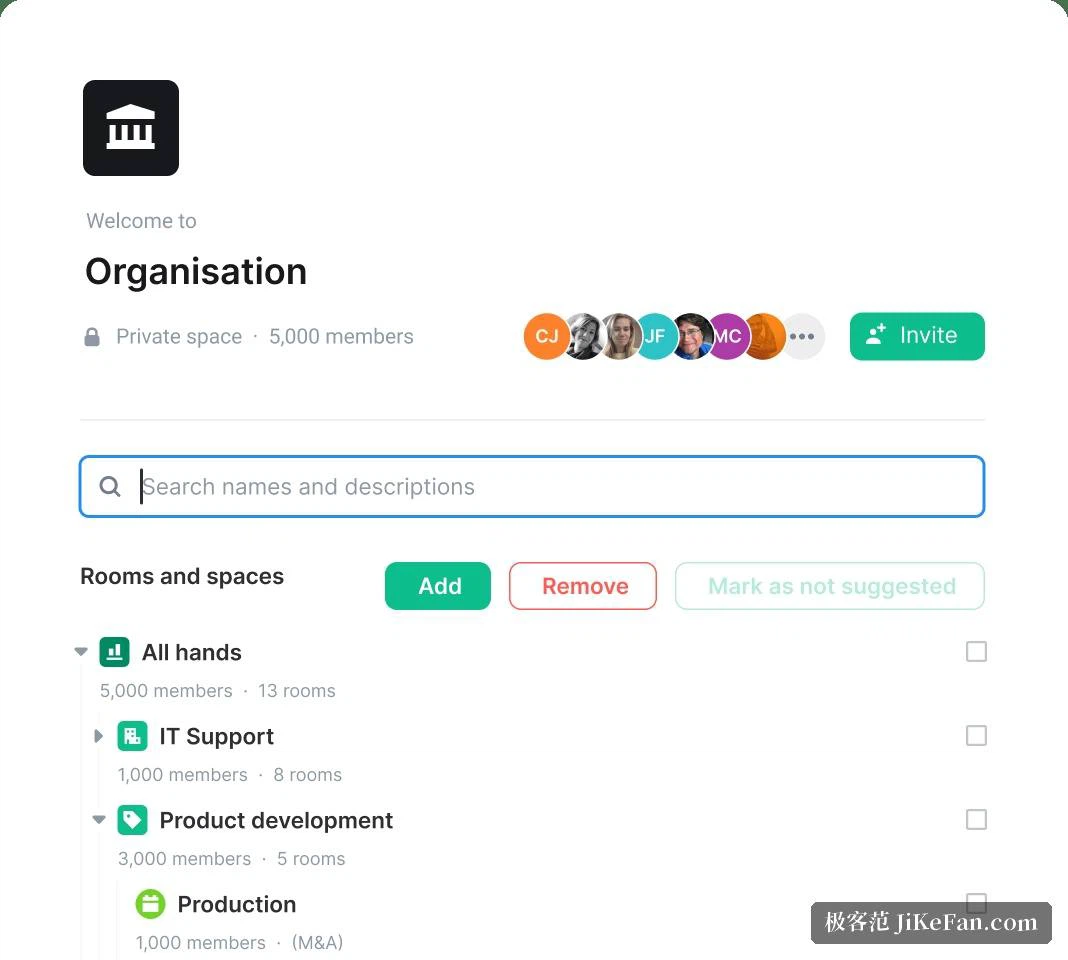
With several projects running, a chat list turns into a mess. Spaces answer that: the relevant rooms, sub-spaces and people are gathered under one space, a newcomer joins once and sees everything intended for them, and rights are withdrawn in a single step when a project ends or somebody leaves. Spaces nest, so the structure can follow departments, projects or clients level by level, which keeps the visible scope clear without breaking the habit of everyday conversation.
Hosting it yourself, and talking to the outside
Server components are published openly, so an organisation can raise a Matrix service in its own machine room or on a private cloud, keep the data inside the network, and connect it to existing directory services and identity checks. The bridging side deserves a mention as well: message channels from outside services can be brought into Matrix, so colleagues who are used to another tool keep talking where they are while the organisation as a whole moves onto a self-hosted service.
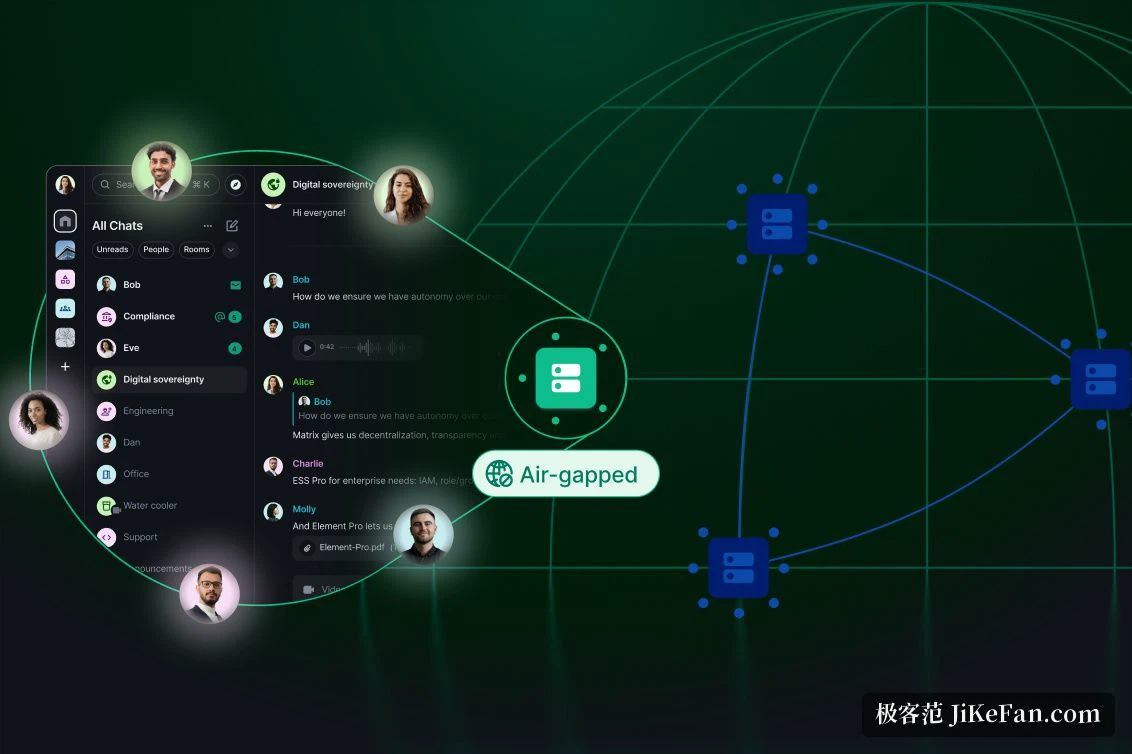
For a site that needs an offline environment or has to keep its network isolated, this way of deploying is the value of the whole thing.
What federation really costs
A chat service is infrastructure, and infrastructure is judged over years rather than afternoons. The argument for federation is not that the protocol is elegant; it is that the record survives a change of supplier, a change of staff and a change of mind. Rooms, membership and history sit with the organisation, so leaving a contract does not mean losing the archive.
The other side of that is honest work. Running a server puts maintenance, updates and backups in the organisation s own hands, and there is no help desk to call when something goes quiet. Federation does the same to availability: the conversation depends on other servers as much as on your own, and nothing can be promised about their schedules. Both are the price of holding the data yourself, and both are better known before the decision than after it.
Who it suits
The client is free and open, and a small self-hosted installation costs nothing beyond the machine; hosted services and advanced features for organisations are billed by subscription per user. Official clients exist for Windows, macOS, Linux, Android, iOS and the web, and messages stay in step between phone and desktop.
For anyone at work who needs a channel where the data is under their own control and the history can be kept for years, or who simply dislikes leaving the record with a third party, half an hour is enough to find out whether it fits.