
Proton Mail Review: Mail That Even the Provider Cannot Read
Summary
Proton Mail encrypts message bodies on your device, so the provider holds ciphertext it cannot open. Swiss jurisdiction, no phone number required, a usable free tier and password protected mail for outsiders.
Recommend- Name
- Proton Mail
- Version
- 20260923
- Pricing
- Free
- Open source
- Proprietary
- Operating system
- WebAndroidiOS
- Website
- https://proton.me/mail
- Updated
- 2026-10-07 22:04
Two kinds of mailbox
An ordinary mailbox stores your correspondence in a form the operator can open. That is not a scandal, it is simply the architecture: the server has to index the message, scan it, hand it to a web interface. Proton Mail changes that arrangement. The message is encrypted on your device before it leaves, the key stays with you, and what sits on the server is a block of data that the company itself cannot decrypt. When a government request arrives, the honest answer is that there is nothing readable to hand over, and the transparency reports say so in numbers.
The jurisdiction is part of the pitch rather than decoration. Swiss privacy law and the country's distance from the larger intelligence alliances make a difference in how a request is processed, and Proton publishes what it receives. For journalists, lawyers, sources and anyone whose mail is a liability rather than a convenience, that combination is the reason to move.
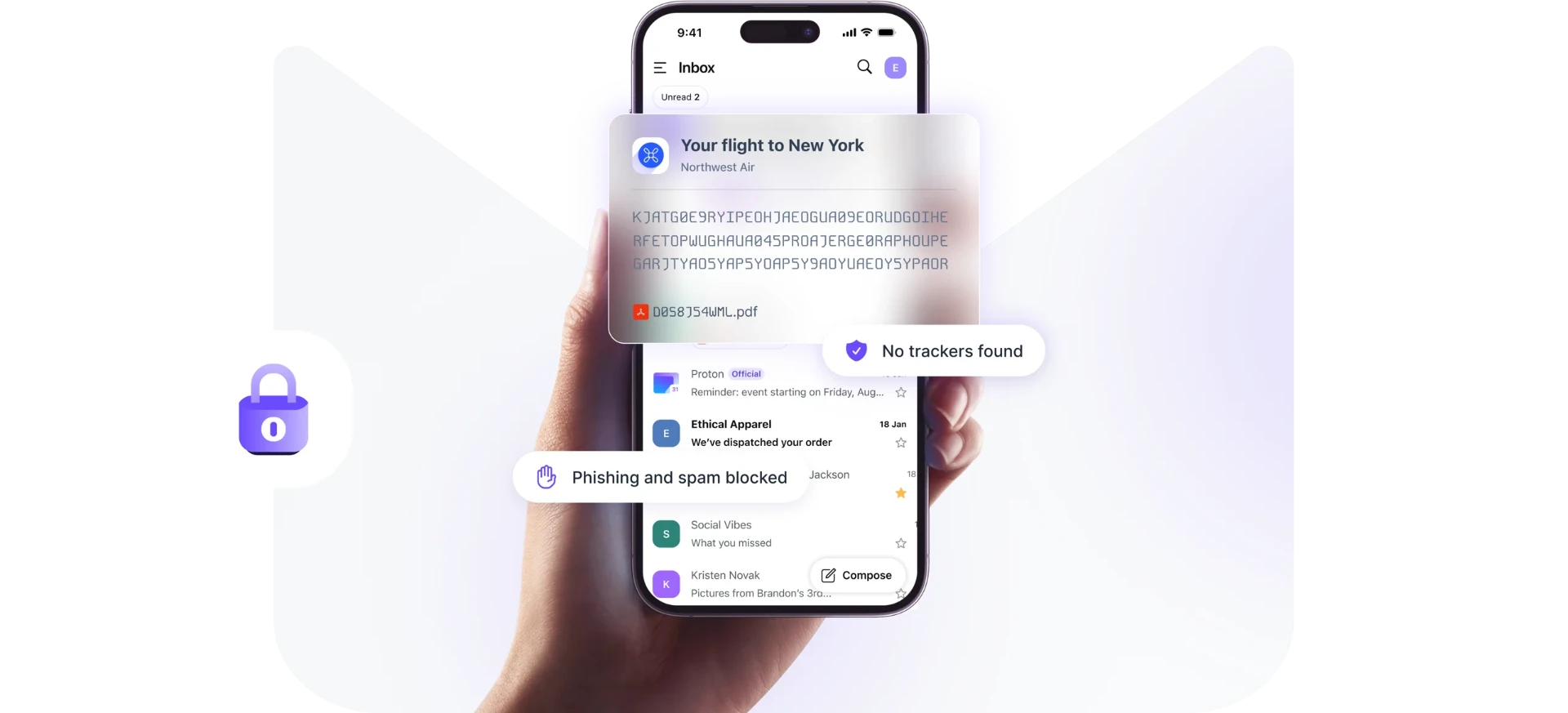
Not an ascetic tool
The usual fear about encrypted mail is that it will feel like a terminal. This one does not. The interface is clean and current, the web and mobile clients are the same product rather than an afterthought, and the calendar and drive sit under one account so the whole set is provisioned in a single signup. Expiring messages and password protected mail are the two features worth learning first: the first puts a timer on a message, the second lets you send to someone who does not use the service at all by giving them a password through another channel.
The free tier is genuinely usable: enough storage for ordinary correspondence, one custom domain on paid plans, aliases for the addresses you would rather not hand out. Signup does not require a phone number, which matters more than it sounds, because the phone number is usually the part that re-identifies an otherwise anonymous account.
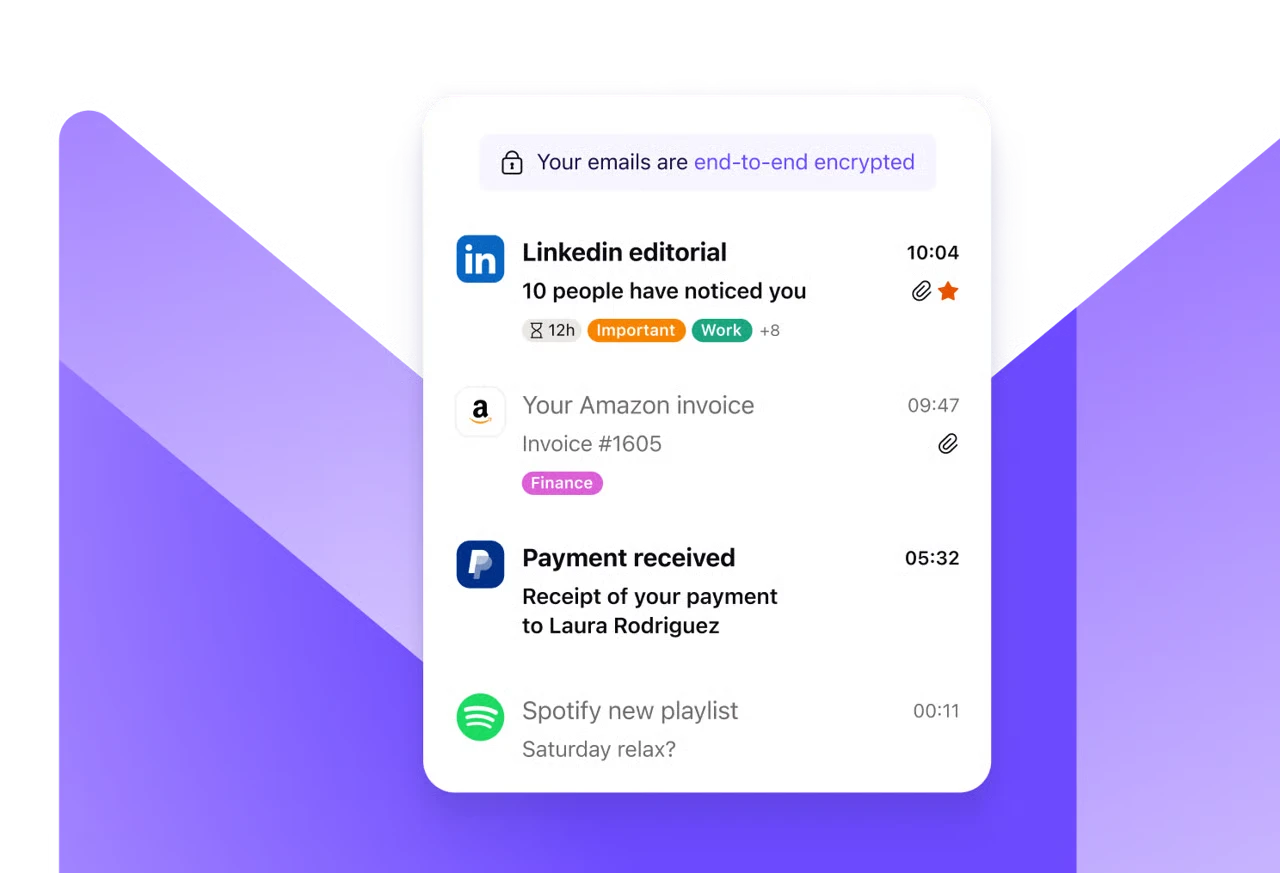
The position is simple and rigid: the letter belongs to the person who wrote it. In an era when privacy is sold back as a premium feature, someone is still making encryption the default.
Where the encryption stops
One honest caveat. End to end protection applies between users of the service. Mail sent to an ordinary address travels with transport encryption only, which protects the wire but not the inbox at the other end. The metadata, meaning who wrote to whom and when, is also visible to the server even when the body is not. None of this is a flaw unique to Proton, but a user who believes otherwise will make worse decisions than one who knows the boundary.
Recovery is the second caveat. If you lose the password and the recovery phrase, the mailbox is gone, because the operator cannot restore what it cannot read. That is the same property that makes the service worth using, seen from the other side. Store the phrase offline, on paper, somewhere you would keep a passport.
How to move across without pain
Start with the sensitive traffic rather than everything: contracts, identity documents, correspondence with a lawyer or an accountant. Keep the old address alive as a forwarder for a few months and tell the important contacts once, in plain language, that the address has changed. Set the two factor authentication on the new account before importing anything, and write the recovery phrase down the same day.
For paid use, the calculation is straightforward: if the mailbox is where your work arrives, the annual price is a fraction of a single hour of your time, and the calendar and storage come along. Try the free tier for a month with real mail before deciding, because a mailbox is judged on the tenth week, not the first day.