
Mumble puts the voice server back in your hands
Summary
With commercial voice services the rooms, the permissions and the data all sit in somebody else's account. Mumble takes the self hosted route: a small server runs Murmur, and a community or a squad has its own voice house with channels, permission tiers and user management under local control.
Recommend- Name
- Mumble
- Version
- 1.5.915
- Pricing
- Free
- Open source
- Open source
- Operating system
- WindowsmacOSLinuxAndroidiOS
- Website
- https://www.mumble.info/
- Updated
- 2026-10-06 20:49
A voice server you actually own
Commercial voice services are convenient in the same way a rented flat is convenient: everything works, and none of it is yours. The rooms belong to an account, the permissions are granted by a dashboard somebody else controls, and the conversation metadata sits on infrastructure you will never see. For a group of friends that is a fair trade. For a community that has been running for a decade, or a squad that treats voice as operational equipment, it eventually becomes an uncomfortable one. Mumble takes the other route. A small server runs Murmur, the server component, and a voice house exists.
What you get to decide is everything that matters. How many channels, whether they nest, who can move between them, which tier of permission each role holds, who is registered and who is a guest. The client connects to an address and starts talking, with an interface that is plain, unornamented and immediately responsive. The latency is low enough that it works as a real time command channel in a game, which is a stricter test than a meeting call because in a game the delay is felt as a tactical disadvantage.
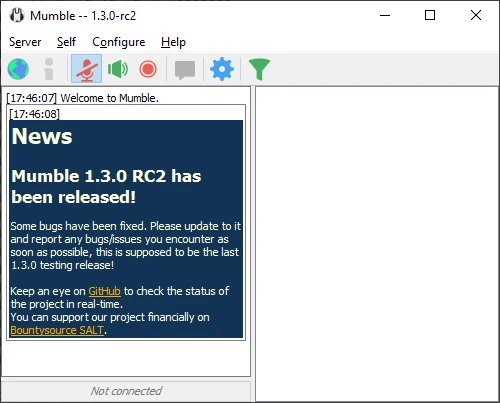
That combination is not an accident of design. It is the result of a project that has been maintained for many years in the same corner of the open source world, which is why the stability is not a claim but a track record. Software that survives a decade of hobbyist use, server migrations and operating system changes has usually earned the right to be trusted with something as ordinary and as important as voice.
Low latency and positional audio
The signature capability is spatial audio. In games that support it, a teammate's voice takes on direction as their position changes; someone on your left is heard in the left ear, someone behind you sounds behind you. It is easy to dismiss as a novelty until you use it in a match, at which point it stops being an effect and becomes tactical information you act on. Hearing which side a sound came from without looking is the difference between reacting and guessing.
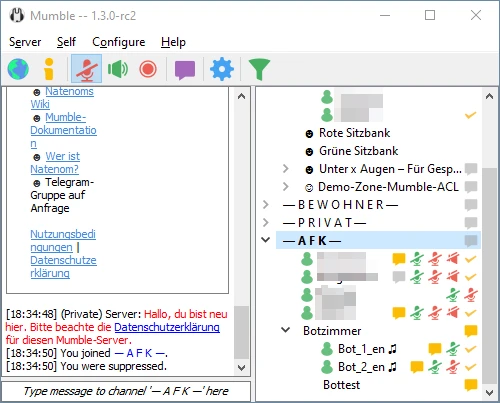
Encryption is on by default rather than offered as an upgrade, which is the correct default for a tool whose whole argument is that conversations belong to the people having them. Resource use is low enough that the server side runs on an old computer or a small single board machine without complaint, so the hardware for a community voice house can be something already sitting in a drawer. Clients exist for the three desktop systems plus Android and iOS, and they interoperate without ceremony.
There is an operational argument for owning the room that tends to arrive later than the philosophical one. When a group grows past a certain size, the free tier of a commercial service starts limiting the things that matter: how many people can speak at once, whether you can record, whether you can set per role permissions at all. The upgrade is not expensive in isolation, but it is a recurring bill for a capability you could host on hardware you already own. The break even point arrives faster than most groups expect.
The cost of that ownership is not zero either, and pretending otherwise would be dishonest. Somebody has to keep the server updated, watch the disk, renew the address, and answer when connectivity breaks at the worst moment. In practice that person exists in almost every community already. The difference is that the work now produces something the community owns rather than rent it.
The worldview is simple: voice is community infrastructure, and infrastructure should be held by the people who use it. Open source, encrypted, self hostable, all three together, and only then is a channel genuinely your own.
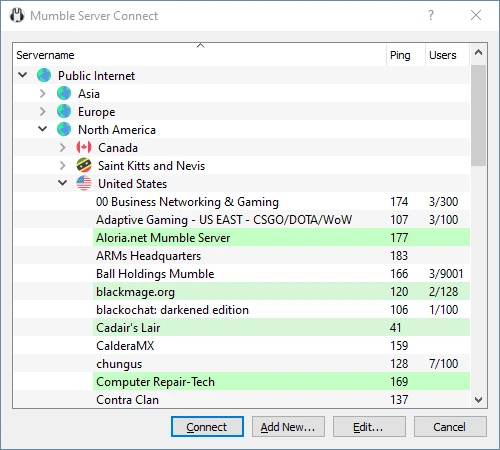
The positioning deserves the same plainness. There are none of the decorative features commercial services compete on, the interface is utilitarian rather than attractive, and running it requires a server and a little operational patience. What is exchanged for that is complete control and a latency figure that the alternatives do not seriously challenge.
For gaming squads, open source communities and circles of friends, a light server plus this client is a voice base that stays put for years rather than until the next pricing change. It is free on every platform, and the setup is an evening rather than a project.