
Calm: five hundred bedtime stories plus a one minute breathing exercise
Summary
Calm is a sleep, meditation and relaxation app whose library holds more than five hundred bedtime stories alongside soundscapes and guided sessions, with a breathing exercise that fits inside a minute; it runs on iOS, Android and the web.
Recommend- Name
- Calm
- Version
- 7.3
- Pricing
- Paid
- Open source
- Proprietary
- Operating system
- iOSAndroidWeb
- Website
- https://www.calm.com/
- Updated
- 2026-10-11 11:12
What makes people abandon a relaxation practice is rarely the content. It is the decision itself: which piece, how long, when to start. Each extra step keeps a person awake a little longer.
Pushing the entrance as shallow as it goes
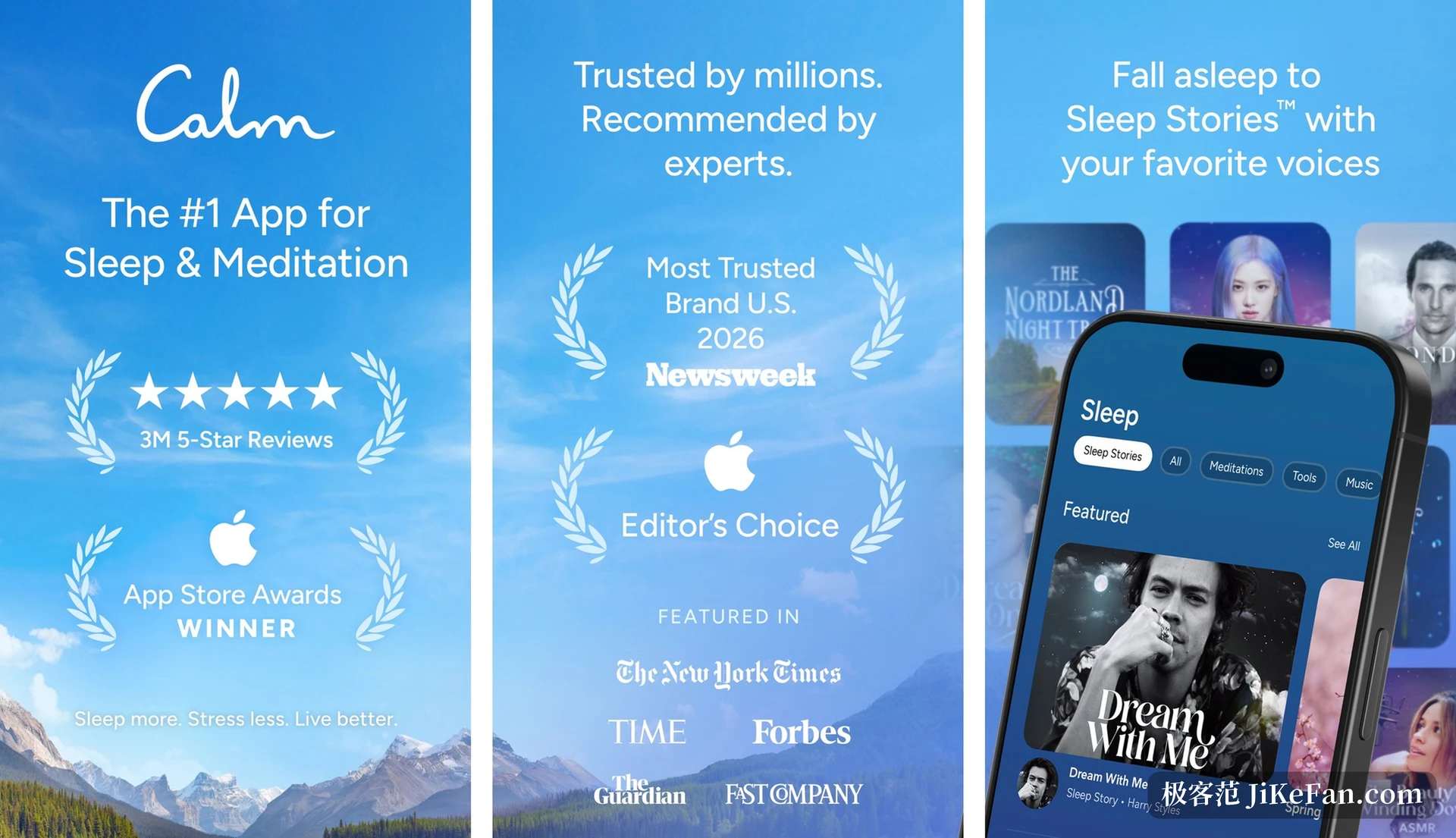
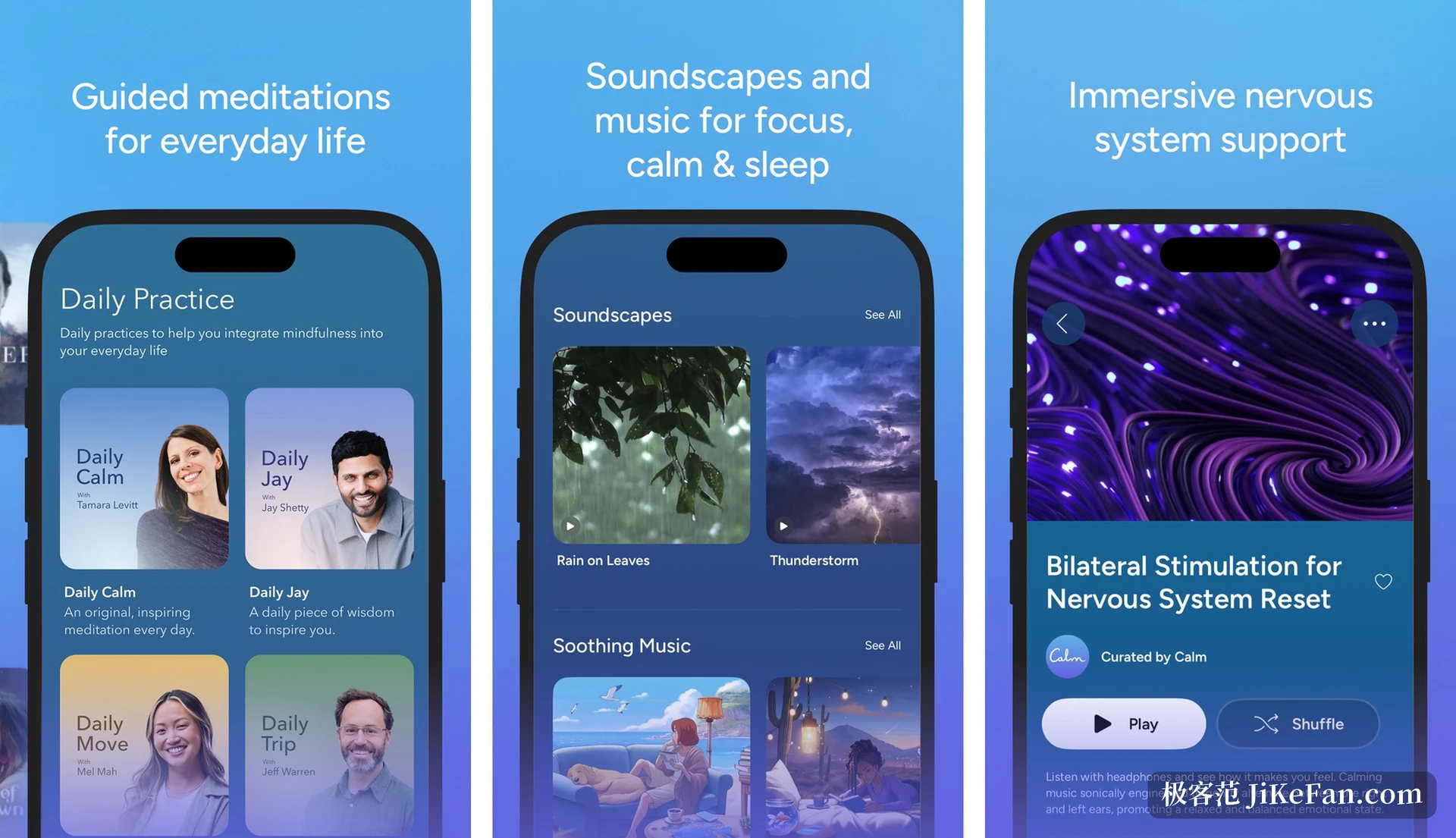
Calm is an app for sleep, meditation and relaxation, and the site calls itself the leading app in its category under a headline about calming the mind and changing your life. Content is not buried behind layers of menus; it is organised by what this moment needs. Cannot sleep, go to the bedtime stories. Chest tight, start with a breathing exercise. Want quiet, pick a soundscape or a guided session. The official library figure puts bedtime stories above five hundred, with a structured set of soundscapes and guided meditations split by purpose: stress relief, focus, working through emotion.
The lightest entrance in the whole chain is a breathing bubble. It turns one deep breath into a rhythm anyone can follow, counts a single minute, and asks for no selection and no full audio track: inhale and exhale along with the prompt on screen. For someone caught by a sudden low mood and unable to take in any narration, that compression of the action into something minimal often does more than the content itself. The official site files it under immediate relief, next to stories, soundscapes and guided meditation.
Scale, and how the library is organised
One layer up, the mass of content concentrates on sleep. Beyond the stories, soundscapes cover environmental sound such as rain, surf and a campfire, while guided meditations are cut by use: stress relief, focus, regulating emotion, some of them led end to end by what the site calls dedicated guidance for stress and burnout. Above the review section the site states more than two million five star ratings, and the comments that scroll past mostly land on sleep and stress, someone falling asleep quickly after playing something from the app, someone else unwinding to a soundscape after a long day.
All of it shares one subscription: the app downloads free and the complete library unlocks through an in app subscription. The three platforms share an account, so a session started on the web corresponds with records on mobile, and something heard on a computer can be picked up on a phone without searching for it again.
Situation | Entrance | Rough length |
|---|---|---|
Cannot fall asleep | Bedtime stories, soundscapes, guided sleep meditation | Tens of minutes |
Emotion suddenly tight | Breathing bubble | About one minute |
Work stress and burnout | Dedicated guided session | A few to a dozen minutes |
Daily habit | Guided meditation picked by theme | From a few minutes |
Where it belongs in a day
The real value of this kind of app shows up where the boundary of time goes soft: lying down with the mind still running, or finishing a long day without managing to let go. It does not solve the underlying problem, but it makes entering a resting state cheap enough that willpower is not required, and only then does it become repeatable. The product orientation confirms this: content made very large, entrance made very small.
Two things deserve thought, the cost of the subscription and the fit of the content. The free tier opens only a limited part of the library, with stories and the full set of soundscapes mostly behind the subscription, and response to relaxation content varies enormously between people, where the same sound works for one and does nothing for another. A safer route is to use the free portion to sample several styles, confirm that the habit will actually last, and decide about subscribing afterwards.
Turning relaxation into an action that can be performed at any moment, rather than one more task to schedule, may be the problem this category of app actually solves.
How to use it well: play the same piece at bedtime so the body learns that this sound means sleep; reach for the one minute breathing exercise during the day when emotion spikes, since it is easier to finish than hunting for a long track; and before subscribing, check whether the content you actually use falls inside the free range.