
Baidu Ernie Assistant: hand over the task, get the finished work, free for individuals
Summary
Three product lines were folded into one entry, the model underneath was replaced, and the task engine that used to be paid went free for individuals. The interesting part is not the rename but the end-to-end loop: gather, process, produce, deliver, with nobody taking over in the middle.
Recommend- Name
- Baidu Ernie Assistant
- Version
- 5.19.0.10
- Open source
- Proprietary
- Operating system
- WindowsmacOSAndroidiOSHarmonyOSWeb
- Website
- https://yiyan.baidu.com
- Updated
- 2026-10-27 22:00
The company gathered AI capability scattered across three product lines into one entry: the web version, the desktop client and the phone app now share the same assistant, the model underneath was replaced, and a task engine that used to be paid became free for individuals.
After the merger the old name went backstage
On 25 June 2026 the three web front doors were merged into one, after which a single address became the company's only AI service entry on the web. Users of the old page could export their history until 25 July, and other products under the account were unaffected.
The line has been redrawn several times. It was called a search companion at small-scale public testing in May 2023, then renamed twice more, and only in October 2025 settled on the current name. The app line travelled separately, from an earlier name to the present one in November 2025.

Underneath: a compressed model
The rename is the surface; the base decides the experience. The family published a native omni-modal formal release in January 2026, and the current iteration arrived on 9 May: it extracts the best sub-structures from the previous matrix of sub-models, compresses total parameters to roughly a third and activated parameters to roughly a half, and the published figure is that pretraining cost about six per cent of comparable models of the same scale. It also took first place domestically on an international search leaderboard the same day, at 1223 points. That arithmetic is what makes a lasting free allowance possible.
The real variable is the free task engine
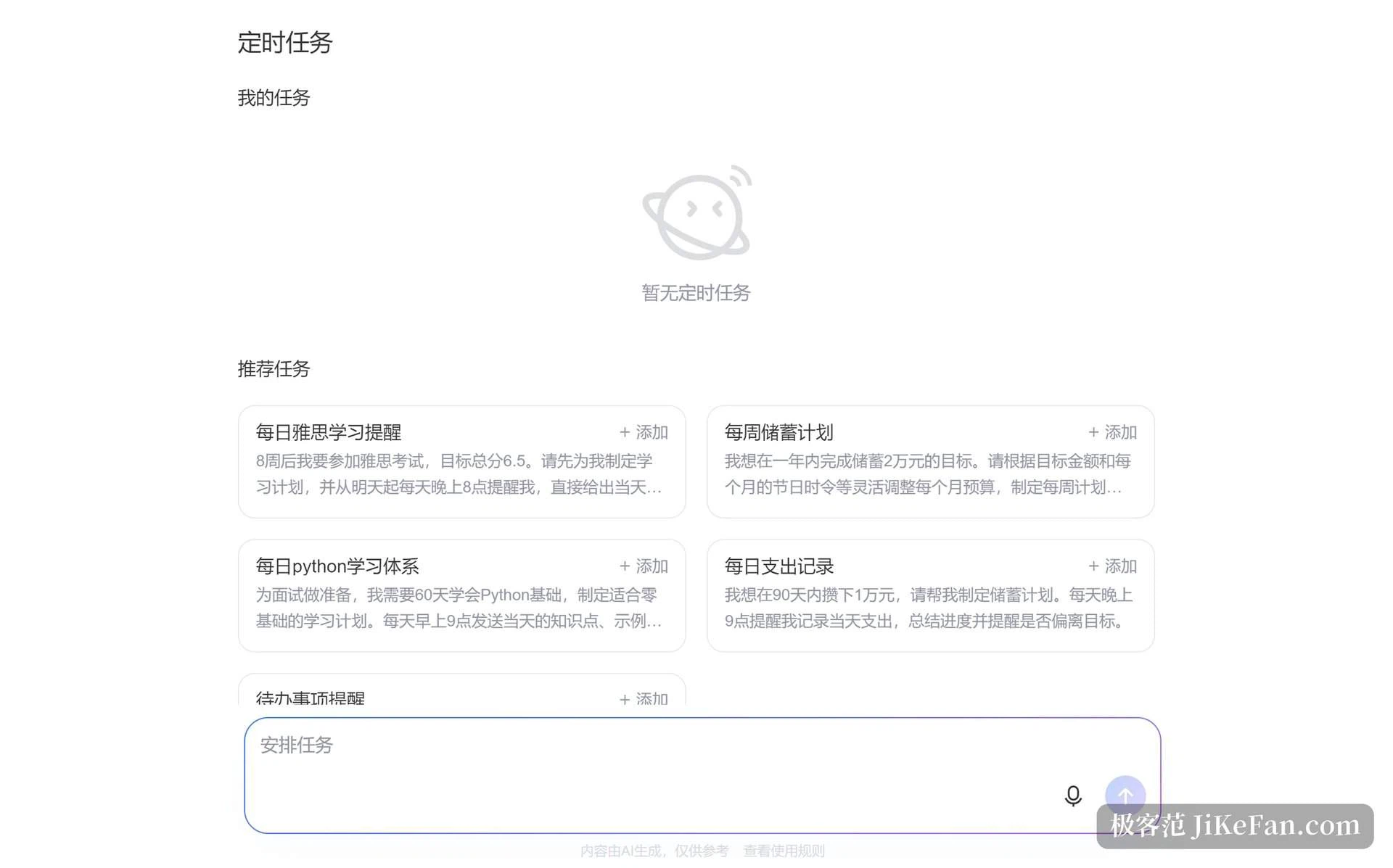
At the company's AI day on 20 August the task engine moved to a second version and was declared free for individuals. The execution logic is an end-to-end loop: gathering information, processing it, producing and expressing, delivering the finished item, with nobody taking over in between. Scheduled triggers and condition-triggered push notifications come with it.
What it attacks is the break in question-and-answer. Wanting a deck used to mean listing an outline, then writing the content, then doing the layout, one click for each step. The engine tries to string those into a single instruction. The published coverage is more than thirty industries, finance, education and office work among them, and over four hundred professional skills.
The number worth reading is the memory one
On 17 July 2026 the mission mode took first place on an agent leaderboard aimed at engineering tasks, with a composite success rate of about ninety-five per cent. A month later a domestic evaluation of task-oriented products gave it ninety-seven point six two and first place, with a full score on memory.
That last item is exactly where long processes break: still remembering, at step twelve, the constraint you gave at step three. Without that, handing the whole thing over does not hold together.
The desktop client exists, and there are impostors
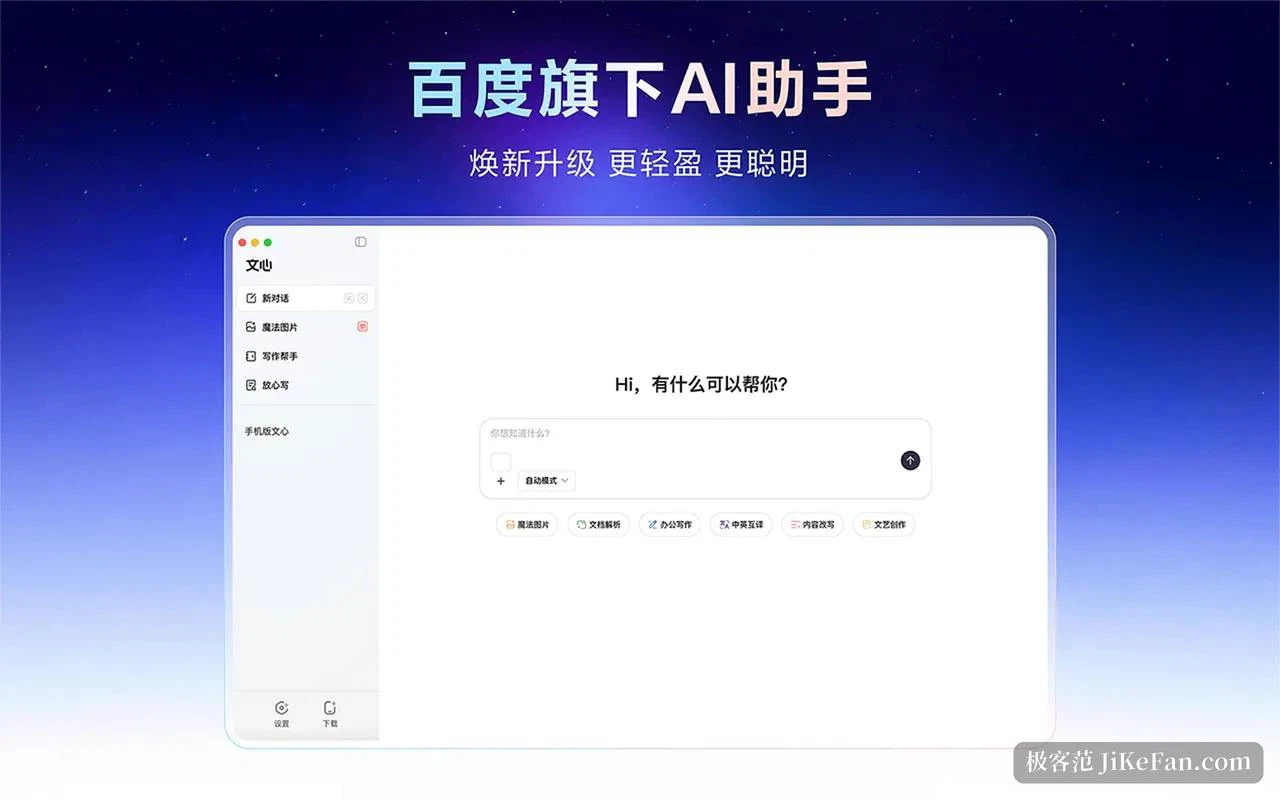
Searching for a desktop version turns up contradictory pages: some say there is a download button, some point at addresses that no longer exist, and some articles fill the checksum field with the word example. The real situation is that clients exist for Windows, macOS, Android, iOS, one domestic phone system and tablets, gathered under one app name, sharing an account system with the web version. The official store listing, as of 11 September 2026, names both desktop systems and the web alongside the mobile builds.

What it can take on now
The web version has filled in online editing of office documents, so presentations, spreadsheets and word processing files can be changed inside the conversation. Standing capabilities include text creation, image creation, AI reading and agent applications, plus narrower offerings such as a report for university application choices and a deck produced in one go.
Four groups are worth naming. Writing and revising: reports, work summaries, lesson plans and fiction can all be rewritten and polished, with fact checking finished in the same flow. Tables and presentations: give a topic and a deck comes out, with length and audience specifiable, and data can be turned into a table directly. Reading and looking up: multimodal search covers maps, medical questions, reference material and film, and takes voice, image and document as input. And a browser extension for the two main browsers that handles selection explanation, a side panel conversation and full-page summaries.
Free and paid are still separated, and output touching legal, medical or financial compliance has to be reviewed by a person.
What the product actually offers is a single door and a loop that closes. The model compression is what pays for the free allowance, and the memory score is what makes a single handover credible. The warning about impostor packages is worth repeating: the real clients come from official channels, and a search result is not one.