
AIMP at twenty: a local music player with a serious audio engine
Summary
AIMP reaches its twentieth year in 2026. A small team, a plain interface and a deep audio engine: equaliser presets that follow each output device, ReplayGain, BPM detection, cue sheets, bulk tag editing and a built-in converter. The stable 5.40 build still runs on Windows, and the next major version arrives with native Linux and ARM support.
Recommend- Name
- AIMP
- Version
- 5.40.2727
- Pricing
- Free
- Open source
- Proprietary
- Operating system
- WindowsAndroid
- Website
- https://www.aimp.ru/
- Updated
- 2026-10-06 20:48
A player that has been around for twenty years
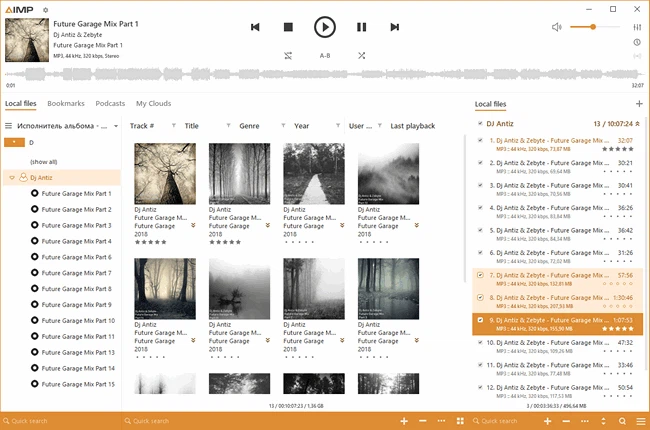
AIMP has been in development since 2006, which makes 2026 its twentieth year. The project is steered by a very small team rather than a company with a marketing department, and the priorities show it: a plain interface, very deep settings, and a memory footprint that stays modest even with a library of tens of thousands of tracks. In a field where most players have turned into streaming clients with local playback bolted on, this one is still a local player first.
The skin engine is the part long-time users mention first. Layouts can be rearranged, the window reshaped, colours swapped, and because the format is documented there are more designs around than anyone needs. None of that is required to play a file, which is exactly the point.
The sound engine is why people stay
A multi-band equaliser is built in, and every output device keeps its own preset. Laptop speakers, a USB interface and a pair of headphones each remember their own curve, so switching between them does not mean re-tuning from scratch every time. Fades can be applied at the start and end of a track, ReplayGain evens out loudness across an album assembled from different sources, and BPM detection fills in the tempo field that a lot of dance and electronic collections never had.
A set of effects sits next to the equaliser for anyone who wants them, from reverb to a simple compressor. The bundled converter reads and writes the common lossy and lossless formats and can pull audio off an audio CD, so a shelf of discs can become files without a second program.
The older details are all there. Cue sheets are read as one album with proper track boundaries instead of a single long file, internet radio streams can be stored as presets, and podcast feeds can be subscribed to inside the player. None of this is new, and that is the appeal: it has been working for years.
Library, tags and playlists
The library groups tracks in a tree by artist, album, genre or year, shows cover thumbnails, and supports smart playlists that re-run their filter whenever the library changes, so a list of everything added this month stays correct without any maintenance. Playlist editing supports undo, which means a wrong drag is not a disaster, and bookmarks can be sorted and kept per file, useful for long recordings and audiobooks where the position matters more than the track.
The tag editor is where the tool goes well beyond playback. Titles, artists, album names and track numbers can be rewritten across a whole selection, files renamed from their tags with a pattern, and BPM or ReplayGain recalculated on several threads. Macros chain those steps together, which is how a collection of a few thousand badly tagged files gets fixed in an evening instead of over a month.
Versions and a change of platform
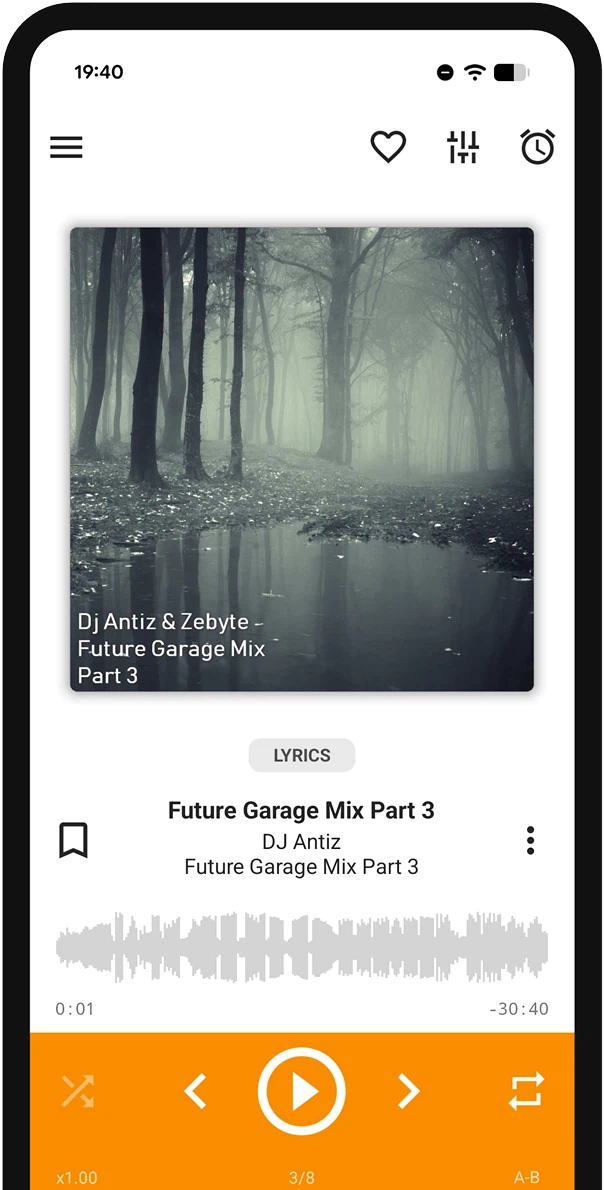
The current stable build is 5.40.2727, published on 8 September 2026, and it still runs on Windows Vista and anything newer than it. An Android version, numbered 4.31, is maintained in parallel, so the phone and the desktop do not drift apart.
The more interesting news is the public beta of the next major version. It is the first genuinely cross-platform build, and on Linux it runs natively rather than through a compatibility layer, which has been the standing complaint for years. It also runs on Windows 11 on ARM. A final release is expected before the end of the year.
If what you want is a local player that opens, plays, sounds good and does not sit in the background eating memory, twenty years of work is a reasonable guarantee. Anyone who has wanted it on Linux can try the beta now and move across once the stable build lands.