
Actual Budget: envelope budgeting that keeps the data at home
Summary
Budgeting built on envelopes: only money that has actually arrived can be assigned, and overspending means taking from another envelope. Data lives locally, syncing runs through a server you can host yourself, and the whole ledger stays encrypted on it.
Recommend- Name
- Actual Budget
- Version
- 26.9
- Pricing
- Free
- Open source
- Open source
- Operating system
- WindowsmacOSLinux
- Website
- https://actualbudget.com/
- Updated
- 2026-10-06 15:38
Envelopes, which means only spending money you already have
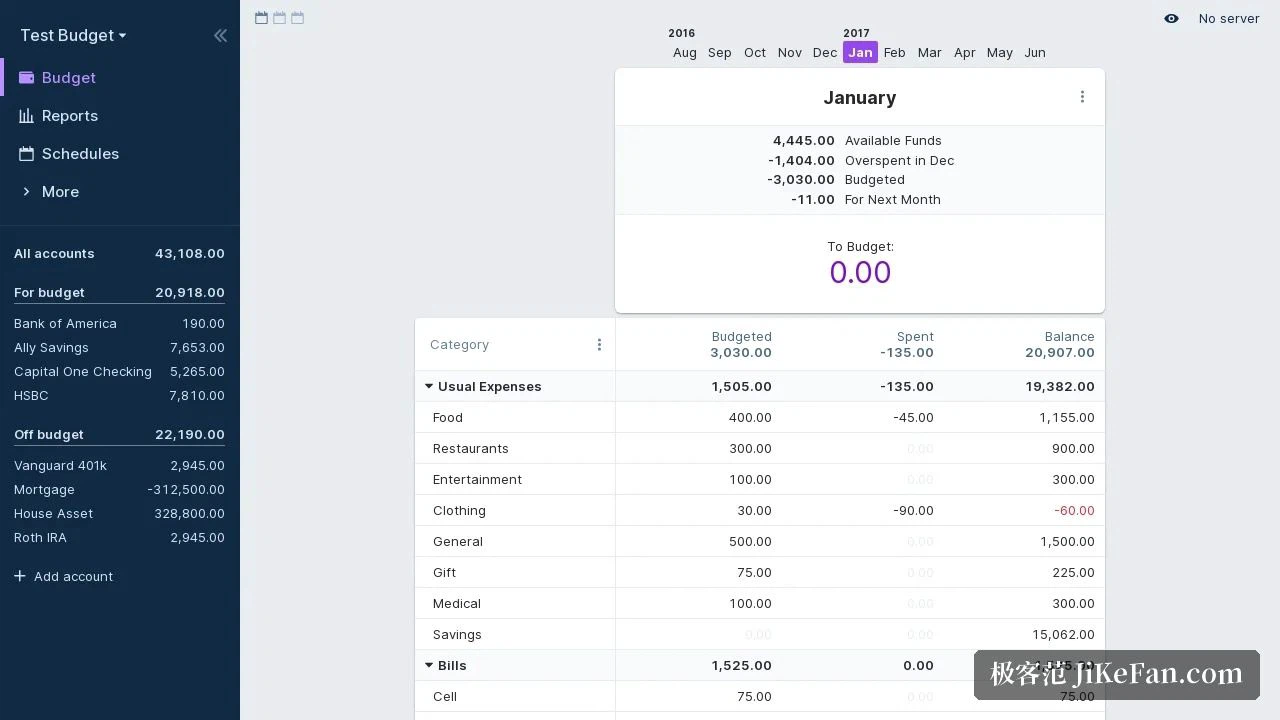
Plenty of tools will record what you spent. Fewer will stop you from planning with money that has not arrived yet. This one uses the old envelope method: the amount available this month is only what has actually been received, and it gets assigned to categories, one envelope each. Overspend in one and the money has to come out of another, which is exactly the conversation a household has when the arithmetic does not work. The vendor's own summary is blunt: it shows you how much you actually saved this month.
That is a different activity from keeping a log of transactions, and the difference is the reason people either take to it in a week or give up on it in three days. A log looks backwards and tells you what happened. A budget looks forwards and tells you what you may do. Both are useful, but only one of them changes what happens next, and the envelope method is the version that keeps the constraint visible instead of burying it in a total.
Local first, which here is not a slogan
Besides the web version, there are official desktop clients for the three main systems. The data lives on the machine, the application keeps working with no connection, and moving between devices is done through a sync server that you can run yourself. The code is open source under a permissive licence. For anyone uneasy about handing a complete financial history to a company, this arrangement removes the company from the middle rather than promising to be careful.
End to end encryption can be turned on, after which the ledger is stored on the server only in encrypted form. That combination is the one that matters: self hosting without encryption still leaves readable files on a machine, and encryption without self hosting still leaves you dependent on somebody else's uptime.
Getting your history in
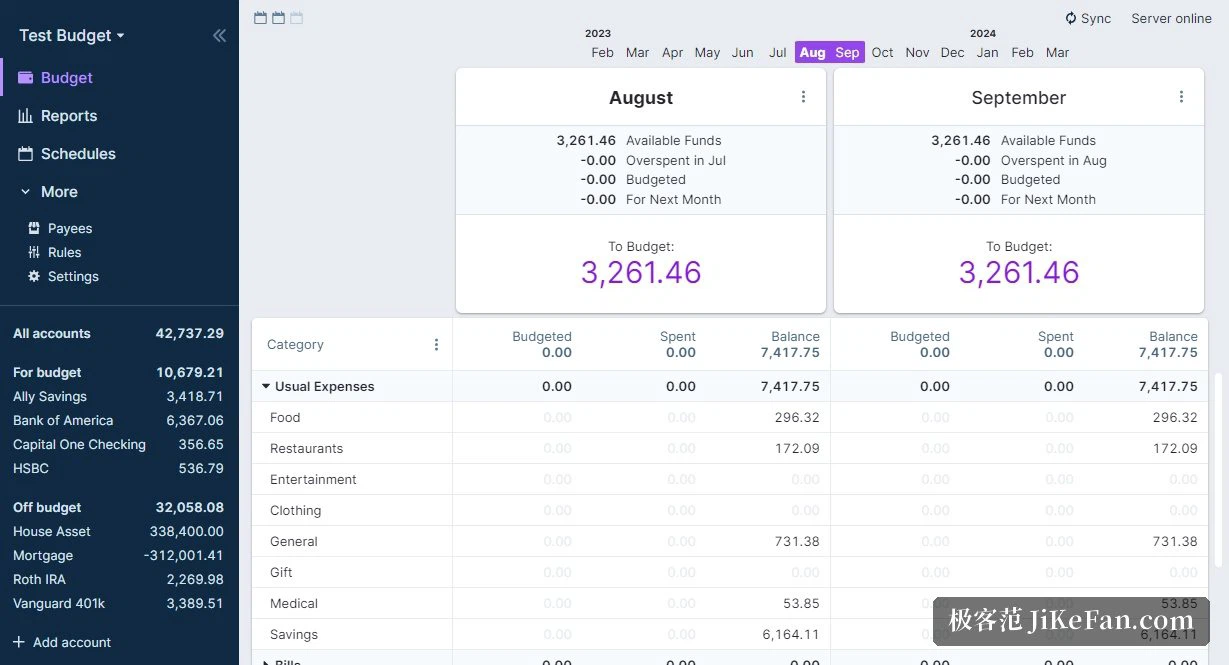
Migration is the part most tools handle badly and this one handles well. There are built in importers for both the old and the current format of a well known budgeting application, so an existing budget moves over with its history rather than starting from zero. Statement files in the common formats import directly, and transfers between two accounts are matched on both sides so an internal move does not appear as income and expense.
Reports start with net worth and cash flow, and a custom report engine sits on top for anyone who wants to build a different view. Automatic bank syncing exists but is aimed at banks in Europe and North America, through two open banking services; everyone else imports statement files, which is a few more steps and no less accurate.
Version, and the honest drawbacks
The project ships often. The current release is 26.9, which added column management to the transaction table and an in-app tutorial for new users, and the repository has passed twenty eight thousand stars. The command line tool became a stable feature a couple of releases ago, so the budget can be queried from a terminal by anyone who prefers that to a window.
Two drawbacks are worth stating plainly. There is no automatic syncing with banks outside the regions mentioned, so the statements are yours to fetch and import. And the envelope idea does not match the habit of jotting down what was spent, so the first week feels like learning a different question rather than a different interface.
It suits people who care where their data lives and will spend ten minutes understanding envelopes. Free, open source, self hostable, and the reputation is deserved. The cost is the manual import and a week of adjustment, which is a fair price for a budget that does not flatter you.