
Weblate 2026.11.1: batch replace takes regex, and translations travel between projects
Summary
Weblate 2026.11.1 folds every batch edit into one find and replace that accepts regular expressions and can clear a translation, adds a language tab to the workspace, and lets finished strings be reused across projects; self-hosting stays free.
Recommend- Name
- Weblate
- Version
- 2026.11.1
- Open source
- Open source
- Operating system
- WebLinuxDocker
- Website
- https://weblate.org
- Updated
- 2026-11-03 20:22
An open platform that joins the strings sitting in a code repository to the web editor a translator works in. Version 2026.11.1 reworks the two chores that eat the most handwork, batch editing and the reuse of finished translations.
Start with where it sits
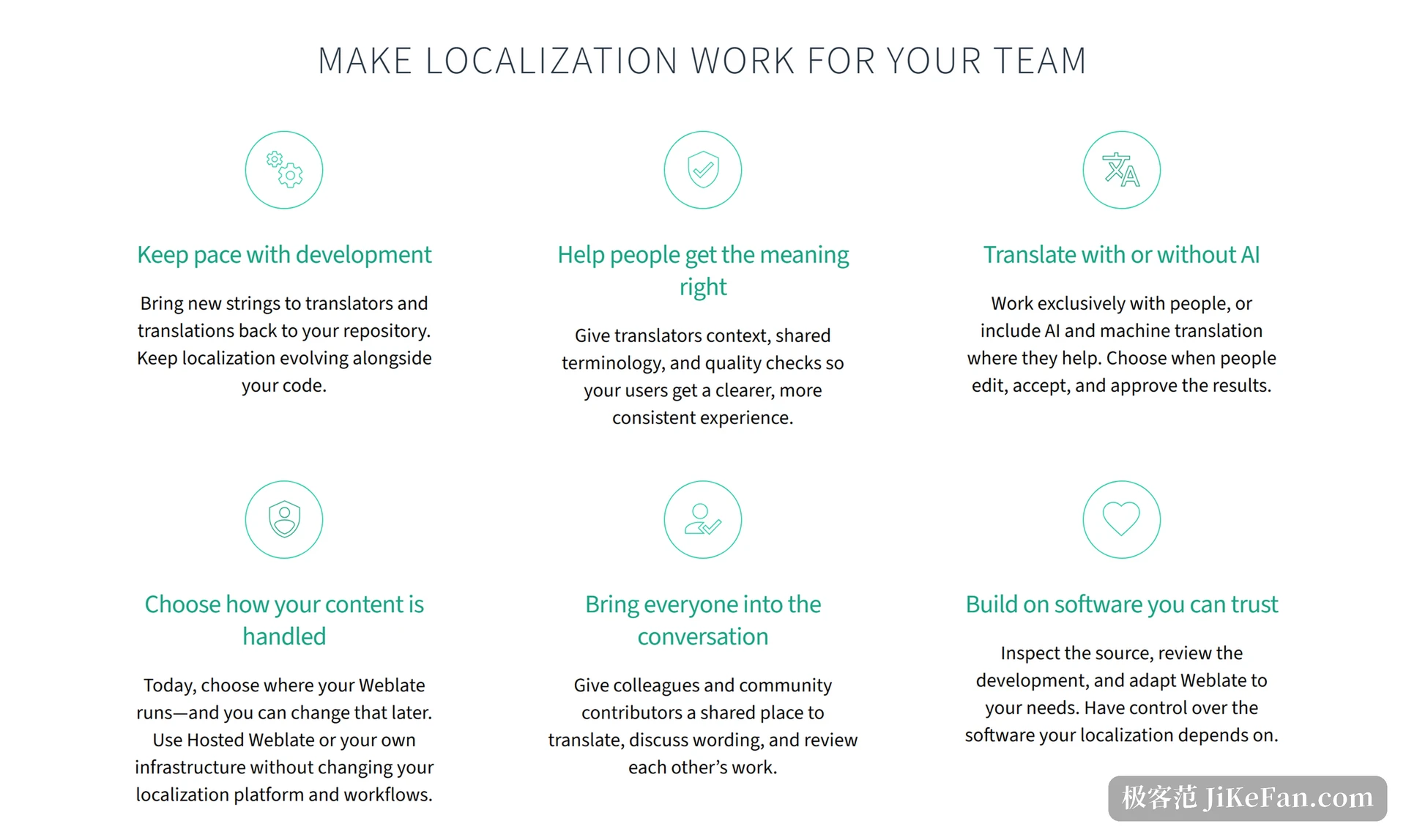
Weblate is an open localisation platform, and its work splits in two. One half hangs off the code repository: it pushes the strings that still need translating to the translators, and writes the finished files back into the repository. The other half is the web editor, where a translator reads context, checks terminology and submits, and where a reviewer goes over the same page.
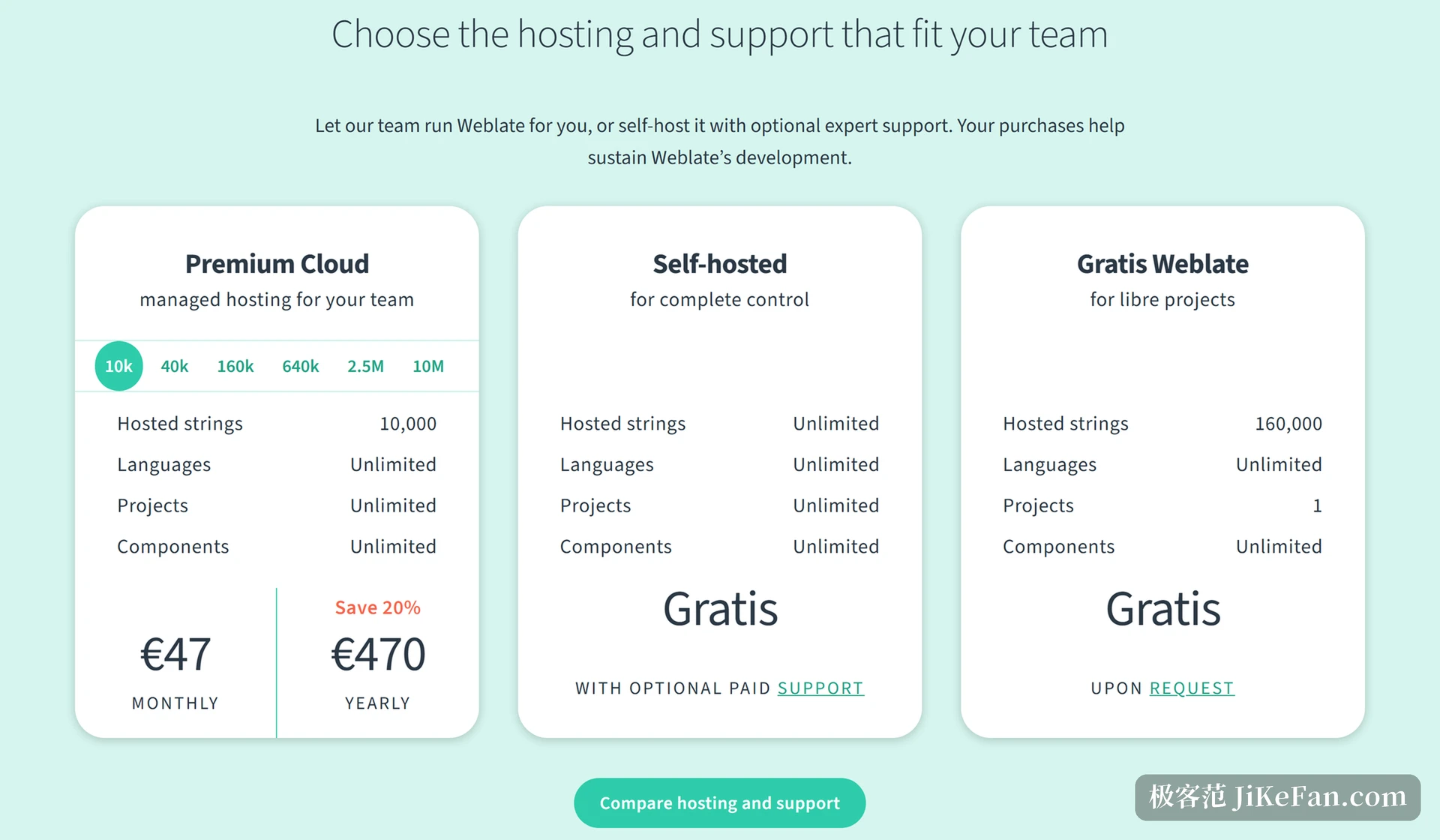
It runs in two ways. There is a hosted service, priced in tiers by the number of strings under management, with the smallest tier at 47 euros a month; or it can be self-hosted, which costs nothing by itself, with commercial support bought separately. Whose machine the content sits on is the user's decision, and the site states that plainly.
2026.11.1: batch editing moves behind one entry
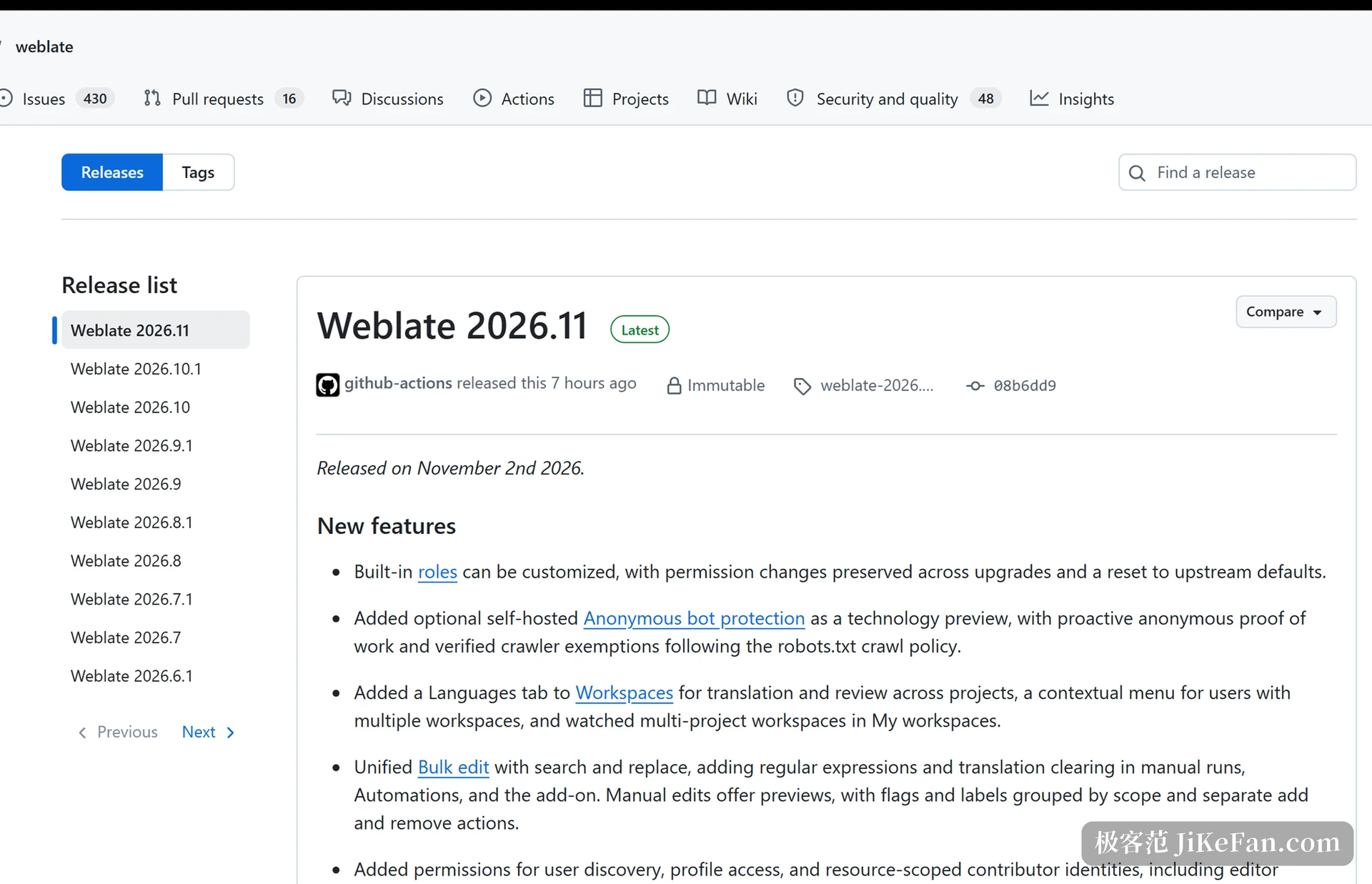
The release arrived on 2 November. The most practical item folds every batch edit into a single find and replace: runs started by hand, by Automations, or from a plugin now go through the same logic. The two additions aim straight at real pain, support for regular expressions and the ability to clear a translation.
Regex earns its place cleaning dirty data. Stray line breaks, leftover placeholders, a term spelled wrong everywhere: one rule sweeps them out. Clearing a translation covers the opposite case, where a batch of strings is invalidated wholesale and has to return to untranslated before the work starts again. A manual edit now shows a preview, so the entries that will change are visible before it runs; tags and labels are grouped by scope, and adding is separate from removing instead of one toggle doing both.
Workspace: a language tab, and translations that travel
The workspace gains a language tab. Reading progress by language used to mean opening projects one at a time; now the state of translation and review for one language can be read across projects in a single place. People who run several workspaces also get a context menu and a way to follow multi-project workspaces from the my-workspaces page.
The other change cuts deeper: workspaces now carry a propagation scope for translations. A finished sentence can be shared between projects, or between components that carry the same name. For a repository shaped as one main program plus a crowd of identical plugins, that saves the repetition of translating the same line a dozen times.
Roles and access control
Built-in roles can now be customised, the changes survive an upgrade, and one action restores the official defaults. This matters most to administrators of self-hosted instances: default roles rarely map cleanly onto the way a team divides its work, and the old choice was to compromise or to assemble a private permission set.
Identity gained switches too. User discovery, profile access and a contributor identity scoped to a resource can each be granted separately; OpenID Connect can serve as the identity provider, letting a Weblate account sign in to other applications. Docker deployments can now log in through OpenID Connect as well, pointing at the hosted service or at another self-hosted instance.
A few changes that are easy to miss
Protection against bots for anonymous visitors arrives as a technical preview. The idea is to add a proof of work to anonymous access while exempting verified crawlers according to the crawl policy in robots.txt, so what gets blocked is a flood of scripted requests, not ordinary search indexing.
Translation service configuration was rearranged. The official name changed from machine translation to translation service, several instances can be installed at site, workspace and project level, each with its own identifier, able to exclude inherited settings and to be paused at any time. The detail page shows the settings, the switches, the provider error log and the rate limit state.
Performance received plenty of small work: project backup and restore, string search, the database cost of syncing a repository and updates to the state of translation memory all got targeted fixes. Text recognition in screenshots moved to the background with cached results, so the editor no longer sits waiting.
Who it fits, who it does not
The barrier is not technical, it is procedural. If a project already keeps its copy in Git and has more than one language to maintain over years, Weblate hands translators an entrance that avoids the command line, with review, terminology and quality checks inside one screen. If the need is an occasional article and there is no repository to connect, the organisational cost will outweigh the return.
Free self-hosting is the decisive point for teams that cannot send data outside: translations, glossaries and screenshots stay on their own machine. The price is operations, upgrades, backups and object storage all land on the user. Those are two sides of one decision, and there is no free half.
Version 2026.11.1 tells no new story; it changes the buttons pressed every day. Batch replace accepts regular expressions, translations travel between projects, roles follow the shape of a team. For projects kept in several languages over years, work like that is worth more than a new feature.