
Wallpaper Engine: a desktop that moves, without eating the frame rate
Summary
A desktop that breathes: a huge community library of animated scenes, controls that pause everything when a game starts, and a one time purchase instead of a subscription.
Recommend- Name
- Wallpaper Engine
- Version
- 20260923
- Pricing
- Paid
- Open source
- Proprietary
- Operating system
- WindowsAndroid
- Website
- https://www.wallpaperengine.io/
- Updated
- 2026-10-08 21:11
A desktop that stops being a photograph
A still image is fine until it has been on screen for a year. Wallpaper Engine turns the desktop into a scene that keeps moving: snow drifting through a city at night, a looping animation, a three dimensional object that responds to the cursor, or a small web page of your own construction. The library comes from the community rather than from a studio, which is why the range runs from restrained to ridiculous and why a person can change the wallpaper every day for years without repeating one.
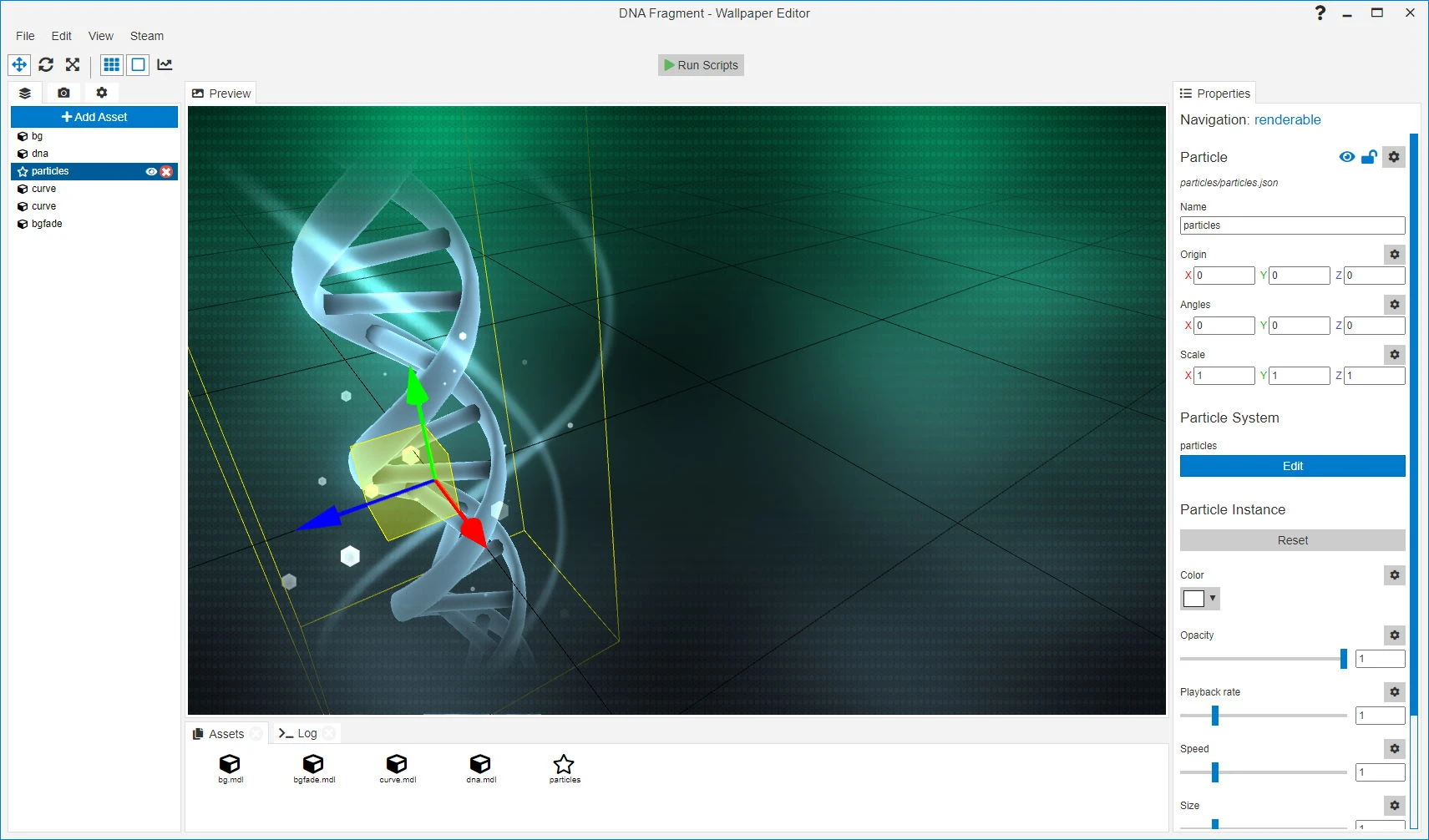
What the purchase buys is not a subscription to that library. It is a one time payment for the program and access to everything published through it, including the editor that lets you build a scene and publish it yourself. Nobody is counting months.
Beauty without a performance bill
The obvious worry is cost, and this is where the design deserves credit. Playback pauses automatically when a game takes the screen, so the frame rate belongs to the game while the game is running. Frame rate limits, quality levels and behaviour on battery are configurable per wallpaper rather than globally, which means a heavy scene can live on the second monitor while the first one stays cheap. Machines with modest hardware have low load options and a pause on fullscreen applications.
Recent versions have kept adding rather than standing still: high dynamic range video wallpapers, generated three dimensional scenes, and better handling of multiple displays with different resolutions and refresh rates. A mobile companion can carry the same scene to a phone, so the desk and the pocket do not look like two different people chose them.
Community as a content engine
The workshop model solves the hardest problem in this category, which is not rendering but supply. A team of any size cannot produce enough scenes to keep a desktop interesting; a community of millions can. Ratings, tags and collections do the curating, and the result is that finding something good takes a few minutes rather than a search through wallpaper sites full of advertising.
Resolution is the one detail that trips people up. A scene built for a wide screen looks soft on a taller panel, and a scene built at a modest resolution looks like a mistake on a large display. The workshop labels resolution and aspect ratio on most entries, and filtering by them before downloading saves more time than any amount of tuning afterwards. Sound is the other surprise: some scenes carry audio, which is charming once and irritating by the third hour.
There are caveats worth stating. Some scenes are heavy, and a laptop on battery will notice. Some are in poor taste, and the workshop is not a curated gallery. The program itself is well behaved, but a scene that runs a small web application in the background is still a small web application running in the background, and it deserves the same suspicion as any other.
The formula behind the product is simple: the community supplies the content, the pause on game launch absorbs the worry about performance, and the user is left with one decision, which scene matches today.
How to get the most out of it
Start from wallpapers tagged as light on resources, and switch on the automatic pause before the first game session rather than after the first complaint about stutter. Building a scene yourself is easiest from a video clip: trim it, loop it, and the editor handles the rest. On a multi monitor setup, set each screen separately, because one elaborate centrepiece next to two calm surfaces reads better than three competing ones.
The desktop is the surface a person looks at longer than any other, and it is worth one good decision rather than a default inherited from the operating system.