
Vic Diary: A Markdown Diary That Keeps the Entries on Your Own Machine
Summary
Vic Diary is a cross-platform Markdown journal that stores an AES-encrypted local file, works offline, and adds full-text search, plain-file export and simple writing statistics to the basic act of keeping a diary.
Recommend- Name
- Vic Diary
- Version
- 20250623
- Pricing
- Free
- Open source
- Open source
- Website
- https://vic-diary.netlify.app/
- Updated
- 2026-10-06 16:15
Local-first is not a slogan, it is a set of trade-offs
Vic Diary is a Markdown journal for Windows, macOS and Linux whose defining decision is where the text lives: in an encrypted file on the machine in front of you, not on a server belonging to someone else. That choice is worth taking seriously rather than treating as a feature bullet, because it determines almost everything else about the program. There is no account, no synchronisation, no plan tier and nothing to be discontinued. There is also no recovery, and no way to read yesterday's entry from a different device unless you move the file yourself. A program that makes the first list short makes the second list longer, and a person choosing it is choosing which list they would rather have.
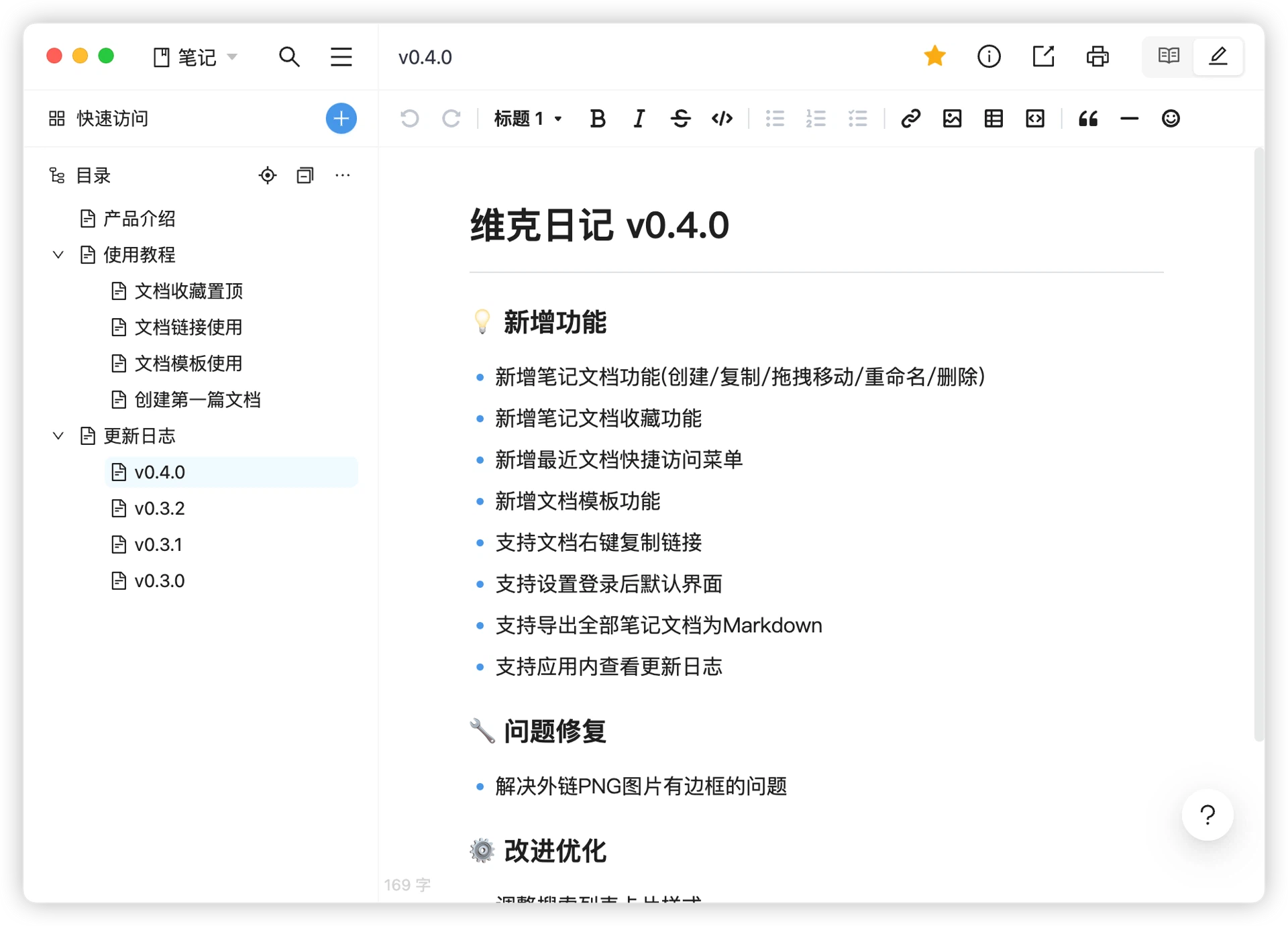
What the arrangement buys is a different kind of durability. A journal is the sort of writing whose value is realised years later, which means the format matters more than the features. A file of plain text with Markdown markers can be opened by an editor written tomorrow, by a text search tool, by a script that produces a book. A proprietary database inside an application directory cannot, and the day the application stops being maintained is the day the difference becomes visible.
What a password actually protects
The content is encrypted with AES and gated by a password, and the honest way to describe that is to separate two threats it addresses unequally. It protects very well against the person who picks up the laptop, or who copies the folder: without the password the file is noise. It protects less well against an attacker who is already running code on the machine while the diary is unlocked, because at that moment the text is in memory and on screen. No consumer application can fix that second case, and one that claims to is describing marketing rather than cryptography.
Encryption also creates the one obligation that users of encrypted software most often skip. If the password is lost, the content is lost, because there is no service holding a reset. That is the point rather than a flaw, but it moves a responsibility onto the person using the program: the backup has to be a backup of the encrypted file and the memory of the password, and those two things must not be stored in the same place. A diary kept for ten years is a long time to be right about that.
Markdown with a live preview is the right compromise
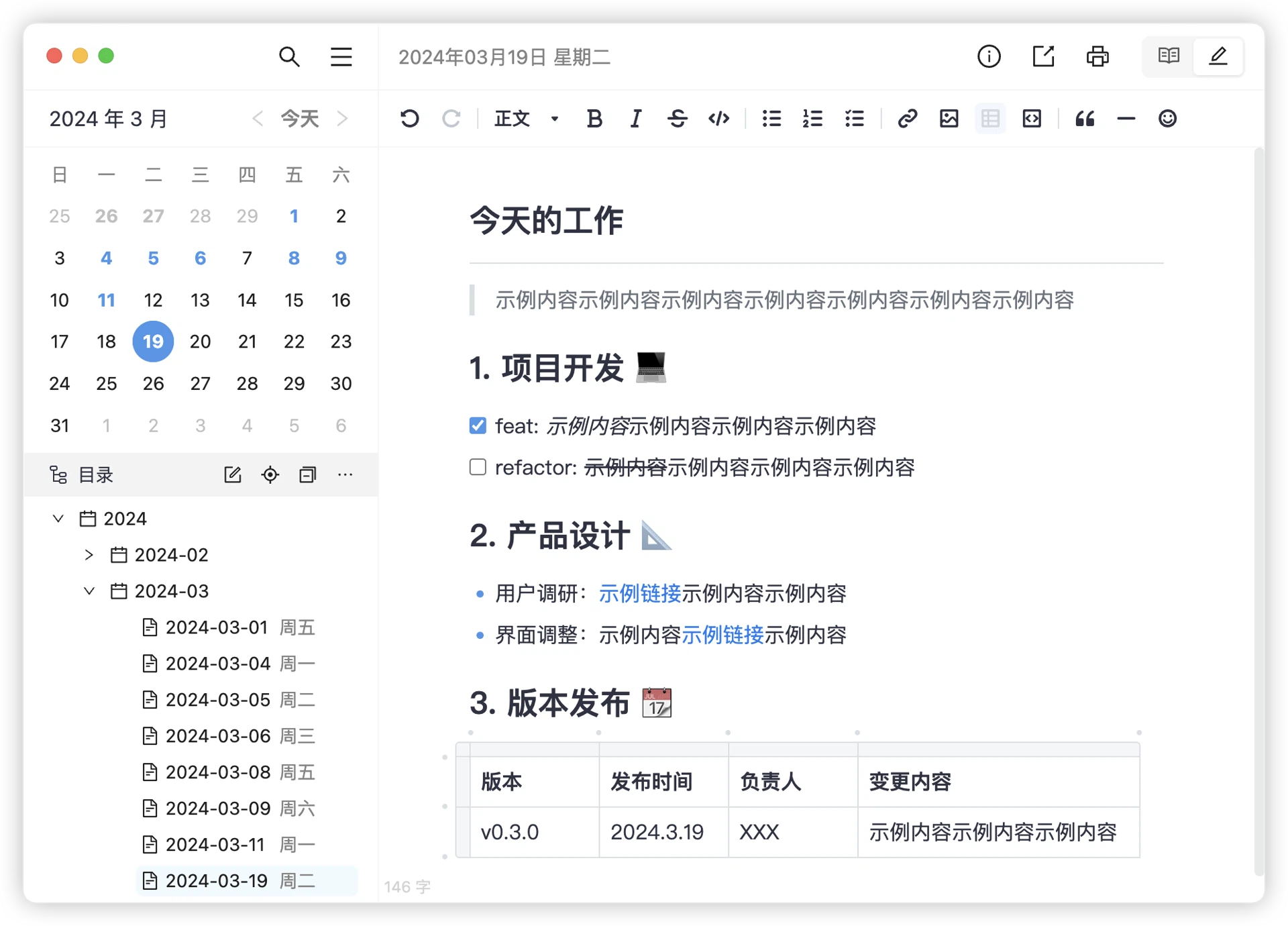
Writing in Markdown means the source stays readable without the program: a heading looks like a heading because of a hash, not because of hidden metadata. The cost is that raw Markdown is not pleasant to read for long, which is why the preview matters. A preview rendered as you type closes the gap between the format's durability and its readability, and it is the specific combination that makes a plain-text diary tolerable for daily use rather than an act of discipline.
One entry per day, created automatically from the date, is the other half of that decision. A journal that asks where to put each new note is a journal that will not be written on a tired evening. The structure is imposed so that the writing does not have to start with a decision about structure, and the date is the one piece of metadata that is always known in advance.
The two functions a diary actually uses
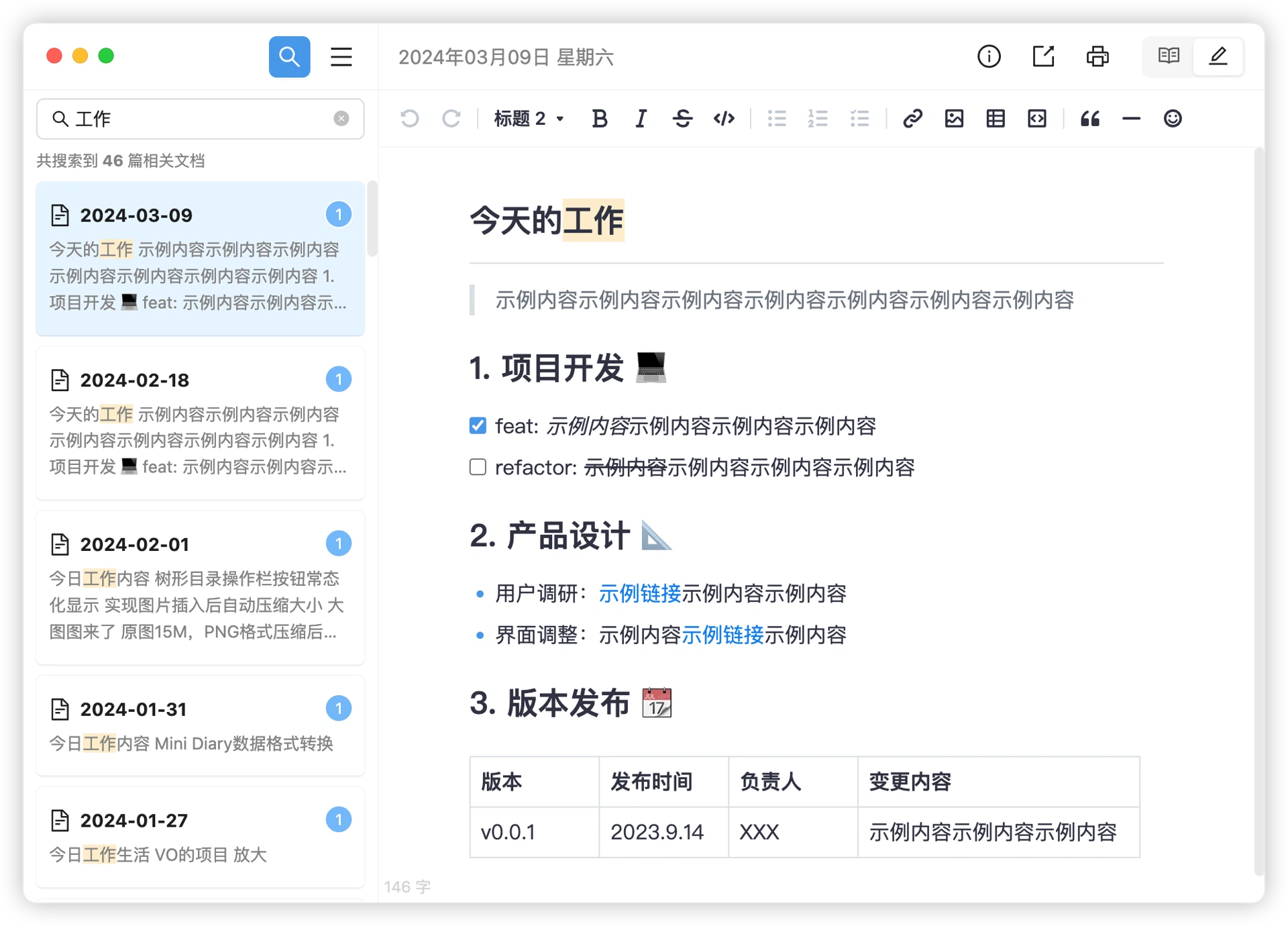
Full-text search, with a count of how often a term appears, is the function that turns years of entries from an archive into something answerable. The count is a small detail with a large effect: it distinguishes the day something was mentioned once from the period when it was mentioned constantly, and that difference is usually the thing one was trying to remember. Writing statistics do something similar from the other direction, by showing the shape of the habit rather than its content — which months were productive, which gap corresponds to a move or an illness. Neither feature is clever; both are the kind of thing that only becomes valuable after the second year.
Export is the escape hatch, and it should be treated as one
Entries can leave as a word-processing file, as a PDF, as an image, as plain text, and the whole collection can be exported in Markdown at once. The batch export is the important one, because it is the promise that the archive is not trapped. A single-entry export to a polished format is for showing something to someone; the bulk plain-text export is for surviving the day the program is no longer around. Programs that offer the first and not the second are asking to be trusted on the strength of a screenshot.
The interface, and the absence of advertising
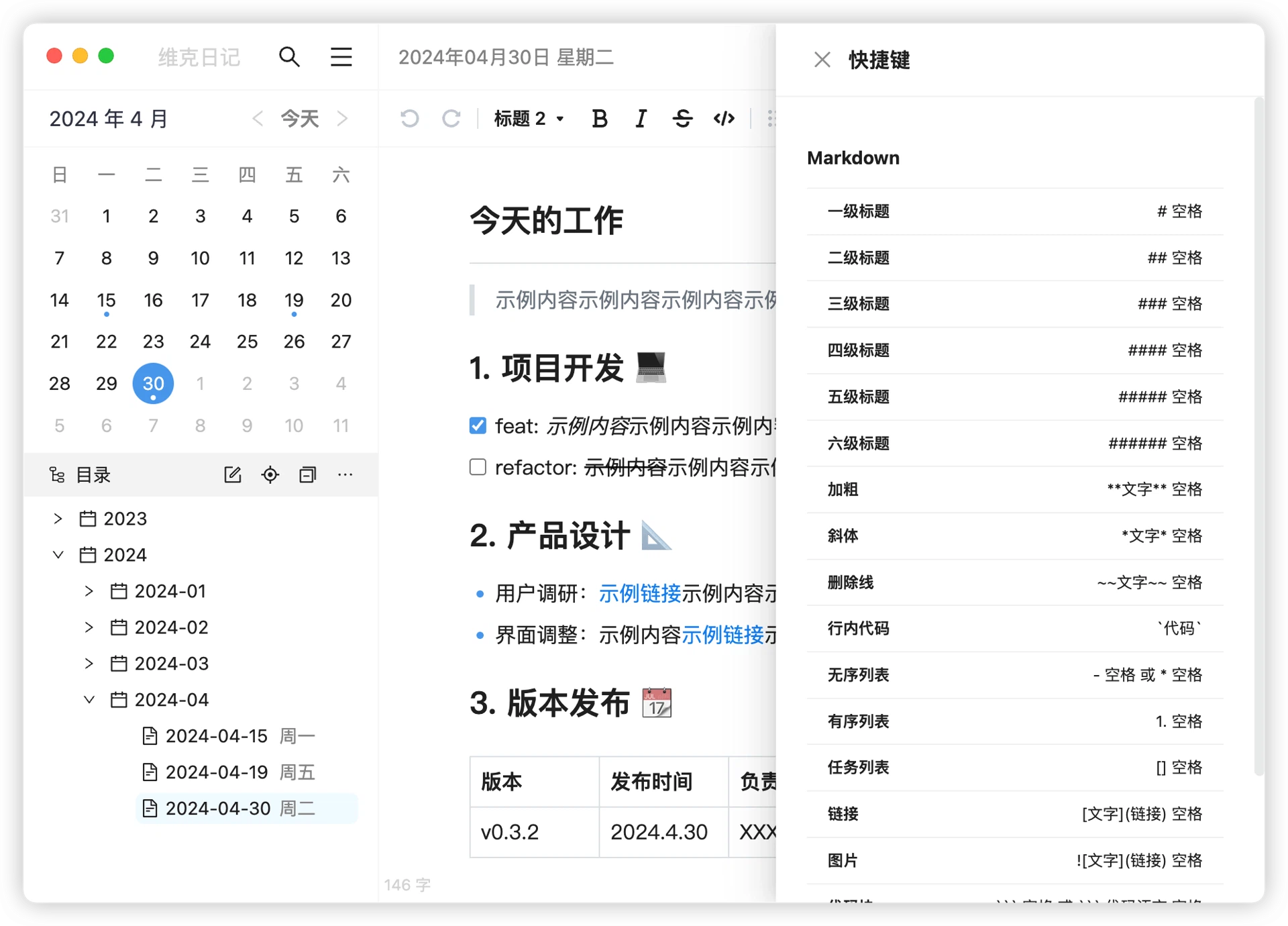
Several colour themes, including a dark one, and no advertising: both sound like small claims and both matter for the specific use. A diary is read and written at night more often than most software, which makes a dark theme a functional requirement rather than a preference, and a writing surface that is trying to sell something is a writing surface one stops opening. The interface is deliberately sparse, and sparseness is a feature in the same sense that a quiet room is.
The roadmap contains a contradiction worth noticing
Cloud sync, multiple languages and blog publishing are listed as future directions, and the first of those sits in tension with everything above it. Local-first and synchronised are not the same promise, and the versions of sync that keep the promise — end-to-end encrypted transport of an encrypted file — are considerably harder to build than the versions that do not. That is not a criticism of a roadmap; it is the reason to read one carefully. A product whose current value is that nothing leaves the machine should be judged on how it describes the feature that would change that.
Who it is for
For someone who has tried a cloud notebook and found the monthly fee, the account and the sync conflicts to be more than the writing was worth. For someone who writes in plain text already and wants the preview and the search without assembling them from three tools. For a person whose journal contains things they would not put in a document shared with a service provider. And for anyone who has watched a note-taking application shut down and has since preferred formats that outlive their readers. The program is small, and its smallness is the argument: it does four things and does not pretend the other thirty are coming.