
Ulysses: a writing environment built for the Apple side of the desk
Version 40.4
Summary
Ulysses keeps every draft in one library, cuts long work into sheets, tracks goals and output, syncs through the system cloud and exports or publishes when the piece is done.
Recommend- Name
- Ulysses
- Version
- 40.4
- Pricing
- Paid
- Open source
- Proprietary
- Operating system
- macOS
- Website
- https://ulysses.app
- Updated
- 2026-10-06 09:33
When long-form writing happens inside the Apple ecosystem, whether the material is a column, a novel or a draft for a publication, this is the application that tends to end up on the shortlist. The first version dates from 2003, it has taken a design award from Apple, and the same experience is offered on a Mac, an iPhone and an iPad without any of the three feeling like a reduced copy. Writing is Markdown-native and the interface is deliberately spare, on the belief that the author attention belongs on the sentences rather than on the furniture arranged around them. That restraint is not decoration; it is the product argument.
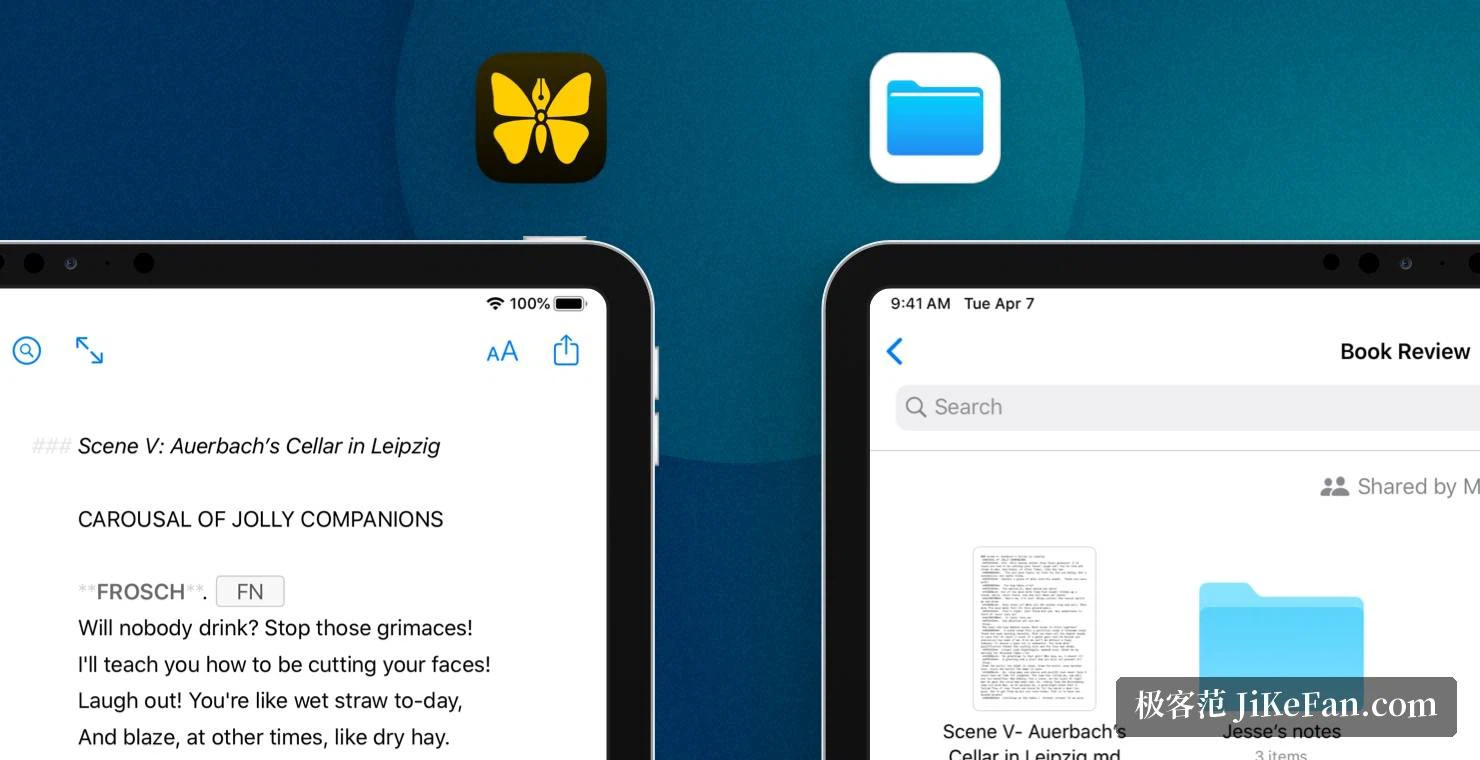
One library, and everything in it
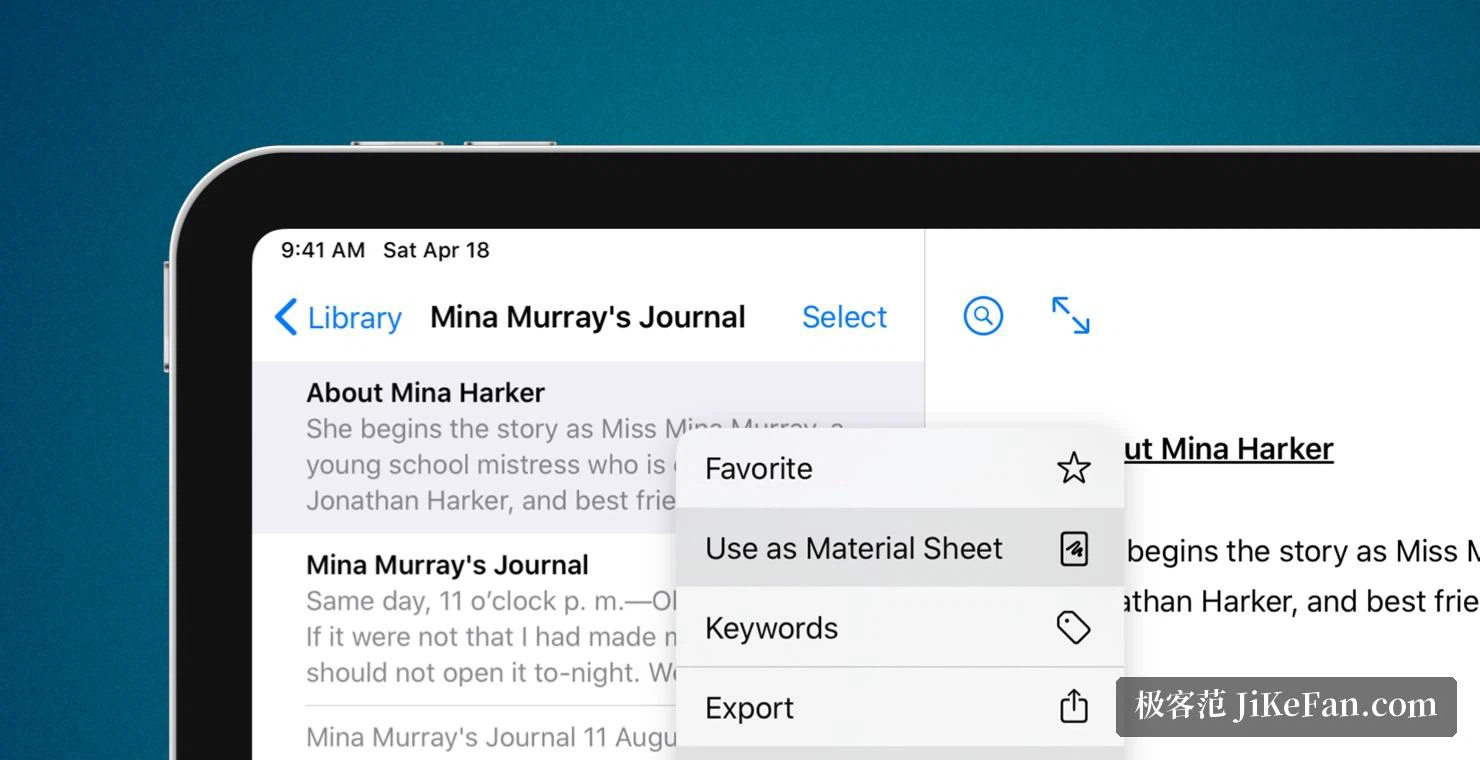
What defines the application most is the single library. Every document lives inside one hierarchy, and the tools for sorting it are groups, tags, keywords and filters, so a chapter of a novel, a short essay and a draft for a blog post can each sit where they belong instead of in a folder someone forgot about. Documents are cut into sheets, and a long piece can be broken into sections, dragged into a new order and merged again at export. That is what stops a book-length project from collapsing into one unwieldy file that nobody dares open for fear of disturbing the structure. Restructuring becomes a matter of moving a block, not of cutting and pasting with crossed fingers.
Goals, statistics and a quiet mode
For anyone who has to produce steadily rather than in bursts, targets and counters are built in. A word target can be attached to a piece and watched as a progress bar while the writing happens, and the time spent, the daily average and the shape of the last weeks are recorded. That is the difference between intending to write and knowing whether one actually did, and over a few months it is the difference between a habit and a hope. A focus mode strips away whatever is left on screen. The editor renders Markdown well enough that typing feels pleasant. A check flags redundant wording and turns of phrase that read as spoken rather than written, so the tidying before a deadline becomes a pass over marked items instead of another read from the top.
Sync that behaves like one machine
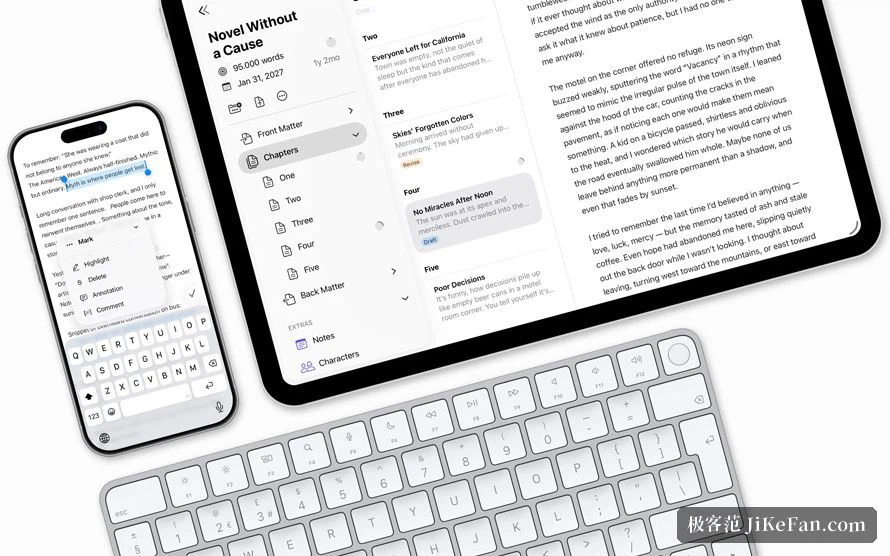
A draft started on the Mac can be continued on the phone during a commute and polished on the tablet at home. The entire library is synchronised through the system cloud service, continuously and without intervention: no exporting a file and mailing it to oneself, no third-party drive sitting in the middle of the arrangement. On a document that has been worked on across three devices in a single day, that absence of friction is the whole feature, and it is the part users stop noticing first, which is exactly the sign that it works.
From finished draft to published piece
Finishing is only the first half. A document exports to Word, PDF, ePub or HTML, with the styling customisable so the result matches whatever the recipient expects, and if a blog is being run the piece can go straight out to a mainstream publishing platform, with a preview of the final appearance before anything goes live. One application therefore covers the route from the first sentence to the published page, which for a writer who does not want to become a typesetter is a considerable saving of attention.
The subscription
As of 2026-09 the application is sold by subscription, and the current version stands at 40.4. One subscription covers the Mac, the iPhone and the iPad together rather than charging for each device in turn, and a free trial comes before any payment, so the decision can be made on evidence rather than on a description. For someone who writes as a matter of routine, the case rests on three things that are hard to assemble elsewhere: a single library that holds everything, synchronisation reliable enough to be forgotten, and a publishing path that does not require a second tool.