
Tickmate reduces habit tracking to one tap a day
Summary
Most habit apps pile on tasks, points, levels and leaderboards, and the longer the feature list the more effort it takes to keep going. Tickmate goes the other way: one habit, one cell per day, tap it if you did the thing. Streaks, weekday distribution and a histogram come along, the data stays on the phone, and no account is involved.
Recommend- Name
- Tickmate
- Version
- 1.4.15
- Pricing
- Free
- Open source
- Open source
- Operating system
- Android
- Updated
- 2026-10-06 20:34
Squeezing a habit down to a single tap
The usual pattern in habit apps is a tower. Tasks arrive first, then points, then levels, then a social leaderboard, and every addition raises the price of showing up tomorrow. Tickmate takes the opposite position. It calls itself a one bit journal, which is exactly what it is: each habit owns one cell per day. Did the thing, tap it. Did not, leave it empty. There is no text to type, no note field asking for context, no category wizard. Open the app, press the button, leave. Three seconds, and the day is recorded.
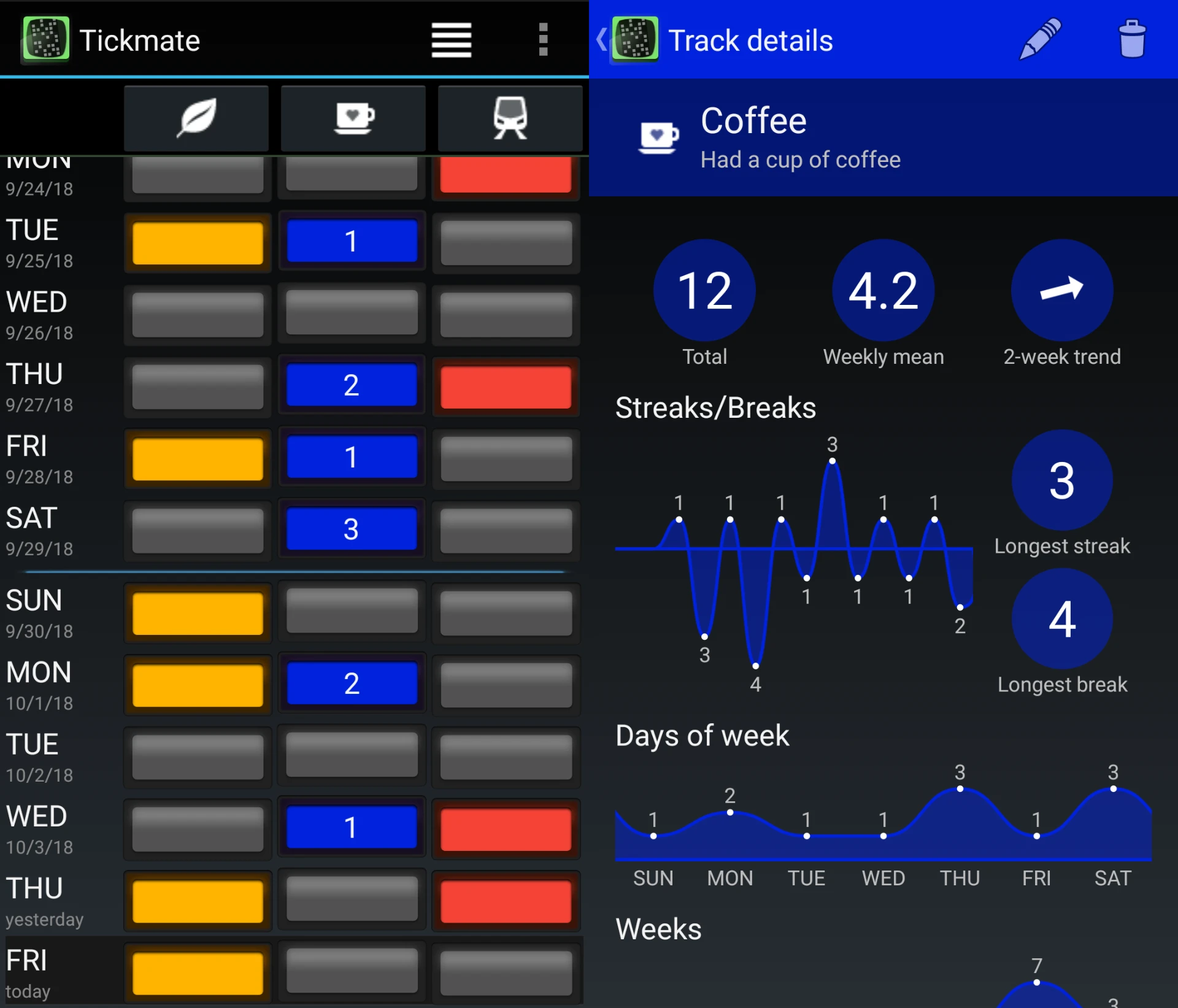
For someone whose actual question is small, that granularity lands exactly. Did I floss today. Did I run. Did I read ten pages. A tool that answers those questions and nothing else is not a lesser product, it is a better fit. The interface has room for a large button and not much else, which also means there is nothing to fiddle with instead of doing the thing.
Simple logging, statistics that are not missing
Do not mistake the simplicity of entry for a lack of review. The calendar view paints a whole month in colour, so a long streak and the exact day it broke are visible at a glance. A weekday distribution answers the uncomfortable question of whether Wednesday is always the weak point. A histogram shows the long term trend rather than the last seven days, which is the view that actually tells you whether a habit stuck.
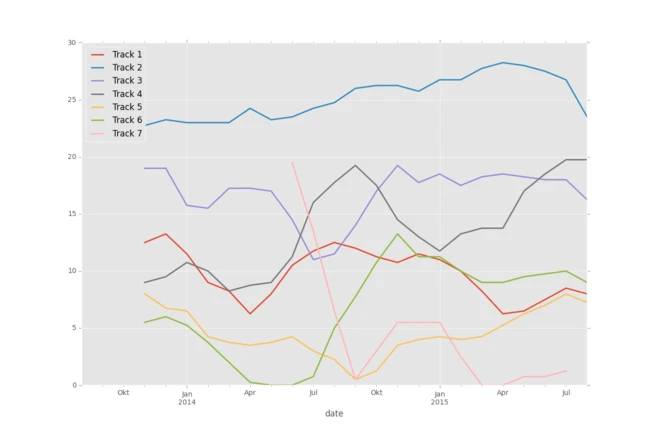
Each habit takes a custom name, icon and colour, can be sorted into groups, and can carry a daily reminder at a chosen time. Records live in a local database file, which means they can be exported for a backup or pulled into a spreadsheet for a closer look. There is no account, no cloud and no upload of any kind. The project is released under the GPL and installs from F-Droid, so the whole chain from source to phone stays inspectable.
The reasoning behind the three second loop becomes obvious once you have abandoned a tracker or two. A logging habit breaks for the same reason any habit breaks: the moment it costs more than it returns, it stops. A form that asks how you felt, how long it lasted and which project it belonged to turns a two second confirmation into a small chore, and the chore is what gets skipped first on a bad day. Remove the questions and the confirmation survives even those days, which is precisely when a record is worth the most.
The other half of the argument is what happens to the record afterwards. A local file looks dull next to a dashboard in the cloud, until you want to move it, read it with another program or keep it for a decade. Exporting a database means the history is yours in a form that outlives the app, and the absence of an account means there is no access to lose. For a tool that asks one tap a day, that is a consistent position rather than a marketing line.
The clever part is subtraction: habit tracking reduced to one confirmation per day. The lighter the tool, the easier the habit survives. Logging should never become the burden it was meant to measure.
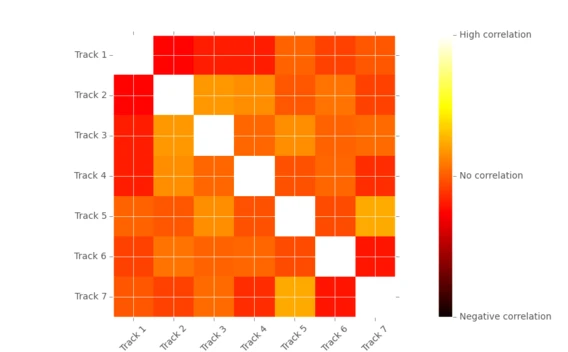
The limits deserve the same clarity. It is Android only. The release rhythm is slow, and the community is openly looking for people to share maintenance. There is no cloud sync, so moving to a new phone means exporting the database and carrying the file across. And it is built for habits that either happened or did not. Quantitative records such as step counts or minutes of practice are outside its scope, and forcing them in would break the whole idea.
If the requirement really is that plain question of whether today counted, this may be the calmest and most private answer in its category. It asks for one tap and gives back a year of dots, and it never asks you to create a profile to see your own life.