
Spendee Review: Turning a Budget Into Something You Can See
Summary
Spendee draws your spending as rings and trend lines instead of a column of numbers, keeps separate wallets for cash and cards, and lets a partner add to the same ledger. Free tier is enough to start.
Recommend- Name
- Spendee
- Version
- 20260923
- Pricing
- Free
- Open source
- Proprietary
- Operating system
- AndroidiOSWeb
- Website
- https://www.spendee.com/
- Updated
- 2026-10-07 22:19
A column of numbers convinces nobody
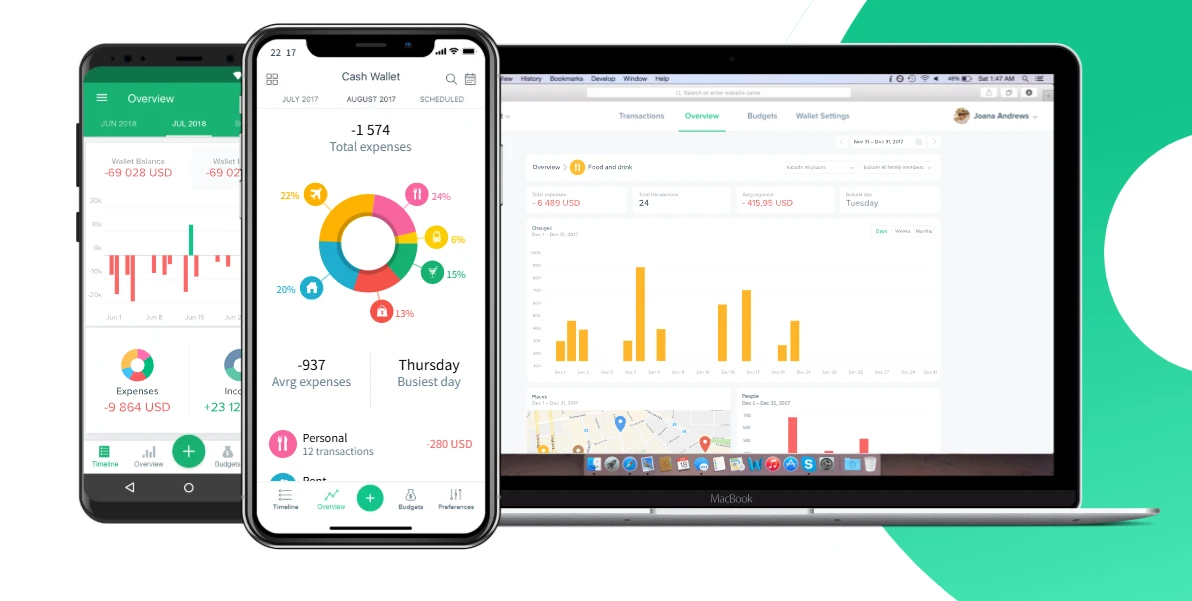
A bank statement is accurate and useless. It tells you that 4,382 left the account last month and nothing about why the figure feels wrong. Spendee answers with a picture: each category becomes a slice of a ring, so food, transport and shopping have proportions you can judge at a glance. Put a monthly trend line beside the ring and the month where you overspent colours itself red without anyone having to audit it. The wallet model works the same way. Cash, current account, credit card and savings each get a box with its own colour, and the split of your assets is a shape rather than an arithmetic exercise.
There is a quiet behavioural argument underneath the design. Tracking fails because it is boring, and it is boring because the output is a list. A report you enjoy looking at is a report you keep feeding, and a tool that survives the third week is worth more than a more powerful tool that dies in the second.
One person records, the household reads
The shared ledger is the feature that changes family life. Two people write into the same wallet, every entry syncs immediately, and the remaining budget is visible to both. The argument about whether the month really went over stops being a memory contest, because the record is not in anybody's head. Budgets are set per category with a soft ceiling that warns before the limit rather than after it, which is the only time a warning is useful.
Multi currency support makes it work across borders: a trip, a foreign subscription, a salary in one currency and rent in another all live in the same book without manual conversion. Receipt photos attach to the entry, which matters at tax time. The free tier covers manual entry and the core reports; bank syncing and unlimited wallets are subscription features. Three platforms and cloud sync mean the entry happens where you are standing.
What it does not do for you
Nothing here decides for you. The bank connection, where the plan includes one, imports the transactions and suggests a category, and it is wrong often enough that the habit of checking takes a week to form. Cash is still manual. A household that eats out three times a week will still have to record three receipts, and the tool will not make that interesting. What it does is make the recording cheap enough that skipping it feels like a worse deal than doing it.
Privacy deserves a word. The cloud account holds your spending history, which is a detailed picture of your life, and the plan choice should reflect how much that bothers you. Export works, and a monthly export to a local file is a reasonable precaution that costs a minute and removes the single point of failure.
Spendee turns budgeting from a test of willpower into something closer to a visual habit. When spending becomes visible, restraint stops requiring clenched teeth.
The setup that survives month two
Resist the urge to build a taxonomy. Three to five wallets and a dozen categories cover almost every household, and a structure with forty leaves gets abandoned by the second week. Decide the entry rule before inviting anyone: some couples log everything, others only amounts above a threshold, but both need to agree, because an inconsistent ledger produces arguments that the tool cannot settle.
Then put a ten minute review in the calendar at the end of the month, and look at the ring rather than the rows. Two questions are enough: which slice grew, and was the growth expected. Adjust one category ceiling, not all of them. Savings goals sitting next to the budget give the surplus somewhere to go, which is the part most tracking apps forget and the reason the habit eventually pays for itself.