
OpenClaw 2026.11.3 rescues stuck updates and slow backups
Version 2026.11.3
Summary
OpenClaw 2026.11.3 is a patch batch with no new features: interrupted updates recover the gateway, slow-disk backups stop timing out, credential leaks close.
Recommend- Name
- OpenClaw
- Version
- 2026.11.3
- Pricing
- Free
- Open source
- Open source
- Operating system
- WindowsmacOSLinux
- Website
- https://openclaw.ai
- Updated
- 2026-11-15 12:09
The self-hosted assistant platform OpenClaw put out version 2026.11.3 on November 10, with desktop apps for Windows, macOS and Linux. It carries no new features. The vendor labels it a security release in the first line, and the work sits in three places: letting an interrupted update finish itself, stopping backups on slow storage from timing out halfway, and closing several seams where credentials could leak.
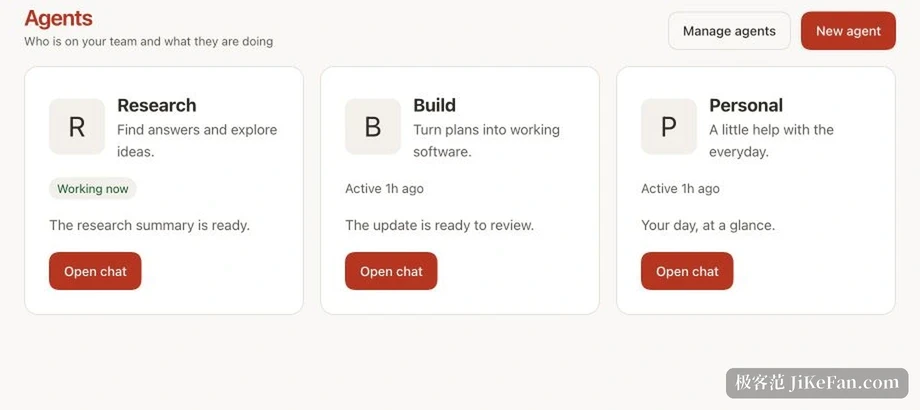
An update stuck halfway is the worst kind of failure
What self-hosted software fears is not failing to start but dying in the middle of an upgrade: the gateway sits stopped, the service is gone, and someone has to go and fish it out. This release deals with that residue. If a managed update or repair run breaks off, the gateway is pulled back up whenever the recovery check allows a restart. If a maintenance run can neither start nor verify, the repair path hands over instructions for starting it by hand and for querying its state. The notes add one warning worth keeping: a recovered gateway does not mean the update finished, and the two have to be read apart.
A few related faults went with it. On Windows the gateway drops its own lock when the boot information does not line up, and on Linux a worker reusing an old process number can leave the boot stage unable to tell that the lock is a zombie; both are fixed. Upgrading from 2026.9.3 or 2026.9.4 no longer stops at the first presence check when an existing installation identifier can be had. And a package update that was interrupted used to report success by mistake, where it now keeps the cancelled state and the recovery path honestly.
Backups on slow disks shared one deadline
A failed backup looks like a broken disk and is usually a waiting policy. In the old implementation every file in a large backup shared a single SQLite discovery deadline, so a slow disk timed the whole run out. The check now retries in smaller batches, and as long as no single file keeps timing out on its own, the backup reaches the end. Error reporting in the discovery stage got more honest too: where a vague failure used to be dropped, it now points at the recovery instructions.
Credentials and the sandbox pull tighter
The vendor calls this a security release, and the work lands in three places. Worker transport no longer skips certificate checks when the fingerprint is empty, going through ordinary CA validation instead, and an HTTPS fingerprint in the wrong shape is refused outright. Session image previews under a required sandbox can only land in permitted directories, even in full access mode, though an administrator can still release a single image. Configuration reads no longer echo values written into inline environment variables, and where redaction cannot be done safely, the raw configuration is simply not printed.
Two more are easy to miss. The managed background daemon and the bundled language server now inherit a narrowed environment, so the gateway key is no longer handed to them in passing. And when a provider plugin tries to redirect a connection to another origin, or stuffs in a target of its own when none was given, that is blocked outright, so credentials cannot reach a wrong endpoint.
Chat channels and the memory module
In Matrix rooms, an unclosed link repeating itself plus a message mentioning the bot used to wedge the gateway in mention validation, and messages of long punctuation stalled the abort check; both changed. A Teams bot reusing another bot s cached parent message context, and Mattermost directory lookups missing a separate instance when several accounts share one token, belong to the same batch.
On the memory side, compression used to delete a hand-written comment together with the whole block when a comment sat right against a marker; in sessions dense with tool calls, decisions and to-dos were pushed out of the summary; and embedding credentials were inherited across providers, which is now cut. In total the release is 56 pull requests, 44 direct commits and 36 contributors.
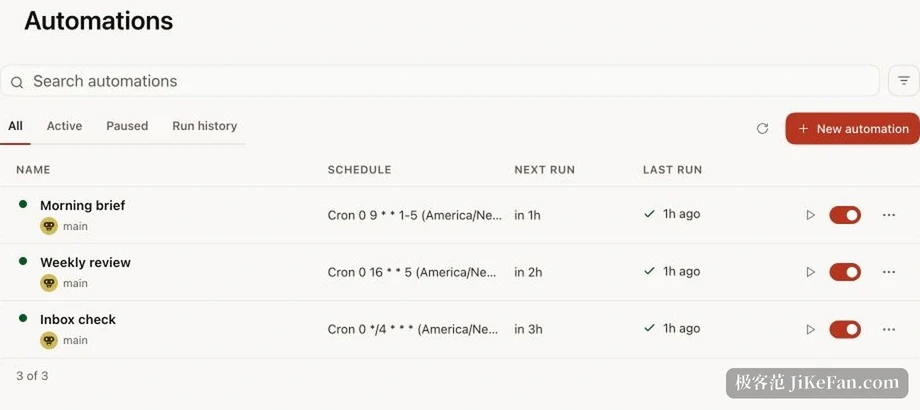
How to read OpenClaw 2026.11.3: 56 pull requests, 44 direct commits and 36 contributors, a patch batch that repairs and introduces nothing new.
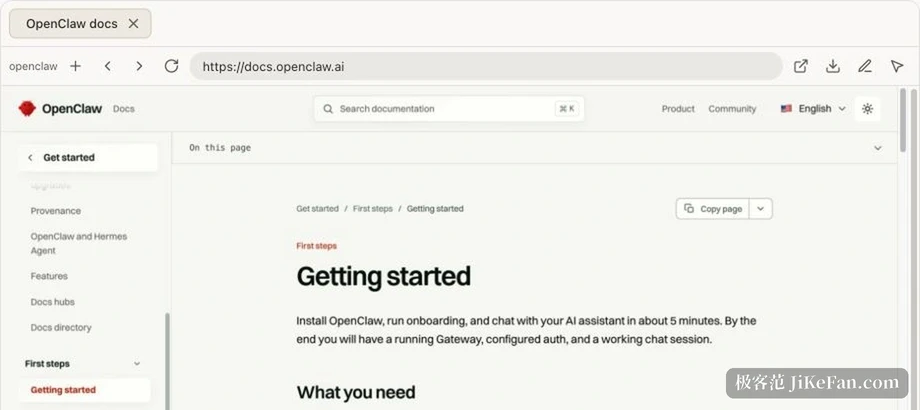
What the thing actually is
OpenClaw is a self-hosted gateway that runs on your own machine. A single gateway process is the one source of truth for sessions, routing and channel connections, wiring chat applications such as Discord, Slack, Feishu, Matrix and Microsoft Teams to an AI agent, on a laptop, a home server or a cloud host. It is MIT licensed, held by an independent 501(c)(3) foundation, with no paid tier and no hosted service; the desktop app covers macOS, Windows and Linux, and there is a console for phone and browser. Channels, skills, models and memory all stay in local configuration, which is the premise many people rely on to run scheduled jobs and long-lived automation.
Version 2026.11.3 is a maintenance batch. The right way to read it is not to hunt for features but to ask whether any of these traps is yours: an update that stalls halfway, a backup that times out on a slow disk, or an exposure surface around environment variables that you would rather not have.