
NetNewsWire: subscription reading, older and calmer than the feed
Summary
NetNewsWire has been subscribing to feeds since 2002 and is still free and open: native and quick on Mac and iPhone, iCloud sync without an account to buy, smart unread lists, search, keyboard flow and OPML import, with no algorithm deciding what comes next.
Recommend- Name
- NetNewsWire
- Version
- 7.1.3
- Pricing
- Free
- Open source
- Open source
- Operating system
- macOSiOS
- Website
- https://netnewswire.com/
- Updated
- 2026-10-06 22:34
Subscription was the earlier idea
Most of the places people read news today decide the order for them. The feed is assembled by a system that watches what makes you stay, and the effect is a stream that is always interesting and never finished. RSS answered the same problem twenty years earlier and in the opposite direction: you name the sources, and you get what they published, in the order it arrived, at the pace you choose. No ranking, no recommendation, no opinion about what you should read next.
A veteran that came home
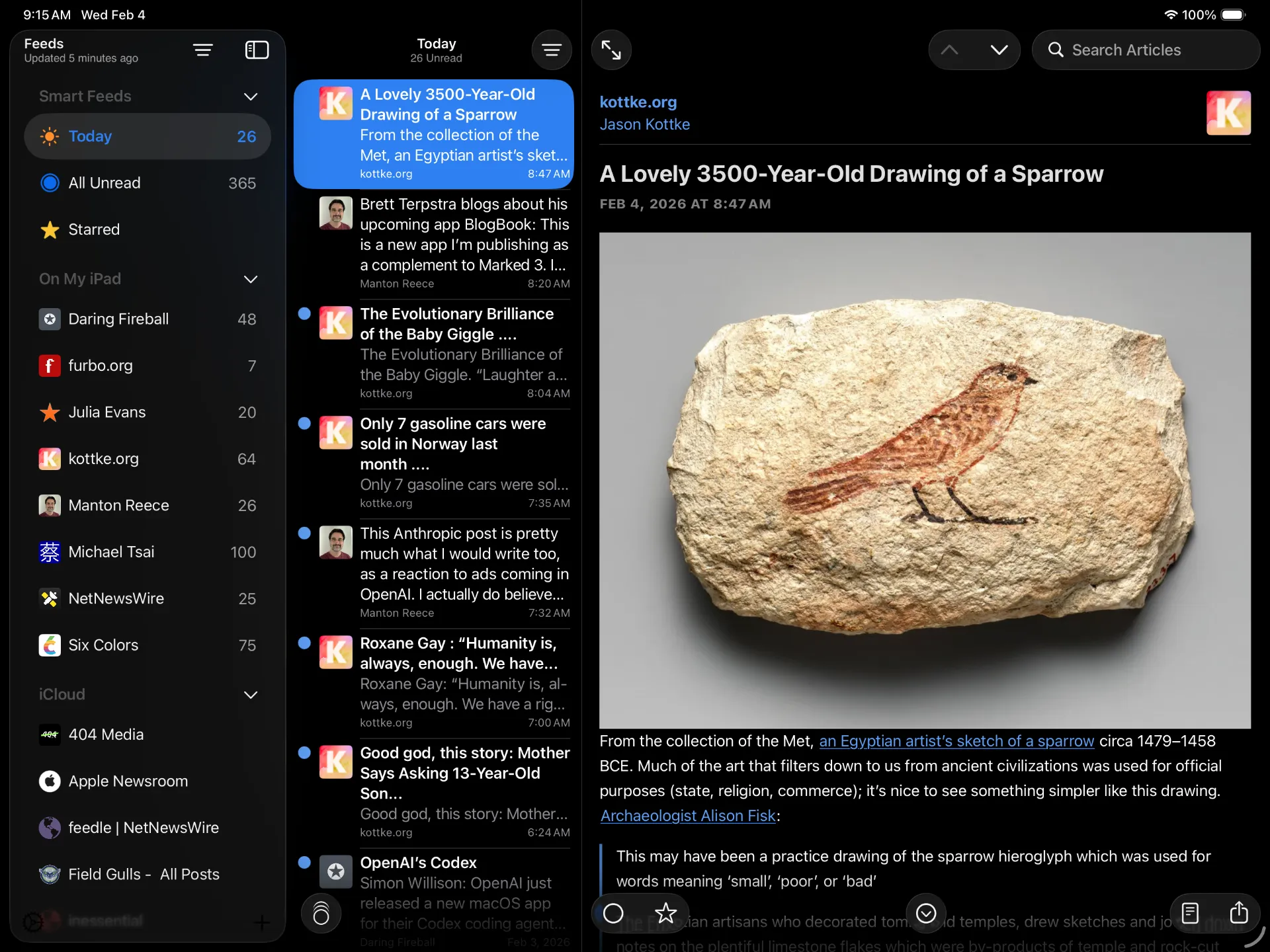
NetNewsWire first appeared in 2002, which makes it one of the oldest applications still in daily use on this platform. It changed hands a few times, came back to an independent developer, and has been open source since. It is built with native tools rather than a cross-platform shell, and the difference shows in the things that matter for a reader: it opens instantly, scrolls without stutter, and treats the battery as something worth protecting. On a phone those three properties are the whole experience.
A short feature list, read carefully
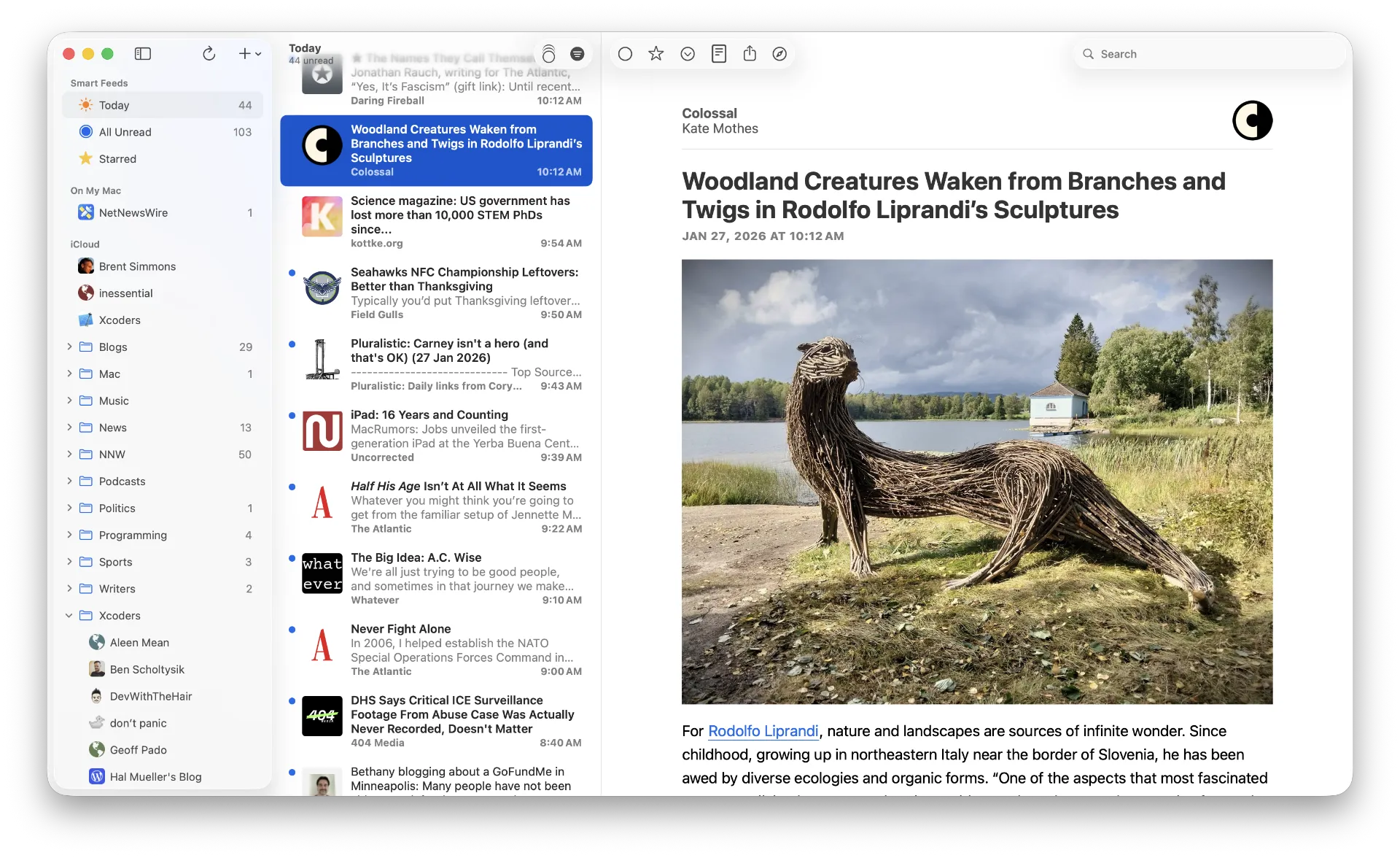
The list sounds plain: subscription management, a smart list of unread items, favourites, search, keyboard-driven navigation, import and export in the standard outline format, a reading view and several typographic themes. Each item is a decision not to add something else. Keyboard flow in particular means you can move through a hundred headlines without touching a pointing device, which turns reading into something closer to scanning a page than operating a program.
Sync that does not require a subscription
Sync options are unusually wide. iCloud works directly and costs nothing beyond the account you already have. Mainstream hosted services are supported, and self-hosted arrangements are welcome, which matters to anyone who has been burned by a service shutting down. Multiple devices pick up where the other left off, and the arrangement stays the same whether you read on a laptop or a phone.
What the 7.x releases changed
The updates in this cycle have been dense: the interface adapted to the visual conventions of the newer systems, the database and the scrolling performance kept being tuned, and two operational details arrived that only a serious reader would ask for, an activity log and a check for feeds that have gone silent. That last one is the sort of feature that reveals how the maintainers think: a dead feed is invisible until someone points at it, and pointing at it is exactly what a reading tool should do.
Free, and portable by design
The licence is permissive, the software is free, and the phone and desktop editions each follow the habits of their platform rather than one compromise layout. Because subscriptions live in a standard format, they can be exported and carried elsewhere at any time. That portability is the quiet promise behind the whole arrangement: nothing here tries to keep you.
Where it stops
It covers the Apple ecosystem only, so Android and other desktops need a different reader. And the layout is text first, which suits writing and suits poorly the magazines built around large images. Neither limit is hidden, and both are the price of a design that refuses to be everything.
The point of a reader without an opinion
A reading tool should be a window, not an editor. The measure of this one is that after a week you no longer think about it: the list is there, the unread count is honest, and the articles are the ones you asked for. Being unremarkable is the achievement.
Why the order matters
Chronological order sounds primitive and is quietly powerful. Everything that was published since the last visit appears once, in the sequence it happened, and then it stops. There is no second page assembled for you, no endless replenishment, no sense that leaving would mean missing something. A feed with a bottom is a different kind of object from a feed without one, and the difference shows up in how long you stay and how you feel afterwards.
One export file that outlives everything
The subscription list is stored in a standard outline format that predates most of the services reading it. Export it and you have a plain file listing every source, ready for another reader on another platform in another decade. That sounds unremarkable until a service closes, at which point the file is the only thing standing between years of curation and starting again from memory.
Typography as a feature
The reading view strips the page down to text, a headline and a byline, and the theme options decide how that text sits on the screen. Neither is decorative. Reading a long piece in an interface full of sidebars and sharing buttons is tiring in a way that is hard to name, and the fix is not a feature but a smaller number of things on screen. Removing furniture is the work here.
The value of NetNewsWire is written in its behaviour: no push notifications, no timeline, no guessing what you might like. Every source you subscribe to waits for you in the same quiet way. The initiative in reading belongs to the reader.