
Logic Pro 11.2: a professional music workstation bought once, with virtual players on call
Summary
Logic Pro covers recording, arrangement, mixing and mastering in one application, and the tools that usually cost extra arrive with it: the Alchemy synth, samplers, drum machines, amplifier models and a downloadable sound library of over a hundred gigabytes. Virtual session players follow the chords, and mixes can be finished in spatial audio.
Recommend- Name
- Logic Pro
- Version
- 11.2
- Pricing
- Free
- Open source
- Proprietary
- Operating system
- macOSiOS
- Website
- https://www.apple.com/logic-pro/
- Updated
- 2026-10-06 19:53
A professional music workstation on the Mac
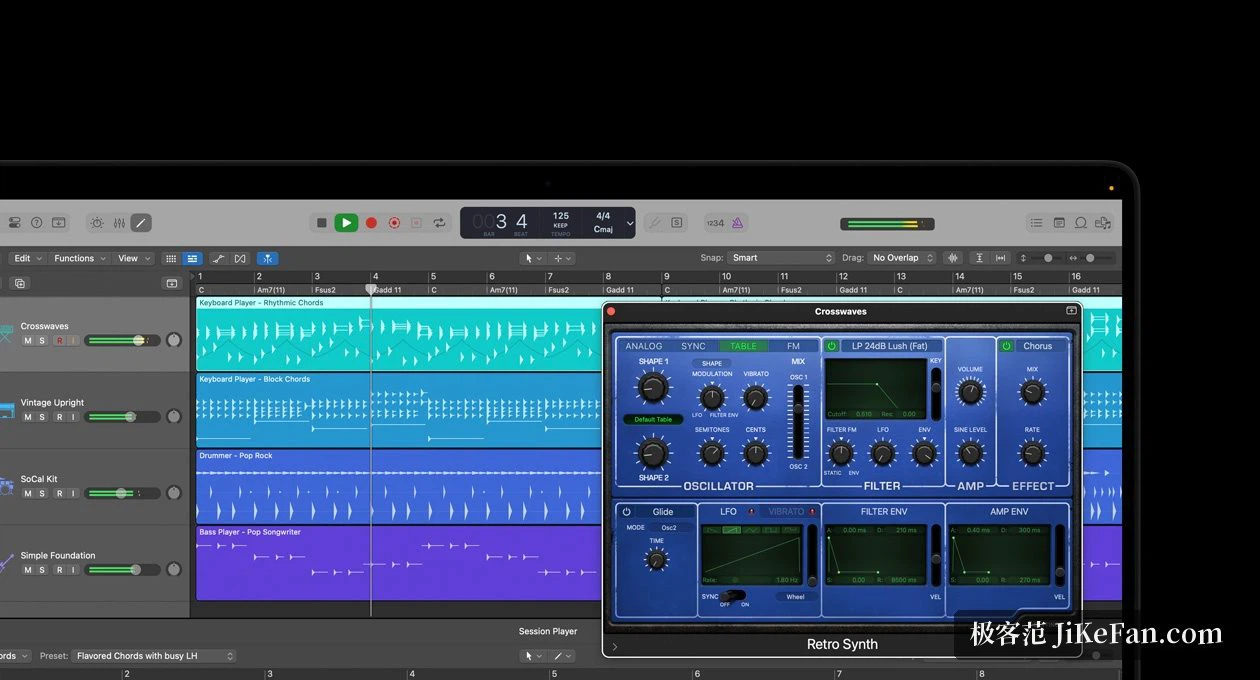
Logic Pro is the professional digital audio workstation published by Apple, and it covers recording and arranging, mixing and mastering inside one application. What the one-off price buys is a complete toolchain that would usually be assembled from separate purchases: the Alchemy synthesiser, long a favourite for sound design, samplers, drum machines and guitar amplifier models, plus a downloadable sound library of more than a hundred gigabytes, running from atmospheric textures to loops for every style of drum part. That catalogue alone takes a sizeable chunk out of what third-party add-ons would otherwise cost.
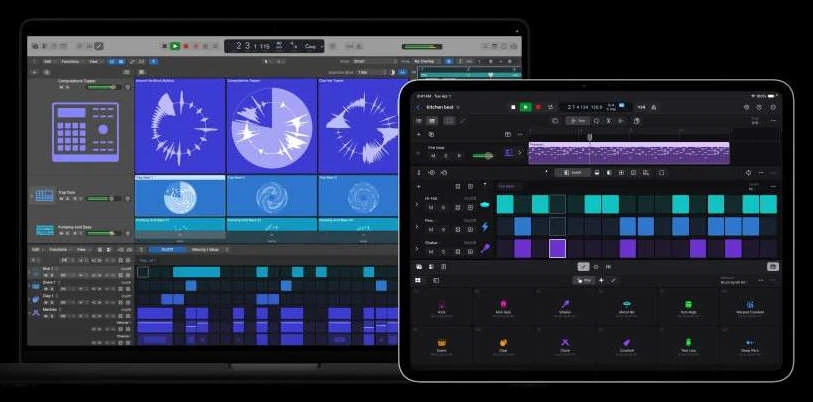
Virtual players and intelligent tools
The signature feature of recent versions is the set of virtual session players: a drummer, a bassist, a keyboard player and a synth player who perform along with the chords and structure of the song, adding fills in the chorus and holding back in the bridge, so a few seconds after an arrangement idea arrives there is a whole band behind it. Stem separation pulls a finished audio file apart into vocals, drums, bass, guitar and piano, which is useful both for a mixing reference and for sampling. And the recovery of forgotten takes turns the familiar regret of having played something good without pressing record into a folder of candidates that were captured anyway.
What that means for an independent musician
For someone working alone, the practical meaning is that people can be saved. Where a demo once needed a drummer, a bassist and a keyboard player taking turns at a recording session, now a chord progression plus a virtual player produces an accompaniment at release quality, with the timing and velocity nudged afterwards by hand. Stem separation makes old material usable again, tape and CDs included, and it makes learning a song by ear easier. The sound library downloads on demand, so a machine short on disk space can install only the styles in use and fill in the rest later.
From tracking a song to spatial audio
The workflow covers the whole chain: timing and pitch correction handle vocal detail, the loop grid suits live improvisation and electronic work, and chord track management and automation are fine-grained enough for professional use; on the mixing side there is support for Dolby Atmos spatial audio, which covers film scoring and podcast production as well. The iPad version offers nearly the full production capability, and projects move between the Mac and the tablet without friction, so a song can be continued anywhere.
The small details where it meets the rest of the ecosystem
The links to other Apple software are a quiet bonus: a phone or a tablet becomes a wireless controller for levels and for playing instruments, and a video project can hand the session straight to the editing application to carry on with. Smaller conveniences, lyric notes and track search among them, keep arriving with each yearly update. Learning material is abundant, with the official manual and community tutorials covering everything from first steps to advanced work, and anyone moving up from an entry-level application finds the transition gentle.
Buying once, and what it asks for
The Mac edition is paid for once and used indefinitely, with major version updates included, which puts it near the front of the field on value among professional audio workstations; the iPad edition is a monthly or yearly subscription. It is worth knowing that it exists only inside Apple's ecosystem, that recent versions ask for a recent system version, and that the full sound library is large enough that installing it on demand is the sensible choice. For a Mac user, the experience of buying once and having all of it has very few gaps.