
Headspace: what a course-shaped meditation app actually offers
Summary
Headspace was founded in 2010 and later turned from an events company into a subscription app. Its content is arranged as skill-ordered courses rather than a library of tracks, with a free ten-day introduction, sleep audio, focus music and a reflection companion.
- Name
- Headspace
- Version
- 2026
- Pricing
- Paid
- Open source
- Proprietary
- Operating system
- AndroidiOS
- Website
- https://www.headspace.com/
- Updated
- 2026-10-05 07:02
Meditation turned into a course
Headspace is an application for meditation and mindfulness, founded in 2010 and later turned from an events company into a subscription product. What separates it from the rest of the category is how the material is arranged. Rather than piling everything into a library of tracks for you to rummage through, it orders content into courses that follow one skill after another and walk you down the path in sequence. The best known of these is the introductory series: ten minutes a day for ten days, explaining the basic method clearly enough that a beginner can follow it, and free users can complete it.
That structure answers a problem most people meet on the first evening. A library assumes you already know what you want; a course assumes you do not, and takes responsibility for the order. For a practice built on repetition, the difference is not cosmetic.

What the content covers
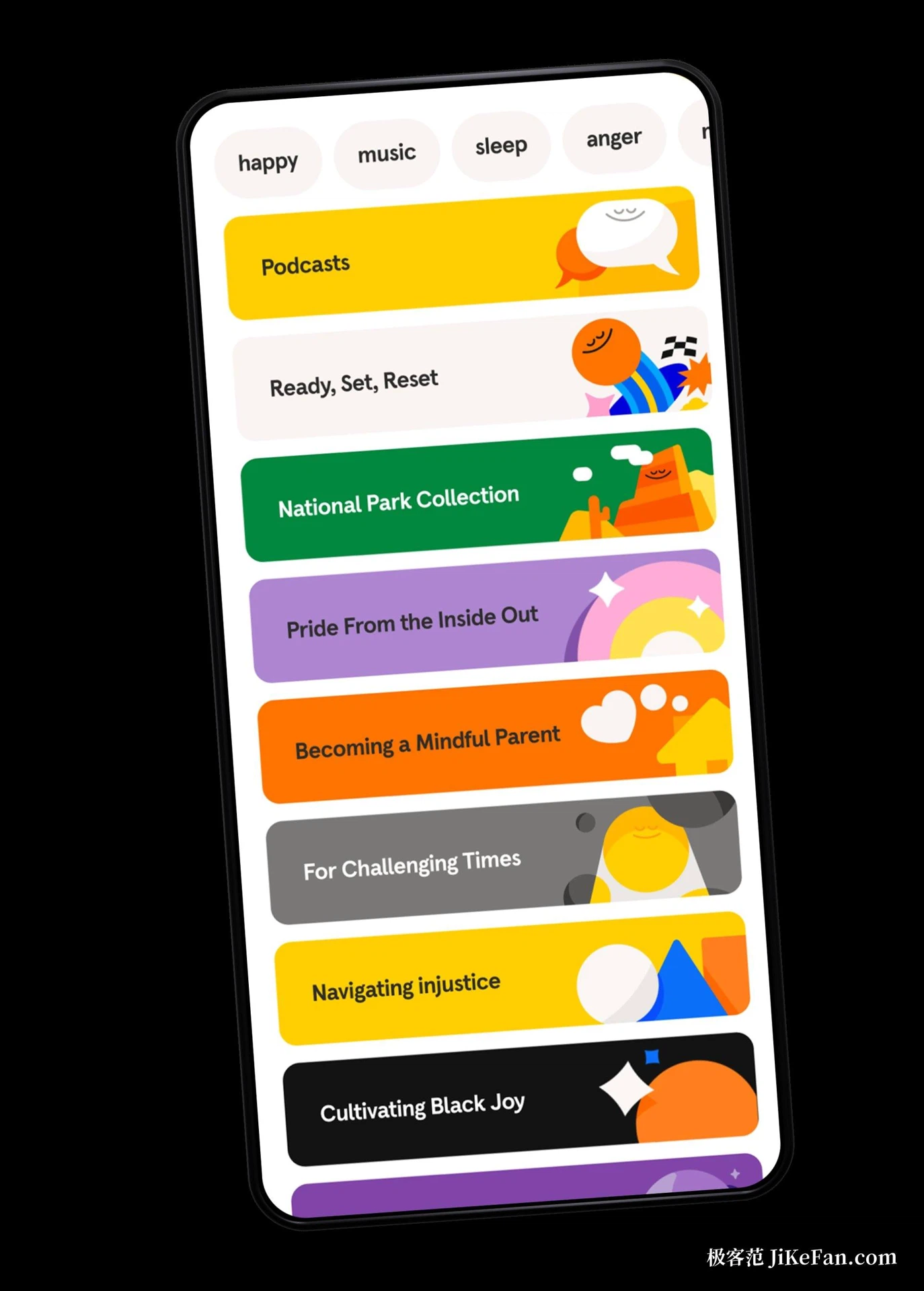
The part behind the subscription is sorted by aim: stress, anxiety, sleep, focus, recovery after exercise. The forms vary as much as the aims do, with guided meditation, sleep audio and stories for bedtime, background music for concentration, short breathing exercises, and material written for children. Lengths run from a minute or two of emergency breathing to courses that last dozens of days, which is what makes the app usable in the gaps of a day: a commute, a lunch break, the minutes before sleep.
Explanations lean on short animation to make abstract ideas concrete, and that is a deliberate choice rather than decoration. Terms such as attention, noting or letting go are easy to repeat and hard to picture; a drawing that shows the movement does more than a paragraph of definition.
A companion for reflection, and a record of practice
In the last two years the app added a feature called Ebb, positioned as a companion for reflection. It opens with a conversational check-in that helps you put the current feeling into words, then recommends something suitable for that state. The vendor describes it as a wellness tool and not as a treatment, and the wording matters: a conversation that helps you name a mood is not a diagnosis.
The application also keeps a record of progress and counts consecutive days, which serves the rhythm of practice more than it serves curiosity. A practice that happens most days is the point; a number that makes an occasional missed day feel like a failure is not.
Price, trials and one honest caution
It is sold by subscription, monthly or yearly, with free trials of 7 days and 14 days respectively. A family plan and a student plan exist, and teachers in some countries can apply without paying. Most of the content sits behind the subscription, and the free portion is comparatively small.
The caution belongs in the article rather than in a footnote. An application of this kind is a lifestyle tool; it cannot replace professional diagnosis or treatment, and if sleep or mood problems persist, the right step is to look for help from a qualified person rather than to try another audio track.
Three kinds of content, doing different jobs
It helps to separate what the app actually contains. Courses teach a skill in order and expect to be followed over days; audio for sleep and music for concentration are used rather than studied, and can be dropped in the middle without loss; the reflection companion is a conversation that ends in a suggestion. Knowing which of the three you are reaching for explains why the library feels both large and organised, and why a single subscription covers activities that have very little in common apart from the mood they serve.
For someone who has never tried meditation and does not want to face a wall of content on the first day, the course structure here is an easy way in. Complete the free introductory series first, all ten days of it, and decide about the subscription afterwards; and keep it as an aid to relaxing and concentrating rather than as a medical measure.