
Habitica Review: Turning Self-Discipline Into a Role-Playing Game
Summary
Habitica wraps habits, dailies and one-off to-dos inside a role-playing game: finish something real, earn experience and gold, level the avatar up, and join party quests where a slacking teammate costs everyone health. Core features stay free and the code stays open.
Recommend- Name
- Habitica
- Version
- 5.50.5
- Pricing
- Free
- Open source
- Open source
- Operating system
- WebAndroidiOS
- Website
- https://habitica.com/
- Updated
- 2026-10-07 15:59
When self-discipline becomes an adventure
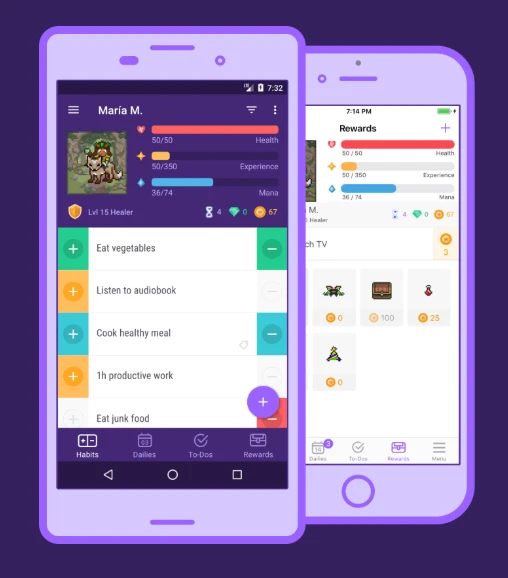
Most task lists die for a boring reason. Finishing an item produces no feedback whatsoever, so the only thing keeping the list alive is willpower, and willpower is a finite resource that tends to run out somewhere around Thursday evening. Habitica aims at exactly that weak point: it wraps the whole list in a role-playing game. You create a character, write down your habits, your dailies and your one-off to-dos, and each real-world completion pays the character experience points and gold.
The economy is simple, yet it motivates far better than a checked box. Gold buys equipment, equipment raises stats, stats make the tougher fights survivable, and pets and mounts hatch from eggs that drop while you work. The sharper trick runs in the opposite direction. Mark a bad habit such as staying up too late or scrolling a phone in bed, and the same character loses health. Procrastination finally has a visible cost, and that cost is your avatar health bar.
Why does this work when reminders do not? Because a reminder is an instruction and a reward is a consequence. The brain is notoriously poor at caring about future abstractions, and a to-do list is an abstraction twice over: a description of something unstarted, checked off for nobody's benefit. Give the same action a number that goes up immediately and the loop closes where it should, in the present tense.
Party quests turn peers into pressure
Solo play is only half of the design. The feature that keeps people around for years is the party quest. You and your friends form a small group and take on a boss, and the boss retaliates in proportion to how many tasks the whole party left undone. Slack off and your teammates lose health, and the game tells them exactly why. That single mechanic reframes self-discipline from a private struggle into a shared campaign, and the mild awkwardness of letting friends down proves a much stronger motivator than any notification.
Around the quests sits a layer of longer-term structure: guilds for shared interests, community challenges with their own leaderboards, and an achievement system that rewards streaks rather than isolated good days. None of it is mandatory, yet together it answers the question that kills most habit apps in week three, namely what is left to do once the novelty wears off.
There is an honest counterweight worth mentioning. Turning a life into a game invites the temptation to optimise the score instead of the life, and any streak system eventually meets the day it breaks. The players who last tend to treat the numbers as conversation rather than verdict, and they keep a few tasks off the board on purpose.

An open project with a long memory
Habitica has been running since its HabitRPG days and has stayed open source the whole way, which matters for a tool you are supposed to trust with your daily routine. The code is public, the community maintains it actively, and the core functionality has remained free for the entire life of the project. Cosmetic extras such as appearance packs are the optional paid layer, a healthy split in which you pay for decoration rather than for the ability to use the tool at all.
Cross-platform coverage is equally untroubled. The web app holds the full experience, the Android and iOS clients handle the quick check-ins made on the move, and one account serves every device. There is no sync ritual to learn: finish a task on the phone underground and the character is already stronger when the laptop opens.
The insight underneath Habitica is a plain one: people are not driven by task lists, they are driven by feedback. Make the feedback fun and persistence finally has an engine behind it.
Who it fits, and how to start
Students, game players and anyone who has abandoned a task app within three minutes will feel at home fastest. The gamification is the point rather than a gimmick, and it suits the small repeated behaviours that ordinary lists handle badly: flossing, stretching, reading ten pages, going to bed on time, drinking water before the third coffee.
For serious project management, pair it with a dedicated tool instead of forcing it to carry work breakdowns it was never built for. The sensible way in is deliberately small. Create three habits, not thirty, and give the system a week to see whether the experience bar does what a checkbox never could. Odds are the character is already level two, and that small number argues the case better than any productivity essay.