
SimpleLogin gives every site an address of its own
Summary
Every signup form asking for your real address is a small wager on somebody else data handling. SimpleLogin hands out a separate forwarding address per site, passes the mail to your real inbox, and lets you switch off whichever alias starts receiving nonsense.
Recommend- Name
- SimpleLogin
- Version
- 4.82.1
- Pricing
- Free
- Open source
- Open source
- Operating system
- WebAndroidiOS
- Website
- https://simplelogin.io/
- Updated
- 2026-10-07 15:57
Why the real address ends up everywhere
Register on a forum, claim a coupon, download a data package, read one article behind a form: each of those moments asks for an address, and each one is a small wager that whoever collects it will look after it. Some do. Others sell it, lose it, or leave a database exposed, and the address then circulates through lists that never shrink. The damage is not dramatic, it is cumulative: an inbox that slowly fills with mail addressed to nobody in particular, and no way to tell which of forty sites was the one that leaked.
SimpleLogin solves it by making the address disposable rather than the account. For each site you generate a separate alias, a forwarding address built from random words, and the site gets that instead of the real one. Mail sent to the alias arrives in your actual inbox within seconds, so nothing about the daily experience changes. When one alias starts receiving promotions for a product you never bought, you have both the diagnosis and the cure in one place: that site leaked, and this alias can be switched off.
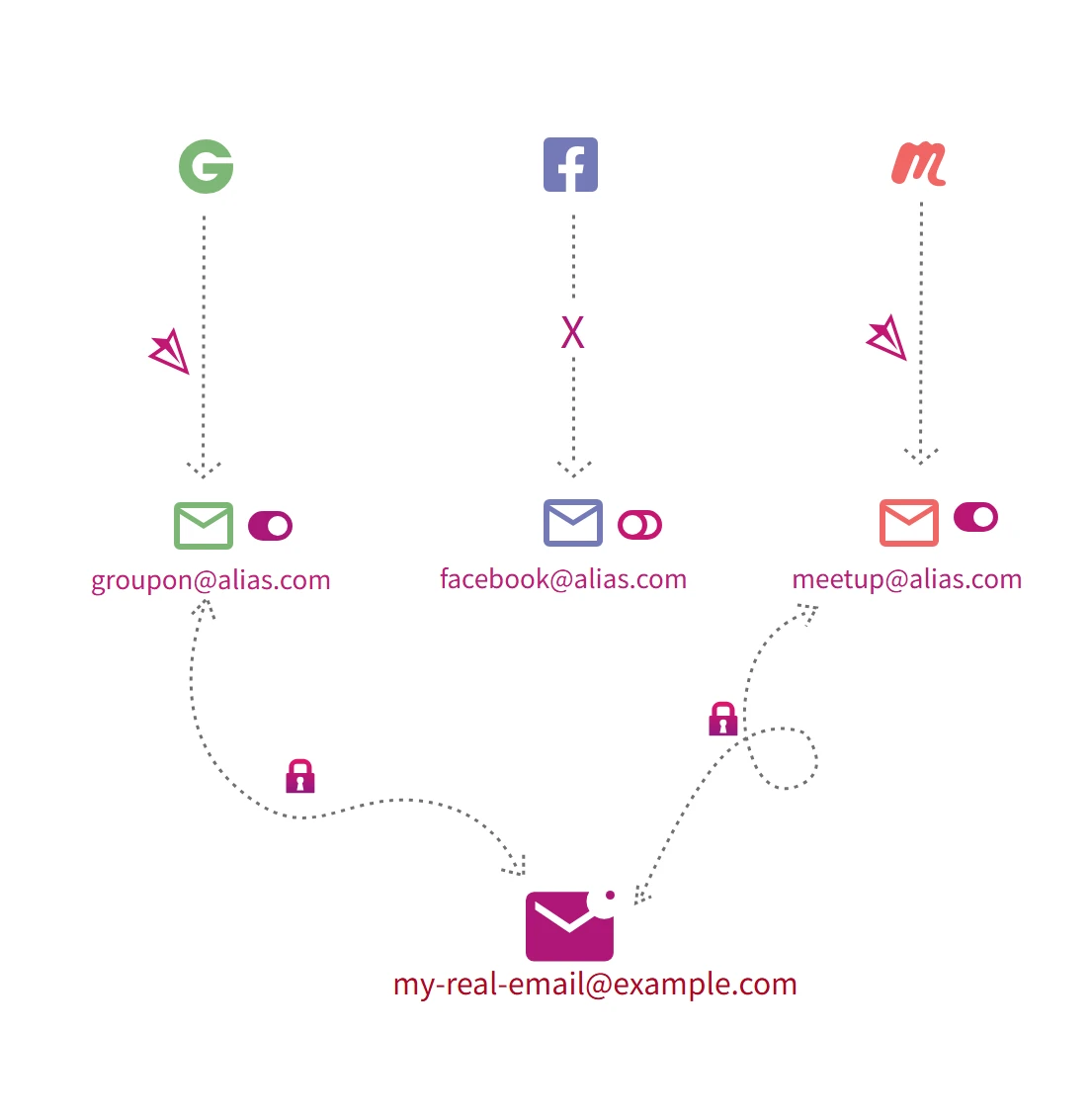
The detail that makes it practical rather than clever is the direction of travel. Aliases work both ways; replies sent from the alias arrive at the site showing the alias address, so a support conversation can continue for weeks without the real address ever being revealed. Without that, every alias would eventually force a choice between privacy and getting an answer.
Open source, audited, and part of Proton
For a privacy tool, the foundations need to be inspectable rather than merely asserted. The server code is open, so it can be reviewed or run on your own hardware by anyone who prefers to trust a machine they control. The service has been through an independent security audit. And in 2022 it joined Proton, the mail provider, which put more resources behind maintenance than a side project usually enjoys.
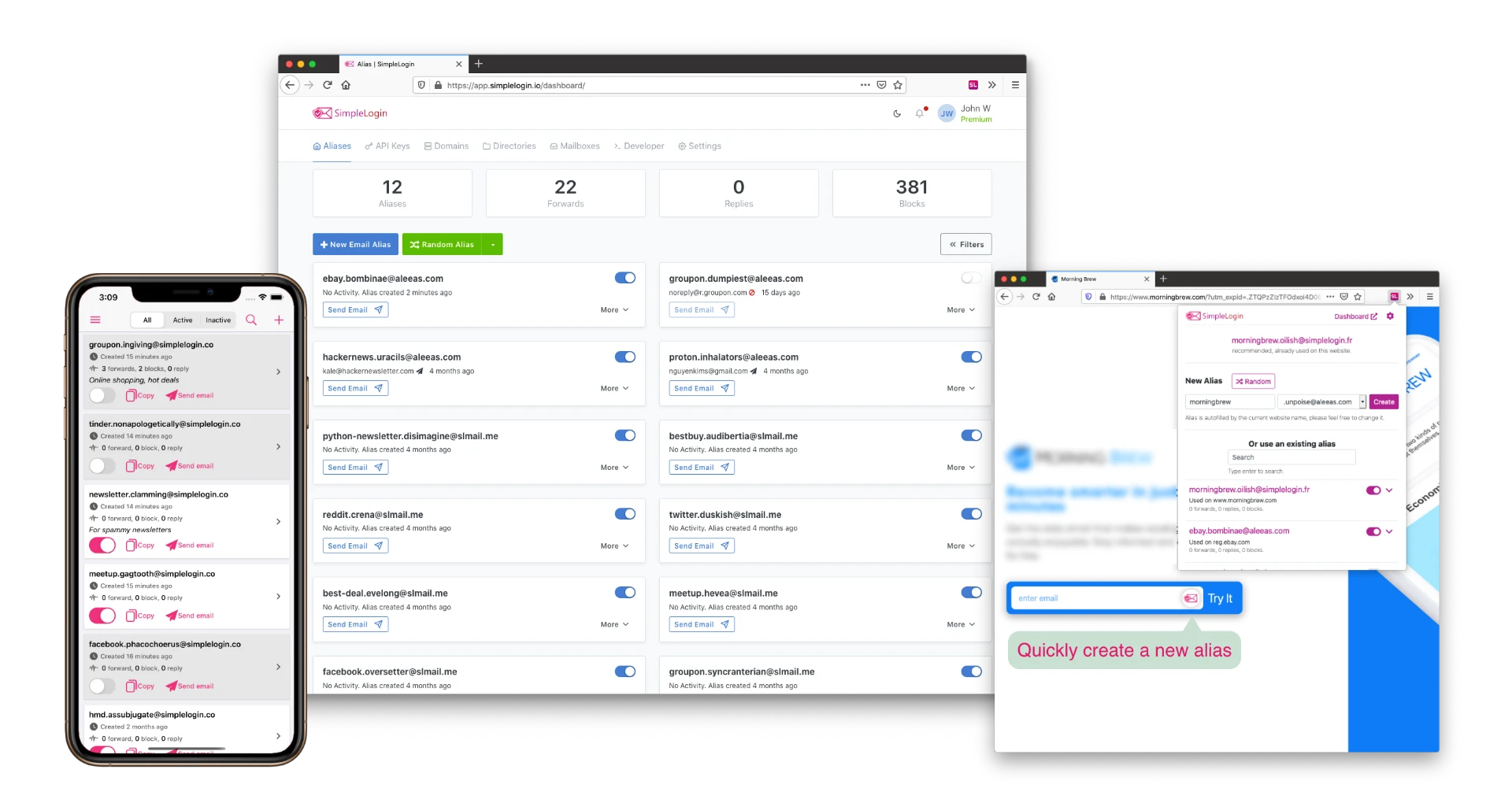
The current release is 4.82.1, and the shape of the offering is easy to describe. The free tier allows a limited number of aliases, which covers ordinary life comfortably, since most people need a dozen rather than a hundred. Heavy users and anyone who wants aliases on a custom domain move to a paid tier, which is also how a service like this stays alive without advertising.
The honest counterpoint is that a forwarding service sits in the middle of your mail, which is a considerable position to hold. Everything sent to an alias passes through it, and the provider can see the sender, the subject and the body unless the message is encrypted end to end. That is not a reason to avoid it, but it is a reason to care who runs it, and it is exactly why the open server code and the self-hosting option carry weight here rather than being decoration. A tool that sits in the middle of your correspondence should be one you could replace.
There is also an exit question worth asking of any service that becomes infrastructure. If the company changes direction, do the aliases keep working? With open code and a self-hosted path the answer is at least negotiable, which is more than most subscriptions can offer. Ten years of accumulated accounts pointing at addresses you no longer control is a specific kind of lock-in, and it deserves a little attention before it happens rather than after.
SimpleLogin turns mailbox isolation into a single click: one identity per site, leaks that can be located and cut off. The boundaries of a digital life get built out of exactly these forwarded messages.
The habits that make it work are simple. Use an alias plus a password manager for services that matter, so neither credential nor address is shared twice. Use a throwaway alias for one-off registrations where the account will be abandoned within a week. Name aliases after the site, because six months later the name is the only thing that tells you what to disable.
Browser extensions and mobile apps are provided, so generating an alias is one click from the form you are already filling in, which is the difference between a good intention and an actual habit. For an inbox that should stop collecting mail addressed to nobody, this is currently the least friction available.