
Framer: from design canvas to a live site, with agents on the canvas in 3.0
Summary
An online platform that carries a page from the design canvas through to publication, with hosting handled by the service. The 3.0 generation brings an agent into the canvas to help design, write and analyse, and adds branches so a redesign can happen without touching the live site.
Recommend- Name
- Framer
- Version
- 3
- Pricing
- Free
- Open source
- Proprietary
- Operating system
- WindowsmacOS
- Website
- https://www.framer.com/
- Updated
- 2026-10-12 11:30
Every extra handover between the design and the live site costs a little of the idea.
Nothing to hand over after designing
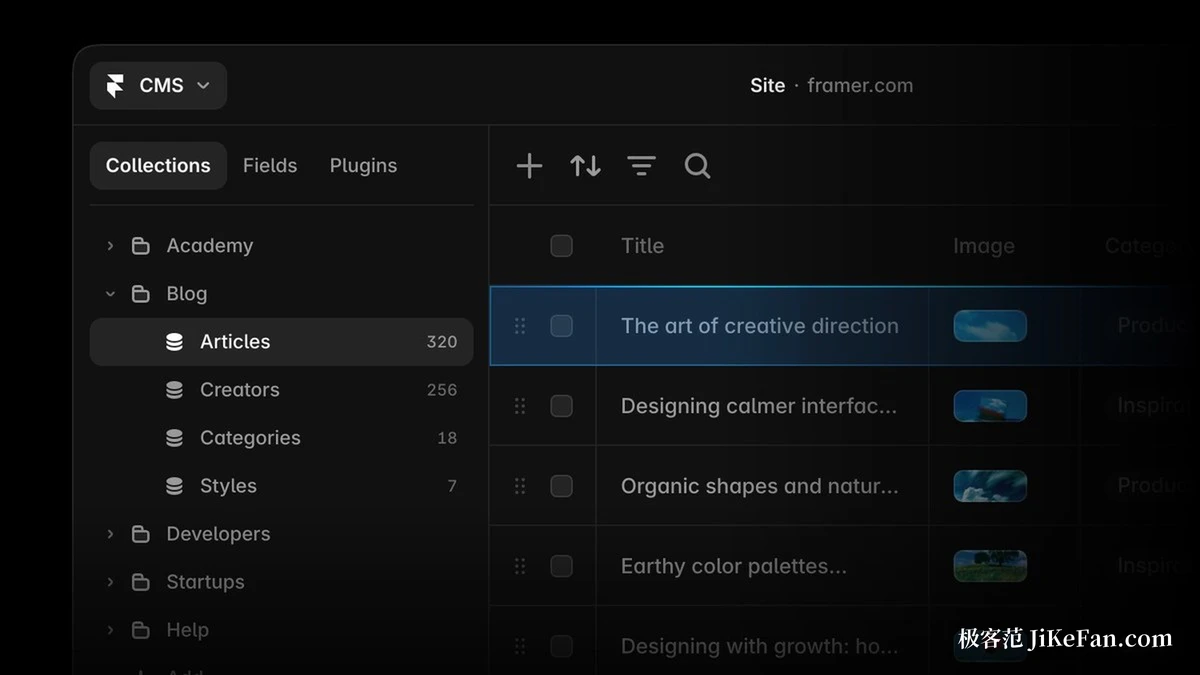
Framer is an online platform for building websites. The front page describes it as a design agent that takes part in every step from idea to launch. That sentence marks the difference from a tool that only draws pictures: the canvas holds one segment of the chain, and content management, publishing and hosting happen in the same place. A finished page can therefore become a reachable site without the stage where a design is handed to a developer to be rebuilt.
The scale suggests the chain has been tested. The 3.0 release notes state that Framer serves around 364 million monthly active visitors, with more than four million sites published. At that volume, the reliability of publishing and hosting stops being a demo question.
What the arrangement asks in return is a decision about where the source of truth lives. When the canvas, the content and the hosting all belong to one service, leaving means rebuilding, so it is worth being clear at the start how much of the site is genuinely portable and how much depends on features only this platform has.
Agents and branches
The current generation is Framer 3.0. The official blog lists three main changes in the release: agents, branches, and a new community section. The agent brings artificial intelligence onto the canvas, and the project says it can help design, write content, analyse a site and tidy its structure. Those cover the more tedious parts of building a site, and sitting beside the canvas saves the switching between several tools.
The branch mechanism borrows an idea from code collaboration. The project describes a safe space to experiment, where a branch can be created, a redesign tried and new ideas tested without affecting the live site, then merged back once confirmed. For a site already serving visitors, that confines the risk of a change to a place where it can be seen before it matters.
Neither feature replaces judgement. An agent that drafts structure still needs somebody to decide whether the structure is right, and a branch only helps if merging is treated as a decision rather than a formality. The tools make the loop faster; they do not decide what belongs on the page.
Item | Official notes |
|---|---|
Chain | the whole path from idea to a published site |
Generation | Framer 3.0, with agents and branches |
Agent | helps design, write, analyse and tidy a site |
Branches | a safe space that leaves the live site alone |
Free plan | 10 collections, 1000 pages, 500 credits, 1GB bandwidth |
Paid plans | Basic and Pro monthly, plus enterprise |
How far the free allowance reaches
Pricing runs on two lines, free and paid. The project says the free plan includes 10 content collections, 1000 pages, 5MB of file upload and one trial language; it also carries 500 agent credits, one free subdomain and 1GB of bandwidth. The subdomain and the bandwidth are what matter, because they let a free user publish to the open web rather than stopping at a draft, which is enough to check whether the whole flow suits.
Paid plans are billed per site and per month, with Basic and Pro and an enterprise tier above them, and the tiers differ mainly in traffic, bandwidth and collaboration. Reading the limits before choosing matters more than the monthly figure, because a site that outgrows its bandwidth mid month is a worse problem than a slightly higher bill.
One more thing is worth knowing. The platform offers a browser editor and a downloadable desktop client, and both work on the same projects. Long sessions on the canvas suit the client, while a quick check or a shared review suits the browser, and moving between them costs nothing.
Flattening the step between making and publishing is what lets a change keep up with the idea.
A few suggestions. Take one small site from design to launch on the free plan first and see whether the flow suits before upgrading. For a site that is already live, make branches the habit for redesigns rather than editing in place. And let the agent handle drafts and structure while the final judgement about content stays with a person.