
-
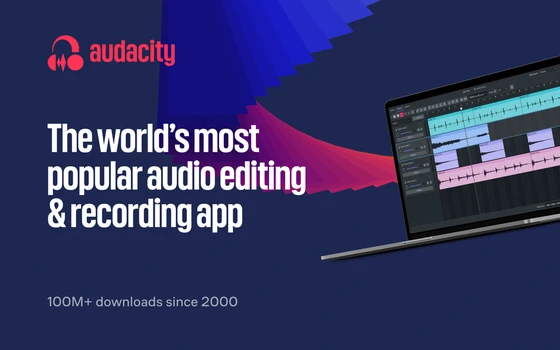
Audacity 4 rebuilds the interface on Qt, with clips you can select and group directly
Audacity 4 moves the whole interface onto Qt, replaces the tool modes with context aware clip editing, adds grouped clips and three workspaces, and stores projects in a new aup4 format. The 4.0.1 patch brought back export multiple and a portable Windows build.
-
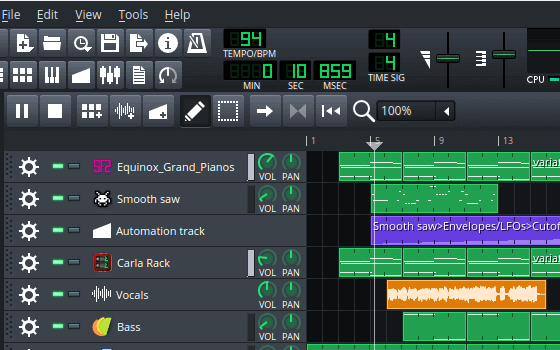
LMMS 1.3.0-alpha.2 arrives with 932 commits piled up over five years
After six quiet years LMMS shipped 1.3.0-alpha.2 in September 2026: 932 commits, 65 contributors and 8 new plugins, plus microtonal tuning, detachable windows and ARM64 builds. The stable release is still the one from July 2020.
-
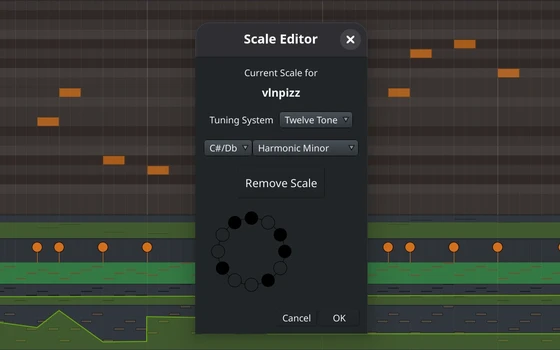
Ardour 9.8: keys and scales arrive, and a note that falls outside gets marked
Ardour 9.8 brings keys and scales into this open source digital audio workstation: notes outside the scale are marked in the piano roll and may be corrected per track. A crash during recording now recovers what was captured, losing at most five seconds.
-
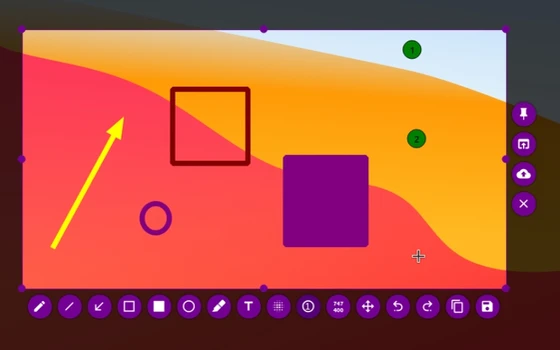
Flameshot: open source screen capture with arrows, blur and text in one pass
Flameshot is an open source cross platform capture tool that lets you draw arrows, blur sensitive areas and drop text on the image right after the selection is made, with a rearranged toolbar, editable hotkeys and a command line interface for scripted captures.
-
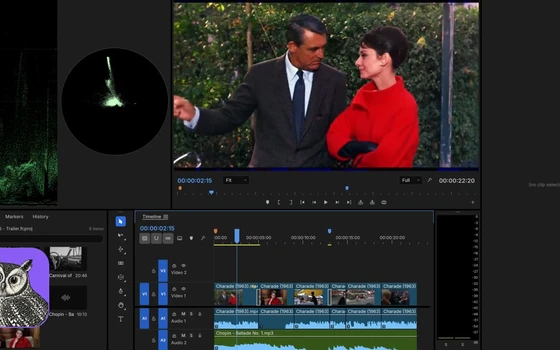
FilmCraft is an open source video editor written from scratch in Rust, down to its own codecs
From the ArtCraft team, an open source non linear video editor written from scratch in Rust: H.264, HEVC and ProRes codecs, the timeline, grading, audio and subtitles are all implemented in house.
-
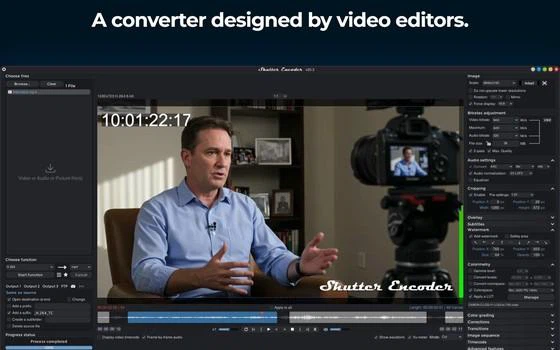
Shutter Encoder review: the free transcoder editors actually keep installed
Written by a working French editor, it puts presets for beginners and full encoder parameters for professionals in the same window: convert, compress, extract audio and burn subtitles without opening a second tool.
-
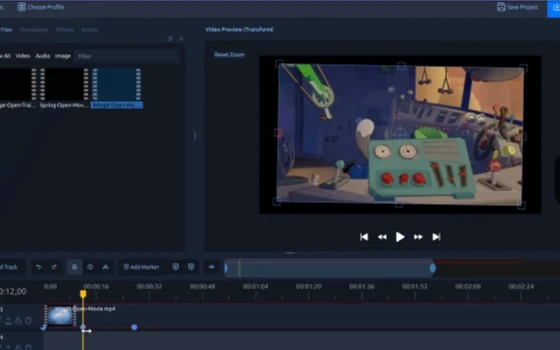
OpenShot Video Editor Review: The Easiest Door Into Cutting Video
OpenShot is the editing program you can hand to someone who has never cut a video: drag clips onto a timeline, drop a transition, add keyframes from a right click. Free, open source and without watermarks.
-
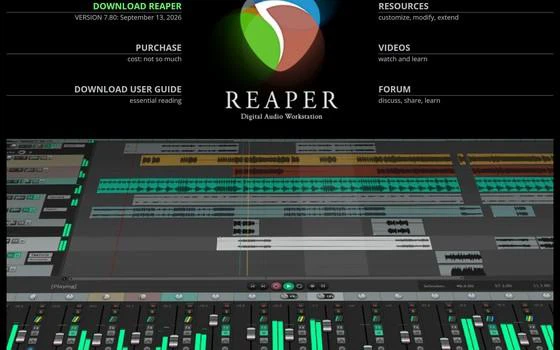
REAPER: keep the budget for the music instead
Music software tends to start at four figures. REAPER went the other way: a sixty-day trial with nothing removed, a personal licence at sixty dollars, and free upgrades through the whole major version.
-
Ant Media Server takes the delay out of live video
Traditional live streams arrive seconds behind reality, which is why the neighbour cheers before your phone shows the goal. Ant Media Server pushes WebRTC playback down to roughly half a second and covers ingest, transcoding and multi protocol delivery in one chain. Version 3.1 adds NDI sources, SRT with language tags and a new console.

-
Tautulli 2.18.1: a dashboard that answers who is watching what
Tautulli is an open-source dashboard that runs beside a home media server and turns viewing into numbers: who is watching, when, what, and on which device. Live cards show resolution, bitrate, bandwidth, subtitles and audio track, history is aggregated by user, content and hour, and notifications fire when content arrives or a playback fails. Version 2.18.1 arrived at the end of August 2026.
-
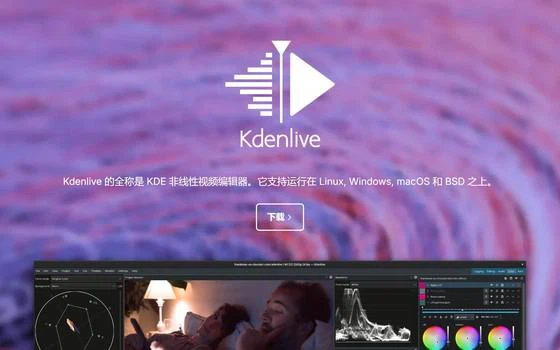
Kdenlive 26.08: an open source editor that covers all three desktops
Kdenlive is the non-linear video editor built by the desktop community behind the K suite, running on Windows, macOS and Linux with the same project file. Multi-track timeline with nested sequences and automatic backups, proxy editing on modest machines, multicam and three-point editing, a mixer with voiceover recording, automatic subtitle transcription, and hundreds of keyframable effects. Version 26.08.1.
-
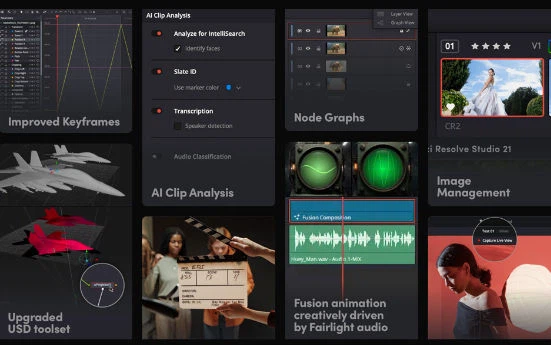
DaVinci Resolve: a whole post-production chain in an edition that costs nothing
DaVinci Resolve keeps media handling, editing, colour grading, visual effects and audio inside one application, divided into pages so nothing has to be exported in between. The free edition is complete enough for most individual work.
-
MusicBrainz Picard 2.13: acoustic fingerprints name the song, so a badly labelled library gets sorted properly
Picard is the open-source tagger published by the MusicBrainz project, and its unit of work is the whole album rather than the single file. Even a file with no tags at all can be identified from its acoustic fingerprint, after which artist, release, track number, year and cover art are written in one pass.

-
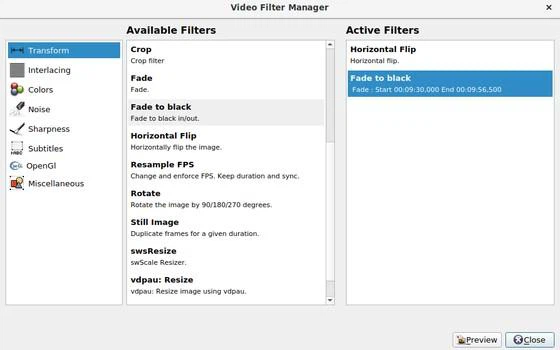
Avidemux: a light open source video tool where a lossless cut takes seconds
A tool of a few tens of megabytes for the jobs that do not need a timeline: cut the title off, take the advertisement out, change the format. With both outputs set to Copy, everything between the two markers is kept without being encoded again, so a trim of several minutes takes seconds and the picture is untouched; the price is that a cut has to fall on a key frame. Frame accuracy is a switch away.
-
MicYou: turning an Android phone into a proper microphone for a computer
An open-source tool that routes an Android phone's audio to a computer over Wi-Fi or USB and presents it as a normal microphone, with noise suppression, automatic gain and de-reverb built in. Runs on Windows, macOS and Linux.

-
第 1 / 2 页