
Rhinoceros 3D review: the modelling tool that wins on mathematics
Summary
Rhino builds on NURBS curves and surfaces with a precision that manufacturing actually respects, pairs it with the visual programming environment Grasshopper, and sells a permanent licence instead of a subscription.
Recommend- Name
- Rhinoceros 3D
- Version
- 8
- Pricing
- Paid
- Open source
- Proprietary
- Operating system
- WindowsmacOS
- Website
- https://www.rhino3d.com/
- Updated
- 2026-10-06 19:43
Where the industry agreement on precision comes from
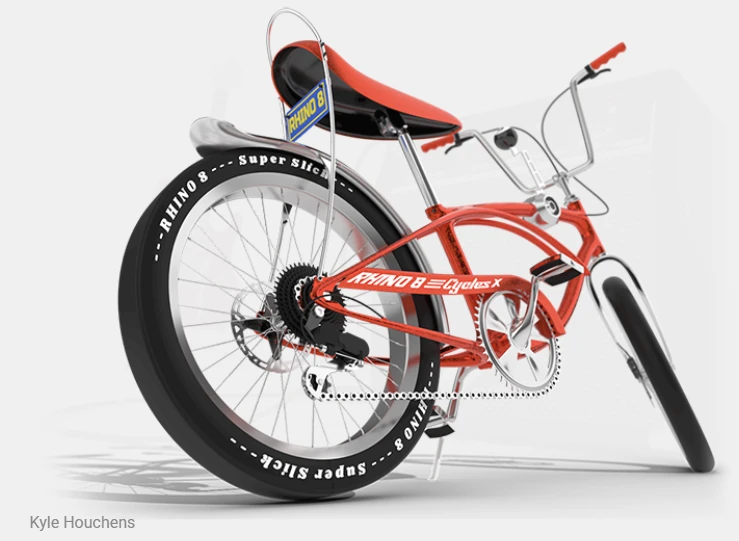
In three dimensional modelling, different tools win on different things. Some win on being easy to learn, some win on the quality of their renders, and this one wins on mathematics. The core language is NURBS, non uniform rational B splines, which describe curves and surfaces as equations rather than as dense meshes of triangles. That choice determines what the output is worth downstream: a fillet drawn in this environment can be handed to a machining centre without a translation argument, a jewellery surface can be divided to tolerances measured in fractions of a millimetre at the setting, and a hull line can survive a lofting check by a shipyard.
The point is not purity. The point is that free form geometry eventually has to be manufactured, and at that moment precision stops being a preference and becomes a hard requirement. Software that approximates beautifully in a viewport and disappoints in a workshop is a category this tool was designed to avoid.
Grasshopper is where the distance opens up
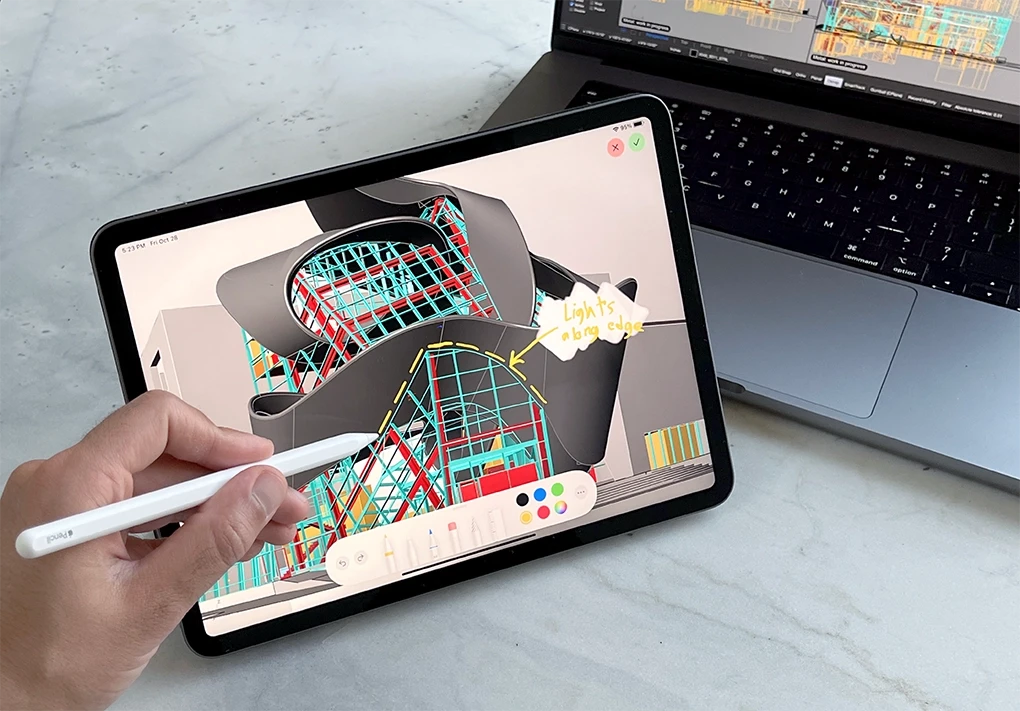
The gap between this and ordinary modelling tools is created by the visual programming environment built into it. Logic is assembled by connecting nodes rather than by writing a script: define a family of forms, and changing one dimension rebuilds the whole assembly. Arrays, lofting, form finding, the repetitive labour of iterating a hundred variants, all of that moves from the hands to the algorithm, and the designer keeps the judgement.
Around that core a plugin ecosystem has grown to cover structural analysis, environmental simulation and digital fabrication, which is why a large share of advanced work in architecture and product design grows out of this pipeline rather than out of a drawing board. The eighth generation filled in the gaps that used to send people elsewhere: subdivision modelling for the early sketch phase, real time display of materials, and proper documentation annotation so that the drawing set can leave the modelling tool.
It helps to be concrete about what an equation based surface buys. A mesh is a photograph of a shape: fixed resolution, fixed number of points, and any change of scale or curvature means rebuilding it. A NURBS surface is a description of the shape: evaluate it at any resolution you like, cut it anywhere, and the result is still mathematically exact rather than a best fit between vertices. Every manufacturing step downstream, whether it is tool path generation or a tolerance check, is happier with a description than with a photograph.
The same reasoning explains why this tool keeps appearing in fields that look unrelated to each other. A ring, a chair shell, a yacht hull and a stadium roof have nothing in common as objects, but all four are free form surfaces that have to be built, and all four are governed by the same question: does the geometry you drew still describe the geometry you can produce. That question is answered in the modelling language rather than in the presentation layer.
The temperament here is that of an engineer engraving tool, not a one click image generator. Precision, controllability and extensibility are built solidly, and the spectacle is left to others. On the day a design has to become a manufactured object, you are glad the choice was made this way.
The commercial model, and the honest limits
The licensing is unusually reasonable by current standards: a permanent licence, one purchase for long term use, and only major version upgrades require an additional payment. There is no subscription anxiety, no feature held hostage to a renewal date. Windows and macOS are both supported, and the educational price is friendly enough that students can learn on the real thing rather than on a limited edition.
Two caveats. The thinking required by NURBS is not the thinking required by polygon modelling, and the first weeks of curve and surface work involve unlearning habits, which is the real entry cost rather than the price. And the built in rendering is adequate rather than exceptional: for presentation quality work a dedicated renderer is still part of the pipeline.
A note on the version question, since buying software is now partly a bet on a company continuing to exist. The eighth generation added the subdivision tools, the display work and the annotation, which means the upgrade path has been delivering substance rather than cosmetics. For a workshop that plans to keep files alive for a decade, that pattern matters more than any single feature announcement.
But if the work involves precise surfaces, the alternatives are thin. That is a strange position for a tool this old to hold, and it is the reason studios keep a licence on a machine for a decade at a time.