
LXDE still works: the lightweight desktop that stayed behind when LXQt took over
Summary
LXDE is an open-source Linux desktop that pairs PCManFM with Openbox and LXPanel to stay under a modest memory budget, which is why old machines keep running it.
Recommend- Name
- LXDE
- Version
- 20260922
- Pricing
- Free
- Open source
- Open source
- Operating system
- Linux
- Website
- https://github.com/LXDE
- Updated
- 2026-10-06 20:44
A desktop built for machines nobody wants any more
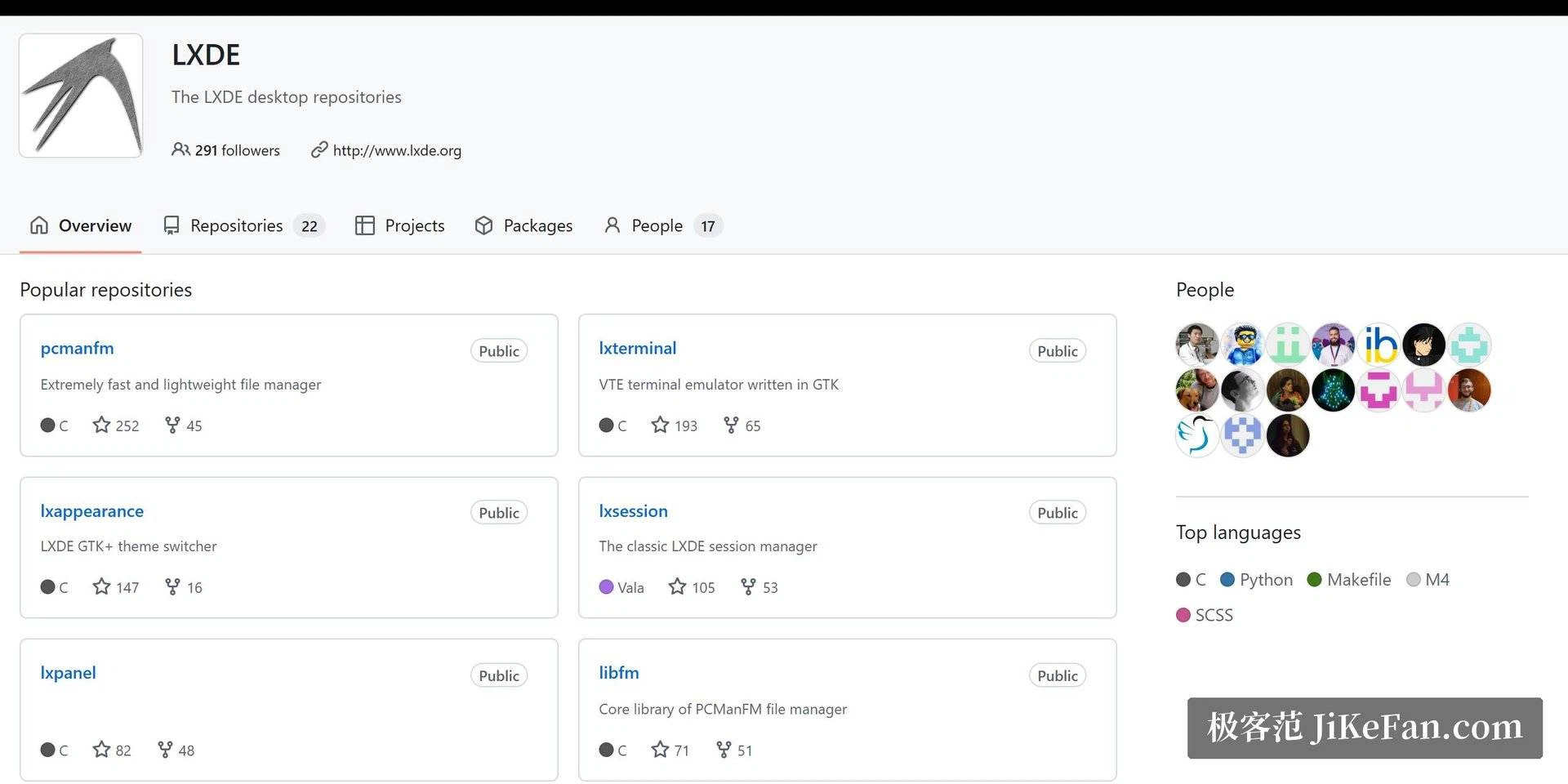
There is a laptop from a decade ago in a cupboard, a netbook that stopped being useful, an old desktop in a lab with modest parts. None of them has to go to recycling. LXDE, the Lightweight X11 Desktop Environment, appeared in 2006 with a single aim: deliver a complete and usable desktop on the smallest possible budget of resources. It is written with GTK, and its memory use has sat at the bottom of the table among mainstream Linux desktops ever since. A figure just above a hundred megabytes after boot is enough to browse, work and watch video.
That number is the whole argument. A modern desktop is not slow because its authors were careless, it is slow because it does more, and on a machine with limited memory every extra service competes with the browser for the same space. Choosing a desktop that asks for little is the cheapest way to give an old computer a few more years of useful life.
Parts that can be taken apart
LXDE is not one solid block. It is a set of components that can be used separately. PCManFM is the file manager and is known for speed, with tabs and volume handling. LXPanel provides the panel and the application menu. The default window manager is Openbox, deliberately minimal, and it can be replaced with Fluxbox, IceWM or even a tiling manager such as i3. Small utilities such as LXTerminal and GPicView run on their own as well.
The building-block design means the collection works as a full desktop and also as a source of individual parts for somebody else s setup. A tiling window manager can be paired with the lightweight file manager without adopting the rest, which is a common way to end up with a system that is both fast and comfortable.
After the handover to LXQt
In 2013 the original author and the core team left for a Qt-based project, merging with Razor-qt to form LXQt, unhappy with the resource consumption and the design direction of GTK3. Distributions followed, and Lubuntu among them moved across. It would be reasonable to assume that the older desktop died at that point, and it did not.
The component repositories still receive community commits, the core pieces such as PCManFM and LXPanel keep getting maintenance fixes, and the packages remain in the software sources of the major distributions. The pace is low and nobody pretends otherwise, but low is not the same as stopped, and a desktop that changes slowly is exactly what some machines need.
Who should still consider it
The clearest case is hardware below 1GB of memory, where a modern desktop and a browser cannot both fit and something has to give. Embedded devices and single-purpose machines are another, because a small footprint leaves more room for the actual task. The third case is a matter of temperament: people who dislike software that keeps adding features they never asked for will find the restraint refreshing.
It is released under the GPL and LGPL, so there is no licence to buy and no account to create. For a machine that only has to browse, write and play a video, that is the whole requirement list.
The story resembles an old-fashioned craftsman. The stage was handed to a more modern successor, and the original stayed where it was, polishing the work in its hands. It no longer chases new features, but as long as old hardware wants to be useful, this desktop has a reason to exist.