
Jira hands on: the shared language of a product team
Summary
Jira turns requirements and defects into structured issues with a full lifecycle, runs Scrum and Kanban side by side, links commits to tickets and uses natural language to draft new ones. Free for small teams.
Recommend- Name
- Jira
- Version
- 20260922
- Pricing
- Free
- Open source
- Proprietary
- Operating system
- Web
- Updated
- 2026-10-06 21:55
Where a shared language comes from
The hard part of work across teams is rarely the technical difficulty. It is that information does not travel: a requirement arrives as one sentence in a chat, a defect arrives as a screenshot, the schedule lives in somebody memory, and when something slips nobody can reconstruct who agreed to what. Jira became the default answer for product teams precisely because it structures all of that. Every requirement is an issue. Every defect has a full lifecycle. Who created it, who owns it, which step it is stuck on, when it is expected to close: all of it is recorded and all of it is queryable.
A new joiner reads the board for ten minutes and understands the state of the project. That sentence is the whole business case, and it is why teams keep paying for a tool that is, by any measure, not lightweight.
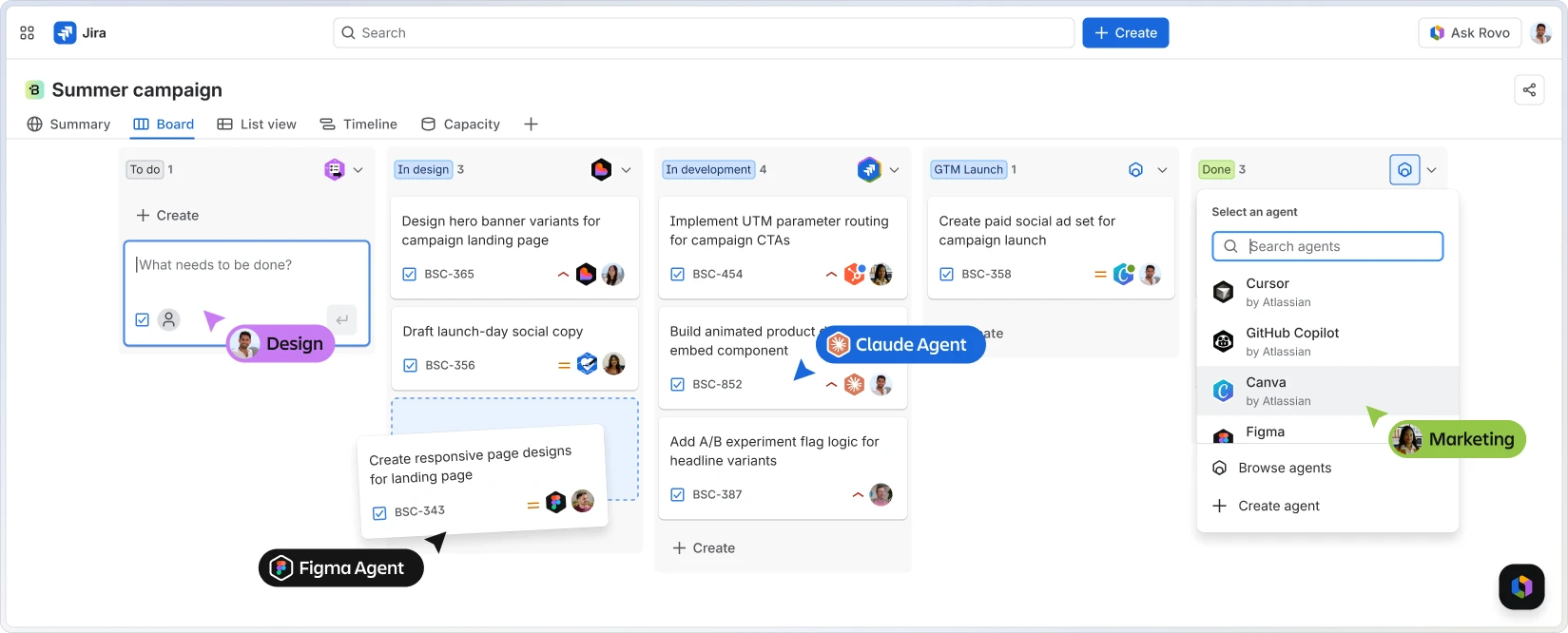
Scrum and kanban, each at its own tempo
Support for agile methods is built in deeply rather than bolted on. Scrum teams use sprint planning to cut requirements into two week iterations, and the burndown and velocity charts make estimates gradually honest. Teams closer to continuous delivery use the kanban board, where cards move when they move and a work in progress limit keeps the queue from turning into a landfill. The workflow engine is the most durable part of the product: states, transition conditions and approval steps are all configurable, from a simple three step flow to something with security review gates in the middle.
Commits and branches in the code repository link back to issues automatically, so when the change is merged the status follows without anyone updating two systems by hand. That single connection removes most of the daily friction between writing code and reporting on it.
In daily use the lifecycle is what does the work. A defect is opened with the environment and the steps to reproduce, triaged into a priority, assigned to a person, moved through development and review, and closed with the version that fixed it. Because those steps are states rather than chat messages, an argument about whether something was already handled ends in ten seconds with a filter, and a release note can be assembled by asking which issues closed in the last cycle.
The value of Jira is traceability. Why did that requirement change three months ago, and who introduced this defect in which version: the answers are lying in the issue history. Project management, at bottom, is the discipline of making a process replayable.
The newer, quieter improvements
Assistance features have been the visible addition of the last two years. Describe a problem in ordinary language and a structured issue comes out with fields already filled. Sprint planning gets suggestions instead of a blank board, and the repetitive tidying work that used to eat an hour on Monday morning shrinks noticeably. None of it replaces judgement, but it lowers the cost of keeping the record accurate, which is the part teams always neglect.
Pricing is straightforward. The free tier covers up to ten people with the full feature set, so a small team starts at zero cost and pays per head only once it grows. It is a genuinely usable free plan rather than a demo.
The reporting layer is the quiet payoff of all that structure. How many defects did the last release introduce, which component absorbs the most rework, how long a ticket typically waits for review: each question is a saved filter, not a meeting. Once a team has run this way for a quarter, the historical record becomes the most useful document the project owns, because it is the only account of the work that nobody had to write from memory.
Two honest warnings. The configuration freedom is double edged: a workflow built by an enthusiast can become so elaborate that the team spends its mornings moving cards through unnecessary states, and the usual advice is to start from a simple template and evolve. And a small team that only needs a shared to do list will find the whole thing heavy, because it is designed for products with a lifecycle rather than for chores. In teams that ship software for a living, though, its position is still secure.