
Devin Desktop puts local and cloud agents on one board
Version 3.10.27
Summary
Devin Desktop, the renamed Windsurf, folds local and cloud agents into a single status board and lets third-party agents join through an open protocol.
Recommend- Name
- Devin Desktop
- Version
- 3.10.27
- Open source
- Proprietary
- Operating system
- WindowsmacOSLinux
- Website
- https://devin.ai/download
- Updated
- 2026-10-05 17:07
One agent sits on the desktop. Another runs in a terminal tab. A third is chewing through a long job somewhere in the cloud. Each of them owns a window, and every switch costs a little memory: which one is waiting on a test run, which one is stuck asking for permission, which one finished an hour ago and nobody noticed. Cognition turned that interface-level annoyance into part of the product. In June 2026 the editor formerly known as Windsurf was renamed Devin Desktop, with the agent control center promoted to the default surface instead of a side panel.
The official description is worth repeating exactly, because the emphasis is deliberate: Devin Desktop is a full IDE with an agent manager built into it, not an agent manager with an IDE bolted on.
One board, local and cloud laid out side by side
The control center sorts every task handed to an agent into columns by state: running, blocked, and finished but not yet dealt with. Several things can be in flight at once, progress is visible at a glance, and you step in only where a human decision is genuinely required instead of sitting in front of one session waiting for it to end. Sessions, pull requests, files and context can be grouped into a Space, so a group of agents shares that material rather than each one relearning the project from scratch.
The team's own framing of the problem is honest about where the bottleneck moved. Engineering groups no longer need convincing that AI coding tools are useful; what they lack is a way to keep watch over an agent workforce that keeps growing. The control center is aimed squarely at that.
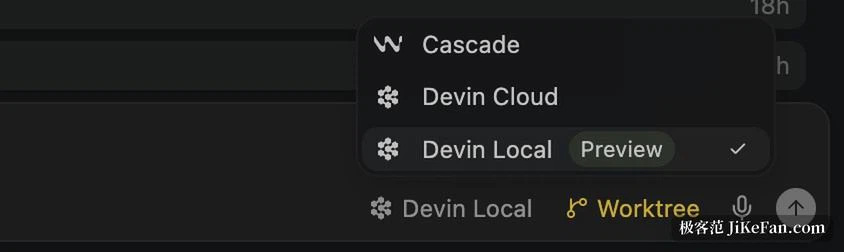
It does not only run its own agents
Devin Desktop speaks the Agent Client Protocol, an open specification whose purpose is to let any compatible agent run inside any compatible editor. Beyond Devin itself, third-party agents and agents a team builds internally can be attached, and they get the same treatment as the native one: they appear on the same board, they run inside Spaces, and they share context with everything else.

A session can live in one of three places: locally, in a separate worktree, or in the cloud. Switching between them happens in the same window, and credentials, rules and context travel with the work, so nothing has to be configured a second time in a different tool.
The local agent changed hands
Anyone who used Windsurf remembers Cascade, the original context engine that scanned the file tree, followed relevant references, lined up a sequence of actions and then ran terminal commands. According to the official changelog it has been removed from the stable release. Its replacement, Devin Local, is a local agent rewritten from scratch in Rust, matching Cascade's capabilities and settings, and the team says most tasks reach the same result using up to thirty percent fewer tokens.
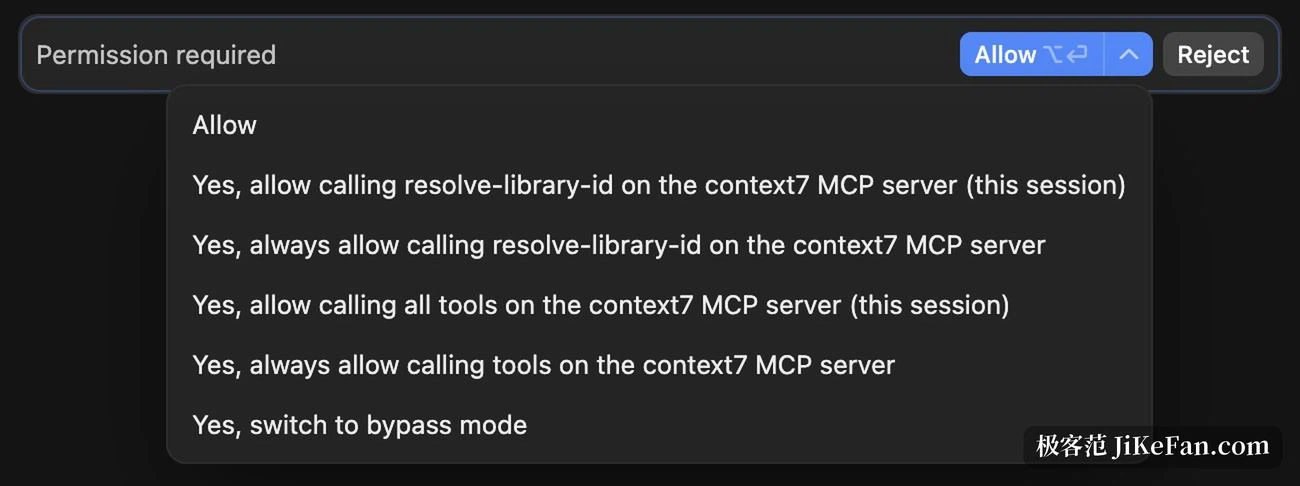
Devin Local can also spin up independent sub-agents for smaller pieces of work, in the foreground or the background. Sub-agents share tools and repository context with the parent but run their own conversation chains. On top of that sits an operating-system-level sandbox: which paths are writable follows the permission scope, and network access is limited by a domain allowlist, which makes local execution considerably more containable than it used to be.
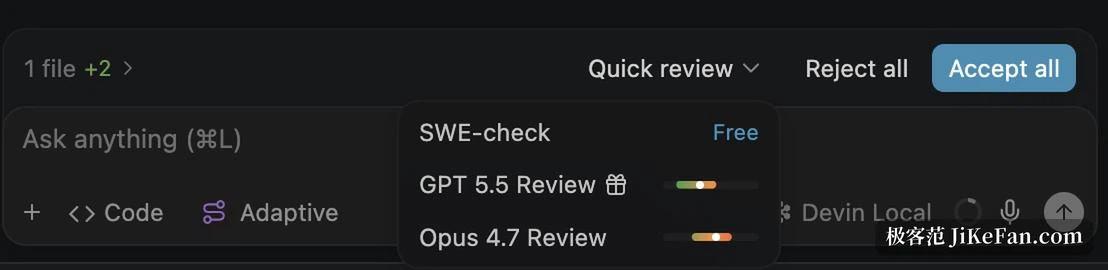
One small feature earns its place in daily use. Quick Review is a dedicated sub-agent shipped with Devin Local that takes a fast pass over local changes, so a round of comments arrives before you commit rather than after a human reviewer gets to it. Older sessions are not wasted either: a migration wizard in the command palette moves workflows and memory across.
It is still a full IDE
A new name does not mean a new tool. The editor, extensions, keybindings, language services and workflows all stay, and everything remains backward compatible with the previous release and with the wider ecosystem of mainstream editor plugins. Rules files stay compatible too: the old format is still read, the new rules directory takes precedence, and common conventions such as AGENTS.md are supported. Directory-style rules can declare in the file header how they activate, whether always on, judged by the model, matched by path, or triggered by hand, and administrators can push one set across an entire organisation.
The installer name did change, though. On macOS the application is called Devin, and on Windows the executable carries the same name. For an individual that is an ordinary update. For the IT staff who own device management policies, the new name has to go on the allowlist ahead of time, or the policy will quietly lock people out.
Agent control center a board split by state, with local and cloud agents managed in one place.
Spaces let several agents share sessions, pull requests, files and context.
Open protocol access any agent that speaks Agent Client Protocol joins the same board.
Local agent Devin Local rewritten in Rust, up to thirty percent fewer tokens by the team's count, with sub-agents and a sandbox.
What the plans cost
The free tier is zero dollars and grants a light allowance: inline edits and tab completions are unlimited, while the choice of models is limited. Pro costs twenty dollars a month with a larger allowance, opens access to frontier models, and allows free use of the company's own SWE-2 plus a set of open models inside both the desktop app and the command line tool, a benefit the official page marks as running through October 2026; cloud agents come with it as well. Max costs two hundred dollars a month with a substantially larger allowance. The team plan charges eighty dollars a month as a base fee plus forty dollars per full-time developer seat, and includes consolidated billing, an admin dashboard with analytics and priority support.
One caveat is worth holding onto: the sticker price is not a fixed number of tasks. Pro and team seats are metered against daily and weekly allowances, and a team that leans on it hard will hit the ceiling sooner than expected. The pricing page also lists a cap on concurrent sessions, ten for Free and Pro, and no limit for Max and team plans.
Once agents multiply, compute is never the scarce thing. The scarce thing is how many threads a person can hold at once. Collapsing the entry points into one board is a way of giving that attention somewhere to land.