
ArtMoney still edits the numbers in single player games, and the free SE covers most of it
Summary
ArtMoney finds a value in a running game and lets you change it, with eight search modes, pointer chains up to six levels and more than six thousand user made tables. The SE edition is free for personal use, and the current version is 8.21.3.
Recommend- Name
- ArtMoney
- Version
- 8.21.3
- Pricing
- Free
- Open source
- Proprietary
- Operating system
- Windows
- Website
- http://www.artmoney.ru/
- Updated
- 2026-10-22 21:37
Some single player games hold their numbers with a grip that wears you down: not enough money for gear, a health bar that empties at the first touch. What a tool like ArtMoney does is plain, finding that number in the memory of the running game and writing the figure you want. It has been maintained since 1996, and the current version is 8.21.3.
What it actually changes
While a game runs, health, money and ammunition sit at some address in memory. ArtMoney works by having you supply a value you already know, after which it lists every address holding that number along with the current value. The first pass usually hits hundreds of places, so you go back into the game and make the number change, then narrow with the new figure, and after a few rounds one address usually remains. The developer is System SoftLab and the site positions the tool as a memory editor for Windows, with a starting point in 1996.
It can scan memory, a single file or a whole folder. The first covers a running game, the other two cover save files or data in an install folder, since some games write their important numbers into a save, where editing the file is less work than editing the process.
Eight ways to search for a number
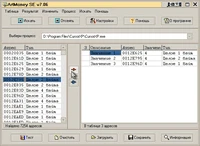
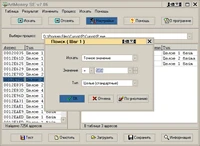
An exact value is only the most basic route. The site also lists number sequences, hexadecimal sequences, ranges, unknown values, encoded values, structural search and formula search. In practice a range suits a case where the exact figure is forgotten and only a rough band is remembered; an unknown value suits starting with no idea of the original number and narrowing by whether it changed or not; encoded values handle games that store numbers encrypted; structural search targets several related values sitting together; and formula search lets you write a conversion of your own.
Pointer search is the other line, and it answers the problem of finding a value once and losing it after a restart. Dynamic addresses may land somewhere different each run, while a static pointer stays put and remains valid after the game restarts. The PRO edition supports pointer chains up to six levels deep and SE up to three, and the deeper the chain the further it reaches through a game's layered objects.
Disassembler and debugger
One layer further in sit the tools at the assembly level. A built-in disassembler turns a stretch of machine code back into a list of instructions, where breakpoints can be set, registers and flags inspected and changed, and the instruction reading or writing that address identified. When a pointer refuses to turn up, one approach is to replace that writing instruction so the game stops restoring the value. This part leans toward reverse analysis and sits a layer away from what an ordinary player does day to day.
Emulated games: addresses follow the console
Playing an old console title through an emulator means the memory addresses are emulated and do not match a process on a PC. ArtMoney offers a set of emulator options that map addresses onto the real console address space, so a table built this way need not be tied to one emulator version. It also provides an integer three byte data type for platforms such as Game Boy, NES, SNES and the Sony PlayStation, and byte order can be normal or reversed, the latter common in emulators for the Sega Genesis, the Nintendo GameCube and Wii, the Sega Saturn and the Panasonic 3DO.
More than six thousand ready tables
The tables page on the site carries more than six thousand entries contributed by users. One table is one file holding addresses and notes someone already worked out for a particular game, and loading it lines up money, health and other key values without searching from scratch. Tables for emulated games bind to the emulator options, so they carry across versions. That accumulation is probably why the tool has survived thirty years: writing the tool is not hard, and what is hard is a stock of addresses somebody else already stumbled through.
Where SE and PRO differ
Both editions share the version number 8.21.3. SE is a special edition free for personal use, and a PRO licence for one user costs just under 25 dollars, paid once, with later updates not billed separately. The differences sit mostly in how many search modes exist and how deep they go: SE has six value searches against eight in PRO, three levels of pointer against six, and both text and string search and folder search belong to PRO, as does the whole disassembly and debugging set. On a tight budget, start with SE to find out whether the habit will last, then decide about the money.
The boundary, stated first
A tool like this has a legitimate place only in single player games: adjusting numbers in your own save so the game sits better, harming nobody. The developer draws the line in its own notes and limits the purpose to single player titles, with network and online services outside support. The reason is not hard to follow, since online games keep their data on a server and locally edited figures get rejected by validation, and forcing a way around that is another matter entirely, one that spoils other people's experience and usually breaks the terms of service. Keeping a backup of the save before editing is the one habit worth repeating.
ArtMoney is a classic of the old school: the interface will never win a prize, the documentation still lives in the age of web pages, yet the search modes, the pointer scanning and the emulator support have thirty years behind them, and the table library is not something to catch up with quickly. It suits a single player who will spend half an hour understanding the principle; anyone who only wants the shortcut will find the free SE edition enough to get an answer.