
-
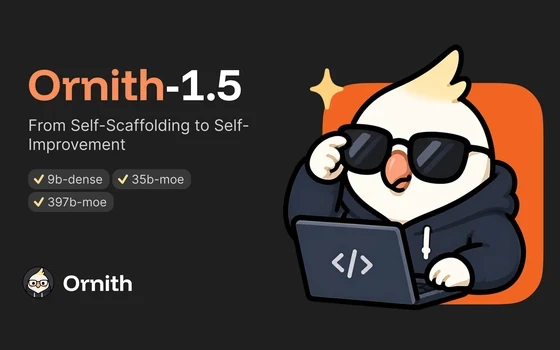
Ornith spans 9B to 397B and writes its own training tasks
From DeepReinforce, Ornith hands task writing, scaffolding and solution writing to the model itself, comes in three sizes from 9B to 397B, and ships under MIT with a 256K context and local deployment.
-
Chatterfly: hold Fn, speak, and get a finished draft
A Tencent voice input tool in beta since September 2026: hold Fn, say it the way you would say it out loud, and get a cleaned up written version that already matches the audience you are writing for.
-
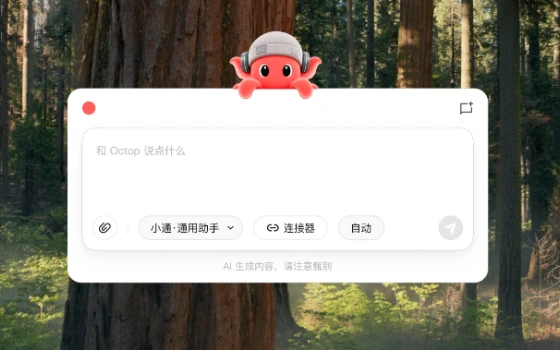
Octop: a self hosted AI assistant that keeps the data at home
An AI assistant platform from Tencent Cloud, MIT licensed, where conversations, workspaces and keys stay on your own machine and nine chat platforms route into the same set of experts.
-
DeepSeek Harness: an open agent runtime you can install and run
An open source agent runtime from DeepSeek with a desktop build that bundles Node.js, pnpm and a Python environment, four preset modes, a plugin page and a trace view.
-
Continue review: an AI coding assistant where you pick the model
An open extension that plugs into the editor you already use and talks to whichever model you point it at: cloud, local, or a private deployment inside the company network, with the configuration written in a file you own.

-
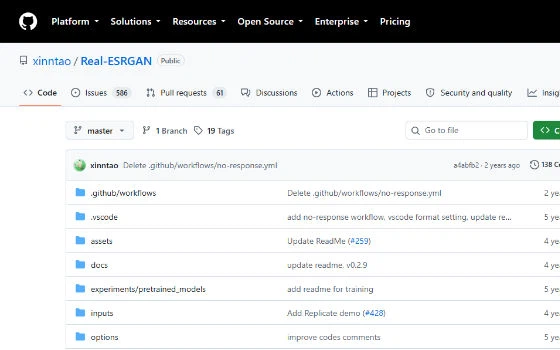
Real-ESRGAN review: the algorithm underneath a shelf of enlargement apps
Not an application but a paper and its reference implementation, trained purely on synthetic degradations and loosely licensed enough that a whole shelf of GUI products wraps it. Three ways in, with different costs.
-
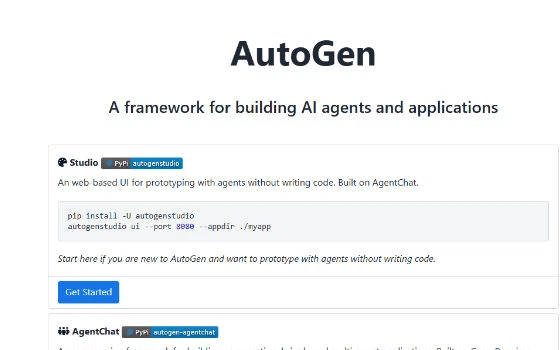
AutoGen in 2026: a layered multi-agent framework that stopped adding features
Four layers split by depth — a no-code studio, a conversational layer, an event-driven core and an extension pack. The framework is in maintenance mode, so the honest question is whether to start on it or only keep running it.
-
OpenClaw review: an open-source personal assistant on your own hardware
An assistant that lives in the chat apps you already use and keeps every trace of its memory on your own disk. A non-profit foundation holds the project, there is no paid tier, and one gateway process routes 29 channels into a coding agent.

-
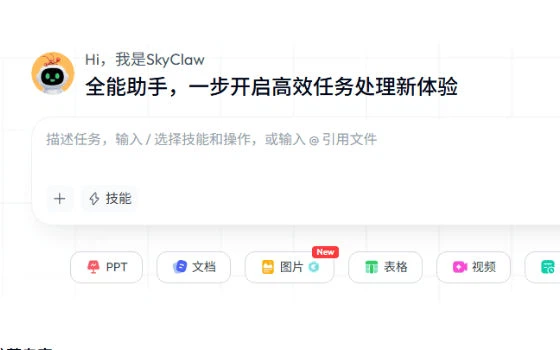
Tiangong grew from an AI search box into a task-taking agent workspace
Search is now one entry in a wider workspace: an all-round assistant takes a described task, picks skills or experts to run it, schedules it, and can be wired into a chat tool so the work happens unattended.
-
Metaso answers a query with a cited outline instead of a page of links
No ads, straight to the result: pick one of three depths, search across the web, a document library, academia, images, video or podcasts, and get an answer broken into sections with a source marker on every claim.

-
NotebookLM answers only from your own sources, then turns them into a podcast
Upload PDFs, sites, videos or audio, and every answer stays inside that material with an in-text citation you can click back to. The same sources can be reworked into a study guide, a briefing, a mind map or a two-host audio discussion.

-
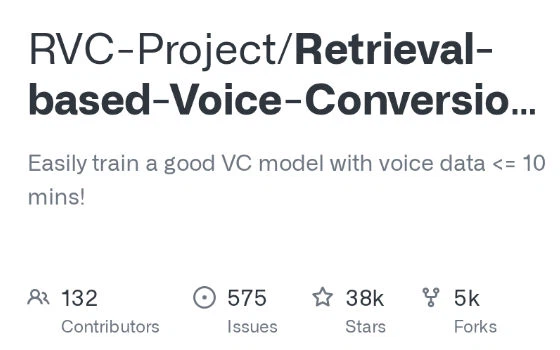
RVC turns one recorded voice into another, with ten minutes of training audio
An open source framework for voice timbre conversion and live voice changing. It asks for at least ten minutes of clean speech to train, reaches 170 milliseconds of end to end latency, and ships both a web interface and a live interface.
-
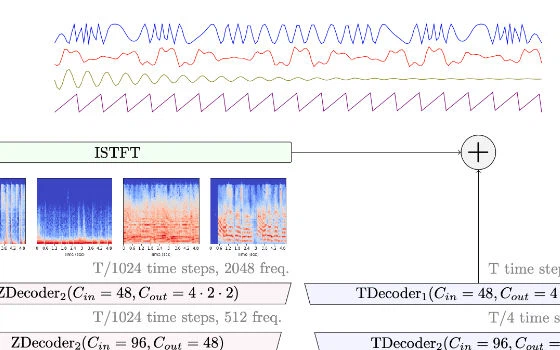
Demucs splits a mixed song into four stems from one command line
An open source source separation model that takes a mixed song apart into drums, bass, vocals and the remaining backing. It runs as one command line call, can be driven from Python, and the code is MIT licensed.
-
Ultimate Vocal Remover splits a track into voice and backing, with nothing to set up
An open source tool that pulls a song apart into vocals and accompaniment using source separation models. The official installer bundles the interface, Python, PyTorch and the dependencies, so nothing has to be prepared beforehand.
-
WhisperX puts word timestamps and speaker labels on top of Whisper
A pipeline that repairs two gaps in Whisper: timestamps stop at sentence level and there is no batch mode. WhisperX force aligns for word level timing, then labels speakers, and reports 70 times real time on the large-v2 model.
-
第 1 / 5 页