
Steam: a PC game platform holding 30,000 titles and a workshop in one free client
Summary
Steam is Valve's PC game publishing and community platform: the store is officially described as carrying around thirty thousand titles, while community, workshop, streaming and chat all live inside the same free client.
Recommend- Name
- Steam
- Version
- 20261010
- Pricing
- Free
- Open source
- Proprietary
- Operating system
- WindowsmacOSLinuxAndroidiOSWeb
- Website
- https://store.steampowered.com/
- Updated
- 2026-10-11 11:06
Between a finished game and a player who sees it sit publishing, payment, updates and community. Gathering all of that behind one entrance is where this platform actually stands.
A store, and everything the store is not
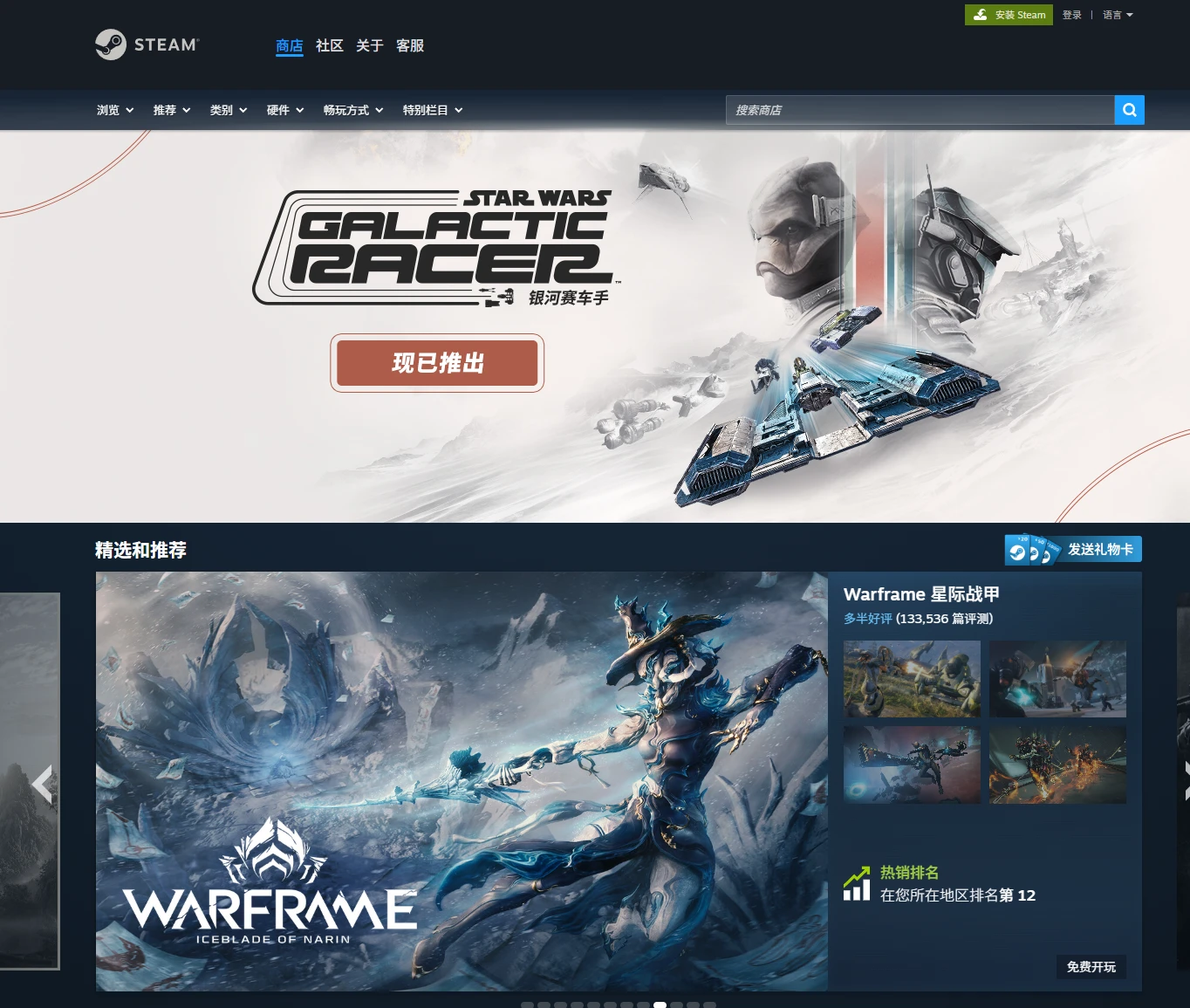
Steam is run by Valve, and its own about page defines the place as being about playing games, talking about games and creating games, three verbs that map onto three lines of business. The store is the part most often mentioned: the official text states it carries roughly thirty thousand titles, from large productions down to small independent work, with automatic updates and recurring discount events attached. For a player this means buying, updating and launching happen inside one client, with no separate update mechanism to maintain per title.
What sits beside the store matters just as much. The community side covers groups, clubs and in game chat. Elsewhere the official material notes that the store accepts more than a hundred payment methods across thirty five currencies, so that users in very different regions can each find a workable way to pay. The クライアント itself ships with twenty eight languages, a number printed on the official pages that also explains how it has stayed the default entrance across an unusually wide spread of territories.
Things players make, and things players watch
The workshop is the most distinctive community feature here. It is described as a place built around content made by players: mods and items can be created, explored and obtained for games that support it, across close to a thousand titles. For players this stretches a game's life beyond official updates; for developers it hands part of content production to the community while keeping it inside the same distribution entrance.
Streaming and game hubs sit alongside. The official description promises one click broadcasting of gameplay, shared with friends or community members, while a game hub collects the discussion, content and updates attached to a particular title. Both belong to what might be called community infrastructure: they generate no revenue directly, yet they decide how long players are willing to stay around a game rather than inside it.
The platform's own shape keeps extending. The official pages mention the Steam Deck handheld and the Valve Index headset, carrying the PC game experience into handheld and virtual reality directions, while the developer side is served by Steamworks, the set of tools and services used to distribute work. Players and developers living inside one system is the main difference between this platform and a plain distribution channel.
Why it is hard to replace
Laid out side by side, the stickiness turns out not to come from any single feature but from how these features interlock: library, friends list, chat history, workshop subscriptions, streams and achievements all point at one account. The longer a user accumulates inside it, the more would have to be abandoned to move elsewhere. That is a structural reason for its long dominance rather than the effect of any one campaign.
The boundary is equally clear. The platform handles publishing, updates, community and payment; the quality and performance of a game are not its doing, and support and refund processes have long been a focus of user discussion. Understanding it as the door through which a game reaches players comes closer to the truth than treating it as a feature list.
What it really sells is not a particular game but a long lived structure in which players, developers and communities all stay put; when everything hangs from one account, staying is simply the natural option.
How to use it well: manage workshop subscriptions separately from the library so that a large subscription list does not become impossible to navigate; follow the pages of developers you like, since new work and updates surface directly in the activity feed; and keep account security operations inside the クライアント rather than signing in through third party pages of unclear origin.