
PPSSPP: a free PSP emulator that runs on phones as well as computers
Summary
A free and open-source emulator for the PlayStation Portable, with resolution scaling far beyond the original hardware, save states at any moment, and official builds for Windows, macOS, Linux, Android and iOS. Maintained continuously since 2012.
Recommend- Name
- PPSSPP
- Version
- 1.20.4
- Open source
- Open source
- Operating system
- WindowsmacOSLinuxAndroidiOS
- Website
- https://www.ppsspp.org
- Updated
- 2026-10-25 22:00
The handheld everyone had in a pocket, and the games still worth going back to
The PlayStation Portable sold in enormous numbers and then quietly left the market. Physical consoles have been out of production for years, the second-hand ones on sale are increasingly scuffed, batteries are swelling, and the discs themselves are aging. Yet the library from that era has not lost its pull, and each year it becomes harder to reach honestly.
PPSSPP is the answer to that particular problem. It is a free and open-source emulator for the platform, first published in 2012 by an engineer who had already spent years in emulation work, and maintained continuously for more than fourteen years since. The code is written in C++, and the important part of how it works is a JIT recompiler: the handheld's processor instructions are translated on the fly into machine code for the host – x86, ARM or RISC-V – so even modest hardware can keep up.
Rendering at a resolution the original never had
The native output was 480 × 272. On a modern panel that looks soft and ragged, with stair-stepped edges on every diagonal. The emulator allows the internal render resolution to be raised to twice, four times or well beyond ten times the original hardware, and with texture filtering and anisotropic filtering switched on, a picture that used to be visibly blocky becomes sharp. Antialiasing is available as well, along with custom post-processing shaders for adjusting colour and brightness, so an older title can be made to look the way you remember rather than the way the small screen actually rendered it.
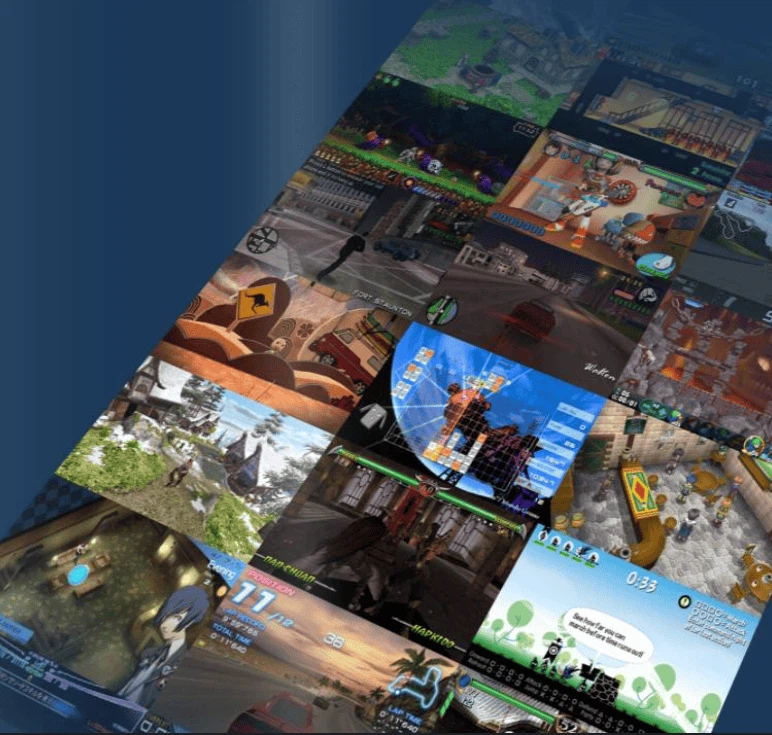
The effect is not only cosmetic. Text that was previously unreadable on a handheld screen becomes legible, distant detail stops dissolving into noise, and the interface of a game can be appreciated in a way that simply was not possible on the original panel.
Save states, so a bad run costs a minute instead of an evening
On real hardware, progress could only be kept at designated save points. Reach a boss encounter under-prepared, lose, and the evening's work is gone. This emulator supports save states: a keyboard shortcut at any moment writes the complete current condition to a slot, and loading from that slot picks up exactly where it left off. Saving before a boss, saving before a trap corridor, saving before a decision that cannot be undone – the frustration curve of a hard game drops sharply.
Existing progress is not stranded either. Save files exported from a real console can be imported, so a game already in progress continues in the emulator instead of starting over.
Five platforms, and a phone is enough
Official builds exist for Windows, macOS, Linux, Android and iOS, which is unusually thorough for this kind of project. On a phone, the on-screen controls support custom layouts and adjustable opacity, so the buttons can be moved out of the way of whatever the game puts in a corner. A Bluetooth controller turns the phone into a proper handheld. On Android there is a Vulkan back end as an option, which performs better on devices that support it. The iOS build reached the app store in 2024; system policy there prevents a JIT compiler, so it falls back to interpretation, but on recent chips of the platform's own design that is still enough to hold full speed for most titles.
Fourteen years of a community project
From a first release in 2012 to the present, the project has run for fourteen years, and that duration is the real reason for its compatibility record. Titles that stuttered or crashed a decade ago have been fixed one at a time by people reporting what broke. The licence is the second version of the GNU General Public Licence, the code base is C++, and the repository is public and active, which is why fixes arrive steadily rather than in bursts.
For anyone who remembers the handheld era and wants those games back, this is currently the most reliable way to play them – not because it is the only emulator, but because fourteen years of community maintenance is hard to argue with.