
OrbStack: containers, Linux machines and a local cluster on the Mac
Summary
A container and Linux machine manager for macOS that keeps the lightweight virtual machine behind the scenes but starts in seconds and sits nearly idle when unused. Docker command lines and Compose work unchanged, containers reach each other by name, and a single node cluster is built in.
Recommend- Name
- OrbStack
- Version
- 2.2.3
- Pricing
- Paid
- Open source
- Proprietary
- Operating system
- macOS
- Website
- https://orbstack.dev/
- Updated
- 2026-10-06 18:09
What it replaces, and why that layer was painful
Running containers on a Mac has always involved a layer nobody wanted to think about. Containers are a Linux idea, the Mac runs a different kernel, so a lightweight virtual machine has to sit behind the scenes and carry them. The older arrangements did that job heavily: memory went to the virtual machine rather than to the editor, startup took long enough to become a habit of leaving it running, and the first thing a laptop noticed was battery life and fan noise.
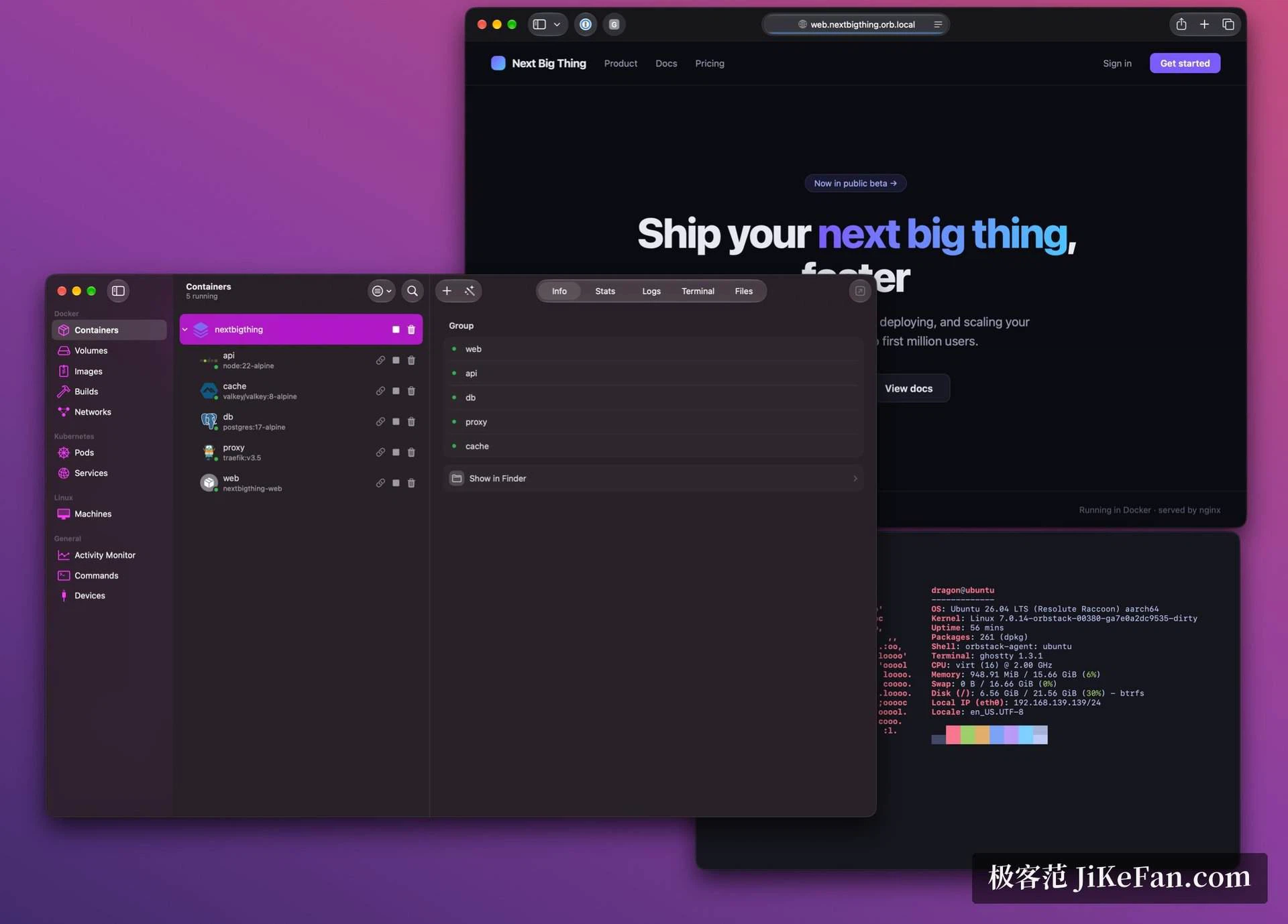
This tool keeps the same skeleton and changes the performance of it. It is still a virtual machine underneath, but written as a native application rather than as a bundle of parts, so it starts in seconds, sits at almost nothing when idle, and the vendor quotes background processor use below one percent and an installed footprint under ten megabytes. Those numbers matter less as specifications than as a change in habit: a tool that starts in seconds gets started, and a tool that quietly costs nothing can stay running all day without the machine complaining.
The relationship with what you already use
It ships an unmodified container engine, configured in much the same way as the established desktop environment, so the command line, the compose tooling and anything built on top of them keep working. The vendor describes it as a drop-in replacement, and that is the accurate word: the daily commands do not change, and the migration cost is one install plus a few settings.
Two details go beyond parity. Containers can reach each other by name on a shared network, which removes a whole class of work involving port numbers copied out of one window and pasted into another. And file sharing between the host and the virtual machine has been given specific attention, which is worth calling out because slow bind mounts have been the standing complaint about this whole category of tool for years. Whether a build finishes in ninety seconds or nine minutes often comes down to nothing else.
Machines, and a cluster that knows its limits
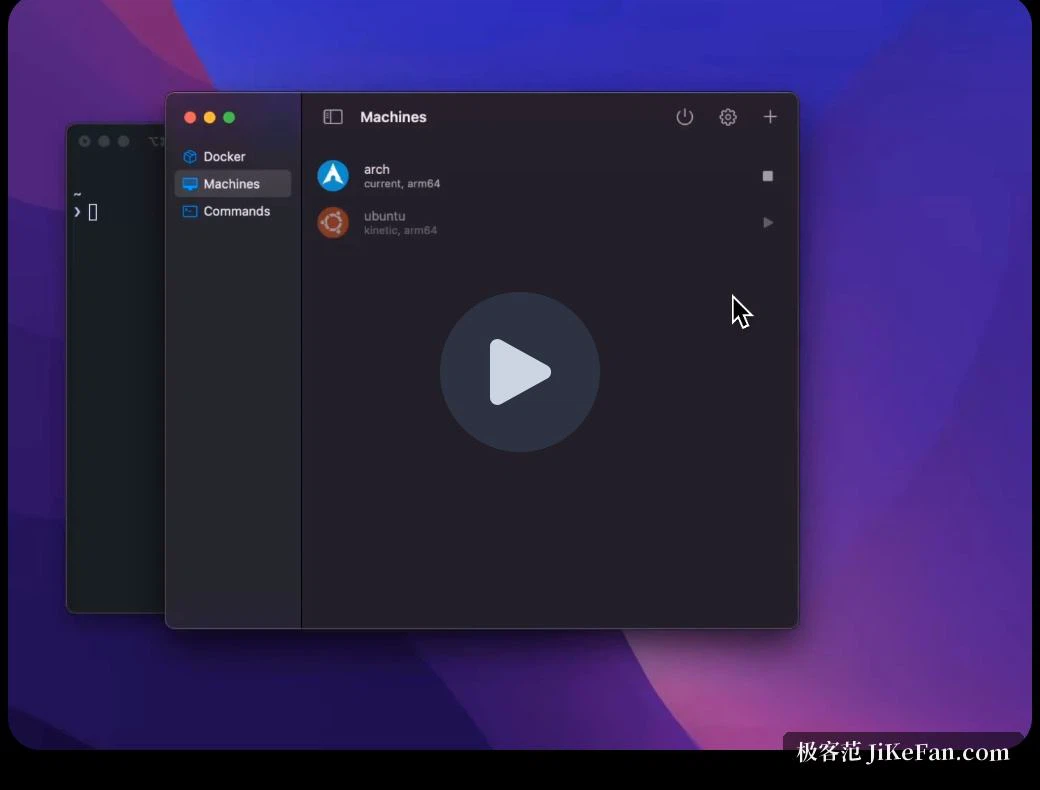
Beyond containers it will start a whole Linux machine, with a dozen or so distributions to choose from, living alongside the containers rather than replacing them. That covers the case where a deployment script has to be tested, or a tool exists only for Linux, without installing a second piece of virtualisation software and learning its opinions.
The built-in Kubernetes is a single node cluster, light enough to leave running, and the vendor is explicit that it is for development. Anything that needs several nodes, or a specific version validated the way production would validate it, still wants a different tool. Knowing where that line is saves an afternoon of trying to make a laptop behave like a data centre.
Recent versions add per-machine quotas for processor, memory and disk, plus passthrough for USB devices and audio, which is the sort of thing that only matters when it is missing.
What the licence asks
Personal and non-commercial use is free, with essentially the same features as the paid tier. Commercial and office use needs a licence per person at eight dollars a month, and educational or non-commercial open source projects can apply for a free one. It is a closed source product, which is a reasonable objection for some people, and there are fully open alternatives in the same category if that matters more than the polish.
The other precondition is worth stating early: it runs only on macOS. A team that mixes Windows and Mac cannot standardise on it, and a shared onboarding document that assumes it will not survive contact with half the group.
What it wins on is making a layer that should have been invisible genuinely light. Containers on a Mac stop being something to be tolerated and go back to being a tool you reach for.