Moyu Danci: Vocabulary Drilling Designed to Hide Inside a Workday
Summary
Moyu Danci is a vocabulary tool for people who study in the gaps of a working day: a word window that fades into the background, a key that hides it, and a review schedule that decides what comes back and when.
Recommend- Name
- Moyu Danci
- Version
- 20250716
- Pricing
- Free
- Open source
- Proprietary
- Operating system
- AndroidiOSWeb
- Website
- https://www.moyudanci.com/
- Updated
- 2026-10-06 08:36
The shortage is not time, it is unbroken time
Most people who need to learn several thousand words for an examination do not lack motivation and do not lack hours. They lack hours that arrive in one piece. A working day is made of fragments: the wait before a meeting starts, the eight minutes while something compiles, the queue at lunch, the commute. A conventional study session needs a beginning, a middle and an end, and none of those fragments has all three, so the fragments are spent on something that tolerates interruption, which usually means a telephone.
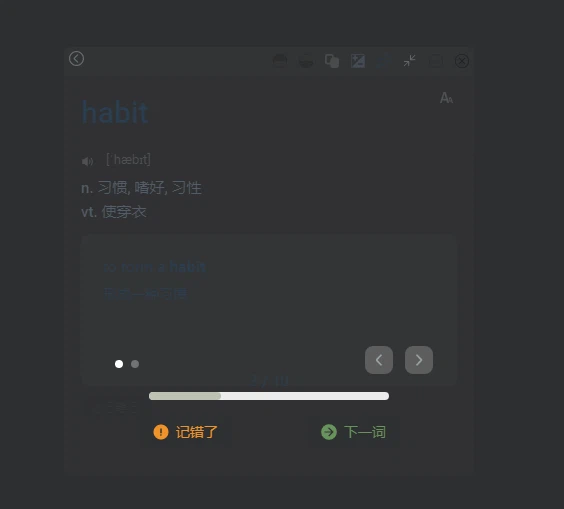
Moyu Danci is built entirely around that observation, and its design follows from it without much compromise. The unit of study is a single word, because a word fits into any gap. The interface is a small window that can be made nearly transparent and placed over whatever else is on screen, so switching to study and back costs nothing. And the review schedule is the part that does the thinking, because a person using their gaps cannot also be planning what to review.
Invisibility is the feature, and it deserves to be discussed plainly
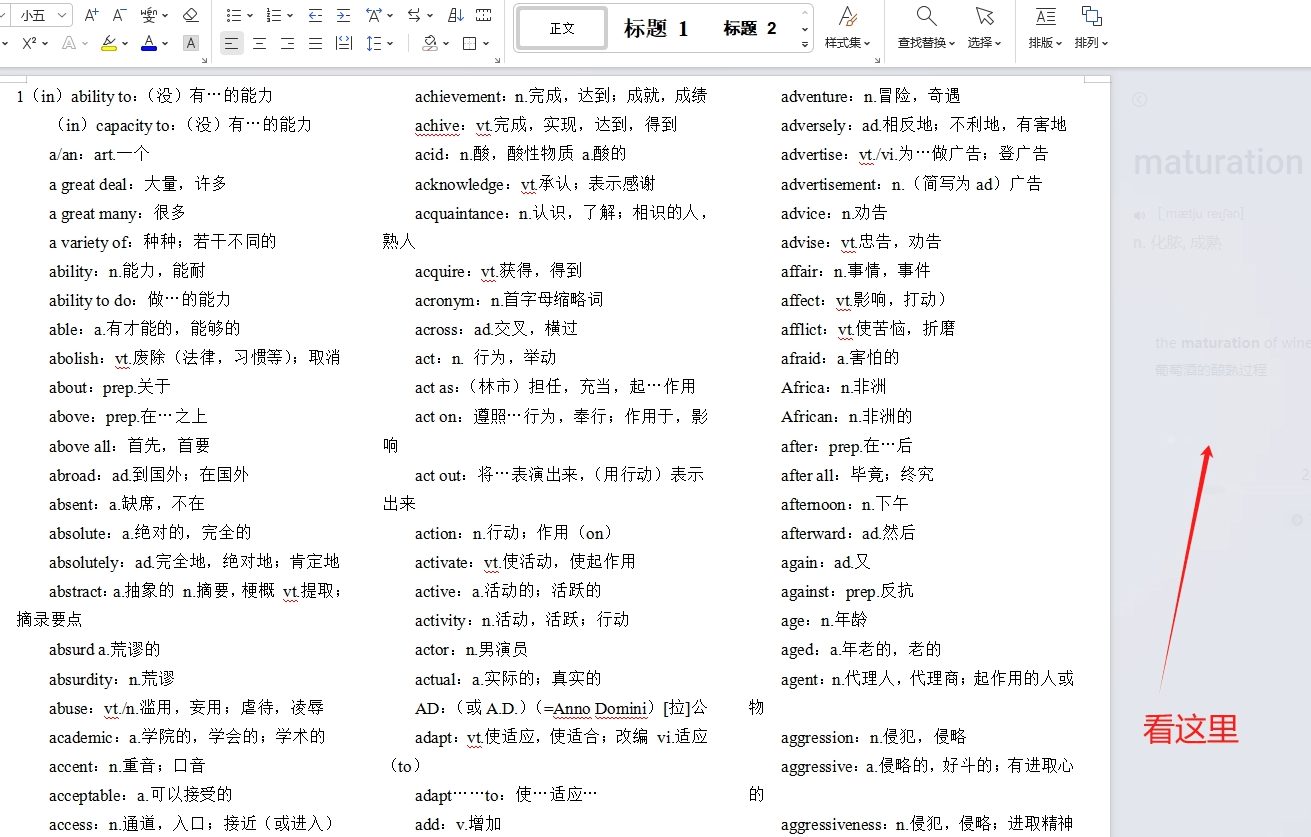
The program is blunt about its purpose: it exists so that studying is not obvious to whoever else is looking at the same screen. Three mechanisms serve that. The word window can be dimmed until it reads as a watermark rather than a window, and its opacity is adjustable continuously while it sits over a document or a slide. A single key combination hides the interface instantly, and the hiding is thorough enough that moving the pointer back over the area does not bring it back. A second combination sends the program to the background altogether. A miniature mode shrinks the window to the size of a business card and lets it be dragged anywhere.
It is worth naming what this is honestly. The tool takes the position that a person may use quiet moments of a working day for their own purposes, and it removes the social friction of being seen doing so. Whether that is a reasonable position depends entirely on the workplace, and the program does not argue the point; it simply provides the mechanics and leaves the judgement to whoever is using it. What can be said without taking sides is that the same mechanics serve a legitimate purpose in an open-plan office where a visible study app invites comment, and that a manager reading this description will understand the product exactly as well as an employee reading it.

The part that is not about hiding
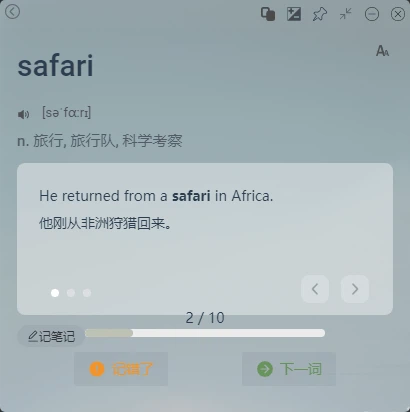
Strip the camouflage away and what remains is a spaced repetition system, which is the only method with a solid record for vocabulary. Words the user marks as known are pushed further out; words marked as uncertain or wrong come back soon, within a day or so rather than within a month. The next day's review set is assembled automatically from yesterday's performance, which is the specific behaviour that makes fragmented study work: the person does not need to decide what to study, only to look at what the schedule puts in front of them.
Two smaller decisions support that. Single-hand key bindings move between words, so the other hand stays where it was and the session never requires both hands to leave what they were doing. Pronunciation can be muted, which matters in a shared office and matters more in a meeting. And progress synchronises across devices, so a review begun on a telephone during a commute continues on a desktop later rather than restarting.
What the numbers are for
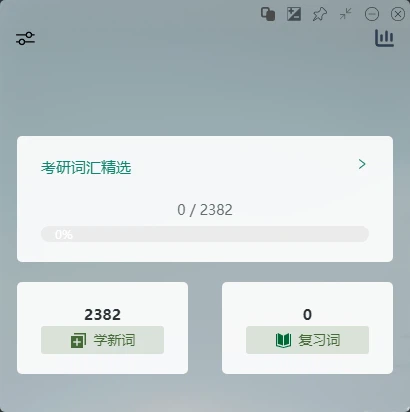
A statistics panel records what the fragments actually produced: words seen, words retained, streaks, the time of day when accuracy is highest. For a person studying in gaps, this is not gamification, it is the only evidence that the strategy is working at all. Fragmented study feels like nothing while it is happening - there is no session to feel satisfied about - so a record that a hundred words were reviewed across a week is doing real work rather than providing encouragement.

The extensions, and what they imply
The same product family includes a reading mode that presents practice passages or articles in a layout that resembles a document, which extends the same logic from single words to continuous text. A speed mode is built for the shortest gaps, the few minutes in a corridor or a lift, where only a rapid pass is possible. And the word lists for the two big examinations mark where each word has actually appeared in past papers, which is the difference between a list of words and a list ordered by what is worth learning first.
That last detail is the most valuable thing in the product for its intended audience, and it is the one that is easiest to miss when comparing vocabulary applications, most of which offer a list and little sense of priority.
What the design costs
Three costs follow from the central idea and should be stated. Studying in fragments produces fragmented knowledge: a word met while waiting for a meeting is met without the context that a longer session would provide, and grammar, which needs continuity, is not served by this approach at all. Invisible studying is also interrupted studying, since the whole point is that it yields to whatever else is happening, so the total retained per hour is lower than an hour of quiet attention would produce. And the method depends on the person actually pressing a key when a word appears, which means the failure mode is silence: a program that has been hidden and forgotten looks identical to a program that is working.
Understood as a supplement rather than a curriculum, that is a fair trade. Understood as a replacement for study, it is not, and no amount of careful interface design changes the fact that learning a language requires some hours that are not being spent on anything else.