
GoldenDict-ng: every dictionary answering one lookup at once
Summary
Learners collect dictionaries the way other people collect records, and then look words up one book at a time. GoldenDict-ng loads the whole shelf and shows every answer for a single query on one screen.
Recommend- Name
- GoldenDict-ng
- Version
- 26.8
- Pricing
- Free
- Open source
- Open source
- Operating system
- WindowsmacOSLinux
- Updated
- 2026-10-07 20:14
The whole shelf, answering one query
Anyone who has studied a foreign language for a few years ends up with a collection. An English English dictionary, a bilingual one, a collocation dictionary, a slang dictionary, an encyclopedia of usage, plus whatever specialist volumes were picked up along the way. The collection is the easy part. The hard part is that looking a word up means opening one book, reading, noticing that the entry explains the meaning but not the collocation, and opening a second book. Three books per word, and the reading stops being reading.
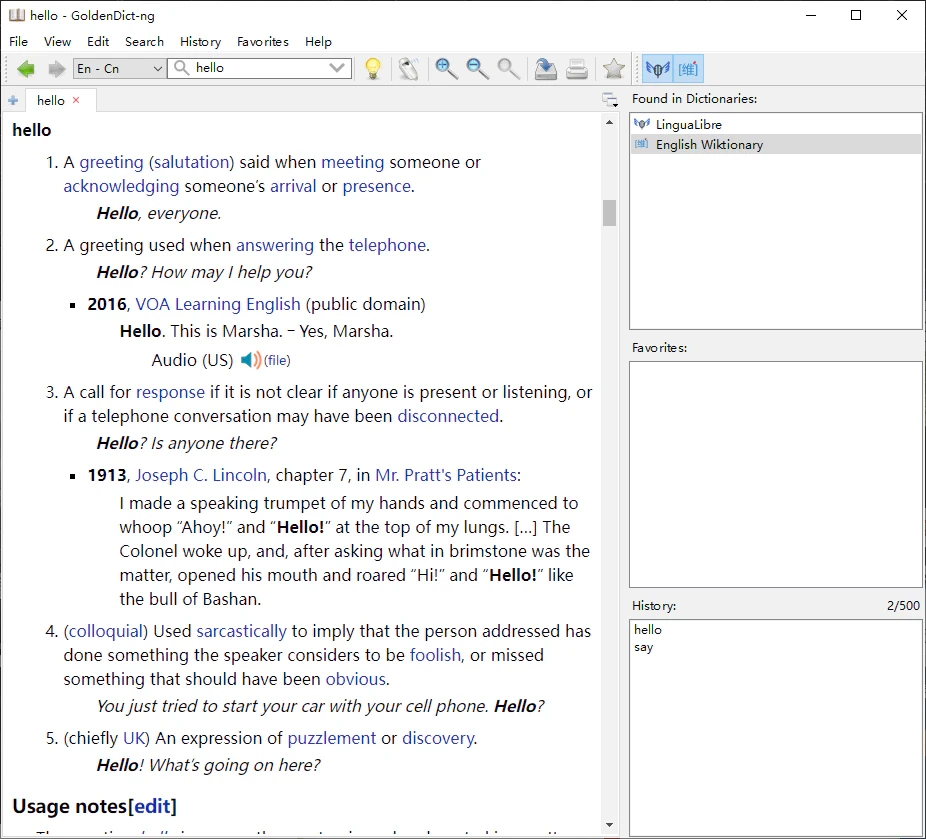
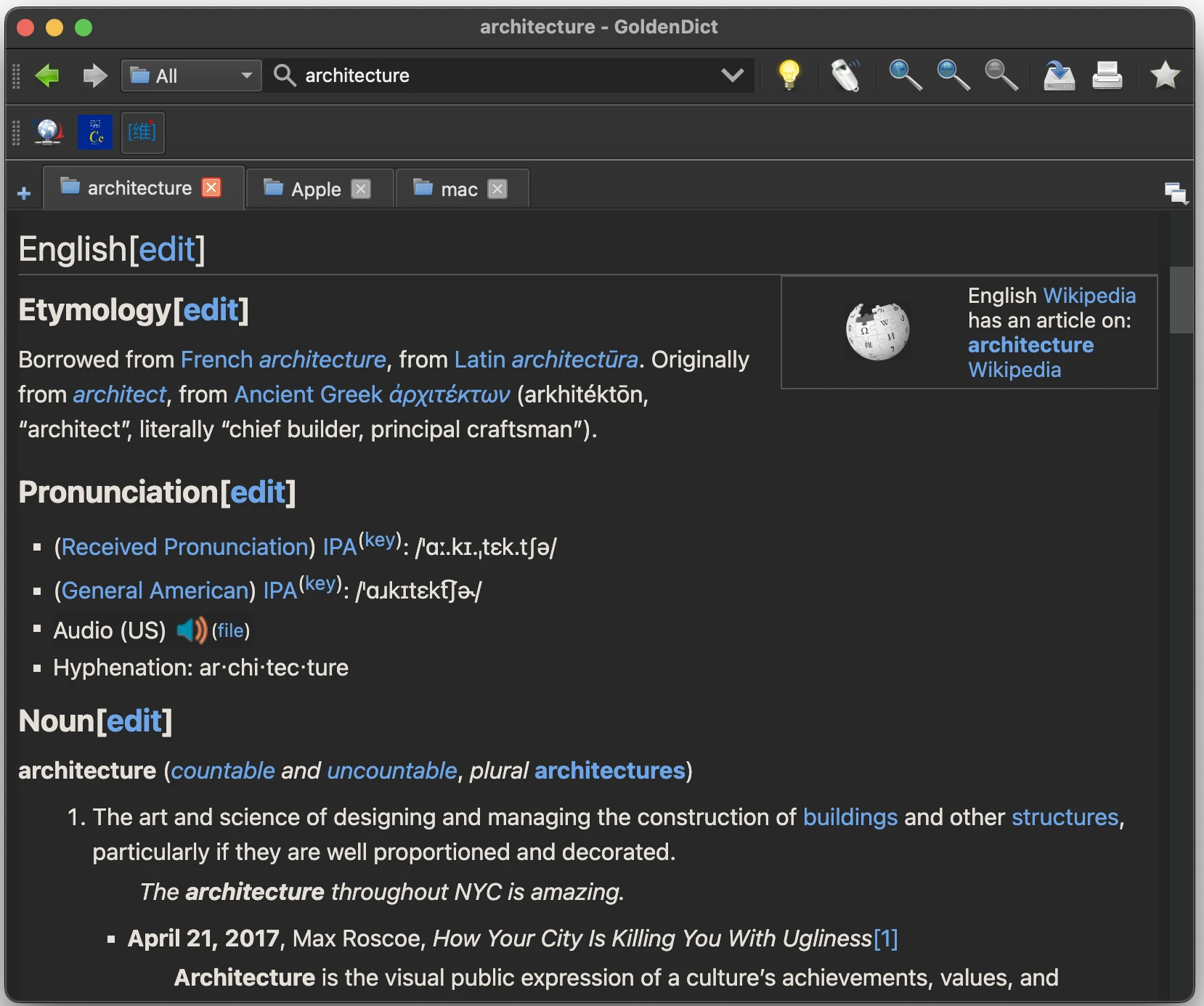
GoldenDict-ng treats the shelf as one instrument. Point it at a directory of dictionary files, let it index them once, and from then on a single query returns every entry from every loaded source, stacked in one window. Search a common word and the screen fills with the monolingual definition, the bilingual gloss, three collocation examples and a synonym note, arranged so they can be compared at a glance. The comparison is the point, not the volume. One definition is an opinion; four dictionaries disagreeing slightly is information.
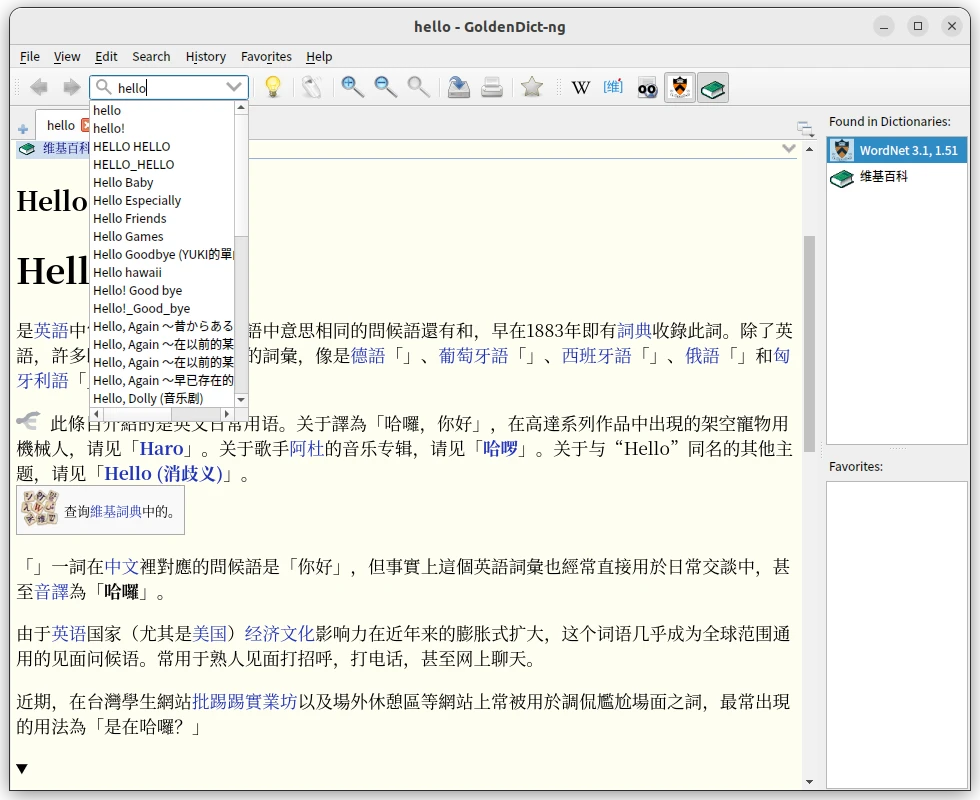
Words picked up from the screen
Reading a long article in a second language, the interruption is the enemy: select, copy, switch to another application, paste, read, switch back, and by then the sentence is gone. The program watches the clipboard and pops a small window with the entry the moment a word is selected, so the definition arrives without the sentence being lost. A hotkey can also be assigned for the same purpose, which matters when reading something where selection is awkward.
The window is deliberately plain, because a dictionary is read for two seconds at a time and decoration is a cost. Panes can be rearranged for those who prefer pronunciation controls on top and history at the side, and the layout persists between sessions.
An old tree with new branches
The lineage matters here, because it explains the format support. The original program was loved for reading almost any dictionary format in circulation, and this branch keeps that while rebuilding the interface on a modern framework: sharper rendering, a cleaner layout, and support for the scripts that older dictionary data relies on. MDict, StarDict, DSL, dictd and the rest are read as they are, so a folder of files accumulated over ten years can be imported without conversion work.
It runs on Windows, macOS and Linux from the same source, handles dictionary groups so that a reading session loads only the relevant volumes, and includes full text search for the case where the word is not known but a phrase from the definition is. The project is open source with a steady release rhythm, and several versions have landed this year alone.
The pleasure of GoldenDict-ng is one input and every answer: the walls between dictionaries are removed, and knowledge connects itself into a network. The thicker the shelf, the better it works.
Keeping the collection in order
Put every dictionary file in one directory before importing, in subfolders by language and by type, and maintenance becomes a matter of dropping new files in and reindexing. Scattered files, imported one at a time, produce a list nobody can audit two years later. Set the lookup hotkey to something the hand already knows, and consider two profiles: everything on while reading, the screen capture muted while writing, because a popup that interrupts composition is worse than no dictionary.
Finally, use the history. A word looked up and forgotten was a wasted lookup, and the history list is the cheapest review queue available. The tool handles retrieval; the rhythm of revisiting is still the reader's job, and no dictionary has ever solved that part.