
Min Review: A Browser That Wins by Leaving Things Out
Summary
Min treats the browser as something to be reduced rather than expanded: one address bar for search, navigation and quick arithmetic, tabs that fade when idle, and a focus mode that clears the screen. Open source, light on memory, three desktop platforms.
Recommend- Name
- Min
- Version
- 1.35.7
- Pricing
- Free
- Open source
- Open source
- Operating system
- WindowsmacOSLinux
- Website
- https://minbrowser.org/
- Updated
- 2026-10-07 21:58
A browser that subtracts
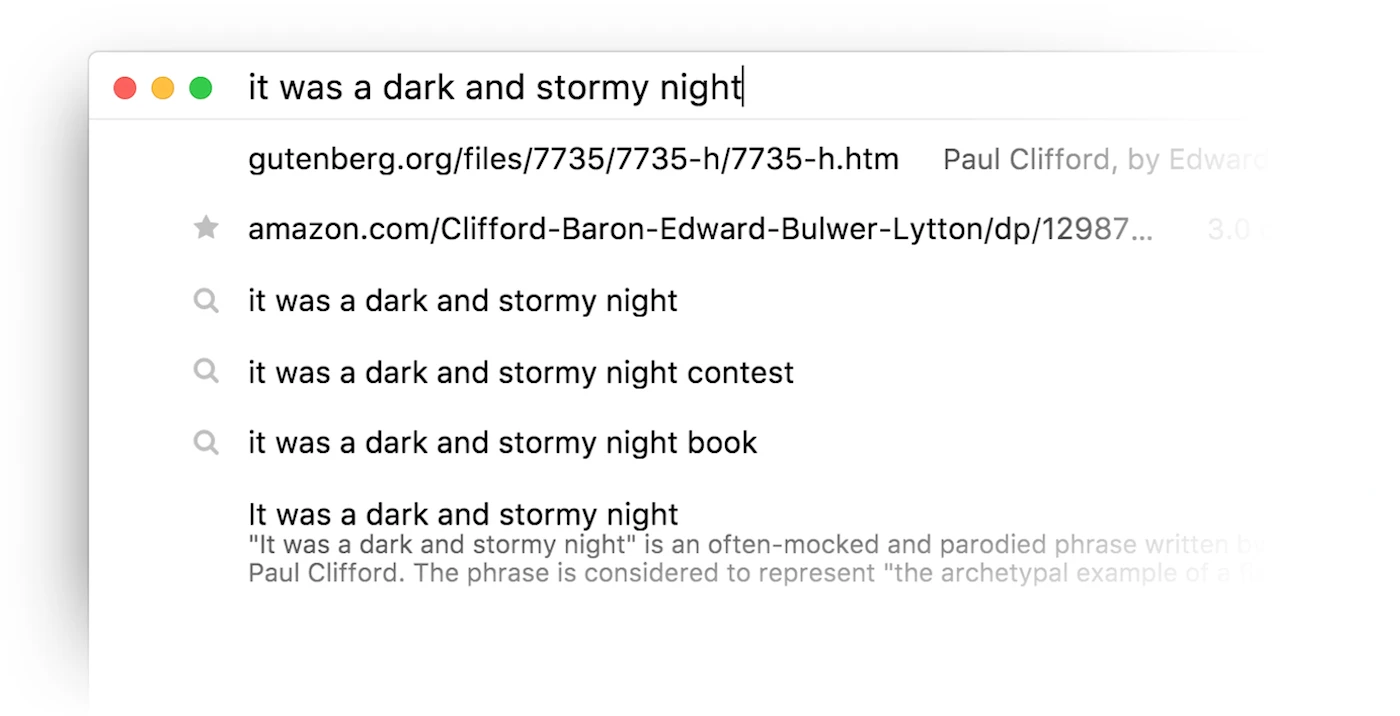
Most browsers grow heavier every year. Features accumulate, toolbars multiply, and the address bar ends up as the launch ramp for an entire product suite. Min heads the other way: it cuts the browser back to browsing itself. A single address bar carries search, navigation and quick arithmetic, so typing a sum returns an answer rather than a page of results to sift. Tabs that have gone quiet fade towards grey, which keeps the eye on the page being read instead of on a row of tabs competing for attention. The surface is clean to the point of extravagance, and after a week the impression stops being about looks and becomes about temperament: it feels like a program that remembers you came here to read something.
Focus as a built in capability
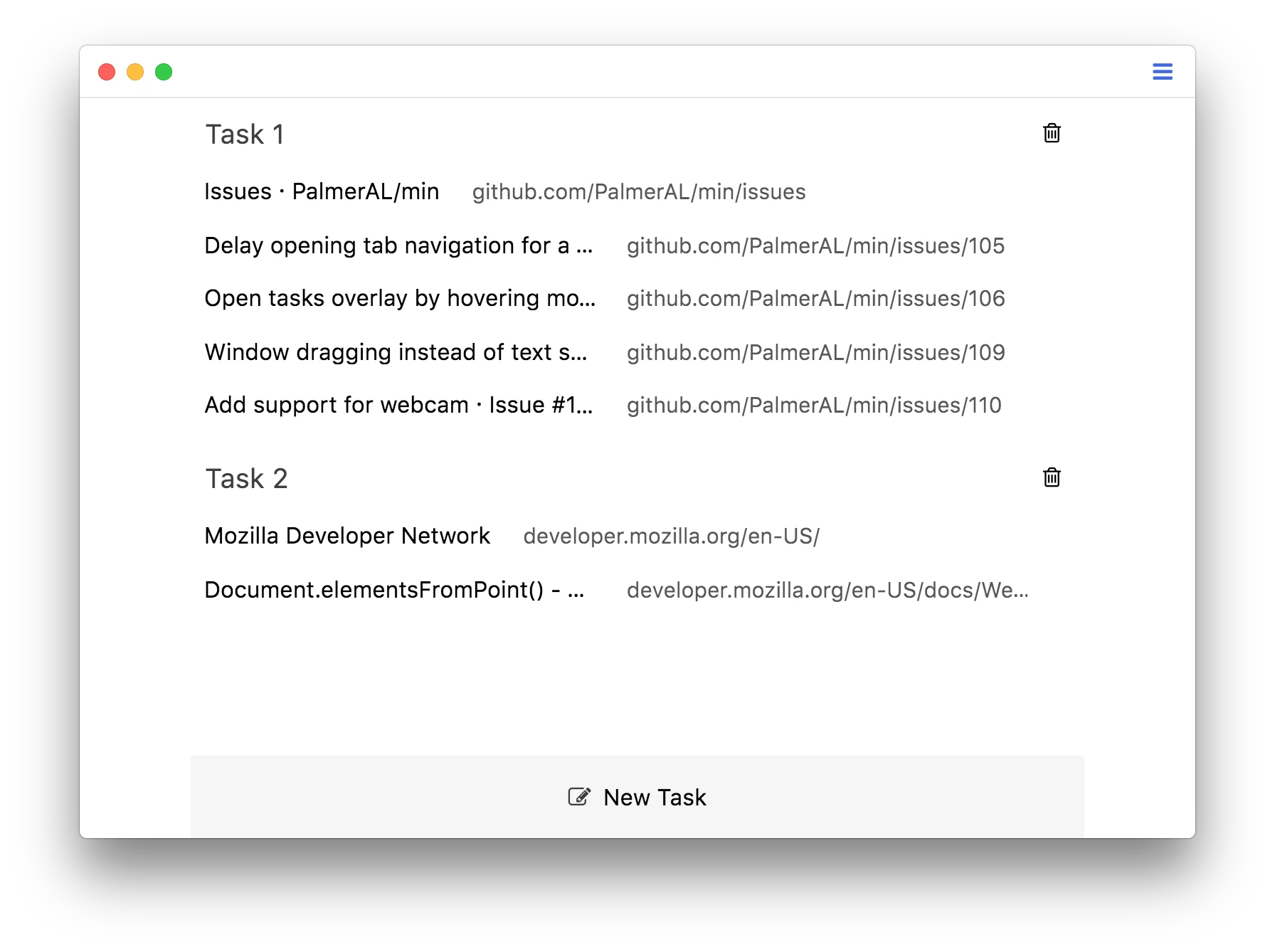
Focus mode is the detail that makes the argument. One keystroke hides every other tab and leaves only the current article on screen, and paired with the built in reading view it brings an ordinary page close to a printed column. Nothing dims, nothing nags; the rest of the session simply steps out of the room. There is also a small task list, which sounds like a gimmick until it is used in anger: jotting a line mid article keeps a thought from unravelling, and the note is waiting exactly where the reading was.
Resource use is modest, which matters more than benchmark tables suggest. On an older laptop with limited memory, the gap between a browser that idles quietly and one that keeps a dozen background processes warm is the gap between a machine that stays usable and one that needs replacing. Min runs comfortably on hardware that larger products have left behind, and it manages that without asking for an account or a sync profile.
Privacy as an absence of machinery
There is nothing dramatic about how Min handles privacy, and that is the point. No account to create, no profile to synchronise, no dashboard summarising a history back to its owner. Search suggestions can be switched off, so a half typed query does not travel anywhere before it is finished. What stays on the machine stays on the machine, in a folder that can be deleted like any other. For readers who find the modern bargain of free software in exchange for a detailed profile exhausting rather than sinister, this is a relief of a quiet kind: the program simply has less to know you with.
The other side of a small project is candour about limits. Because the engine is shared rather than bespoke, pages render the way they do everywhere else, but extension support stays partial and the update rhythm follows the energy of a handful of volunteers. That is a reasonable price for a tool this focused, provided it is understood in the first week rather than discovered in the third.
Subtraction is a position, not a limitation. A browser should be a window onto content rather than a second commotion standing in front of it, and Min is convincing precisely because it stops there.
How to get the most from it
The most useful framing is not as a replacement but as a division of labour. Leave the everyday browser to the logged in work, the extension stack and the sites that genuinely need a dozen tabs open at once, and treat Min as the place reserved for reading and concentrating. Two browsers with clear roles create less friction than one browser asked to be everything at all hours. Pinning the sites visited most often to the top of the task list turns the start screen into a short list of intentions instead of an endless feed.
Anyone who depends on a wall of extensions will find the restraint uncomfortable, and that is a fair trade rather than a defect. The project is open source and maintained by a small community, so the code can be inspected by anyone who wants to, and it covers the three desktop platforms without ceremony. It has no ambition to be the only browser on the machine. It wants to be the quiet one for the moments that call for quiet, and on that narrower promise it delivers without asking for credit.