
GeForce NOW: stream the games you already own, starting on the free tier
Summary
GeForce NOW is NVIDIA's cloud streaming service: games run on RTX 5080 class servers, your Steam and Epic libraries stay yours, and a free tier opens with one hour sessions.
Recommend- Name
- GeForce NOW
- Version
- 20260922
- Open source
- Proprietary
- Operating system
- WindowsmacOSAndroidiOS
- Updated
- 2026-10-06 13:34
The graphics card you rent instead of buy
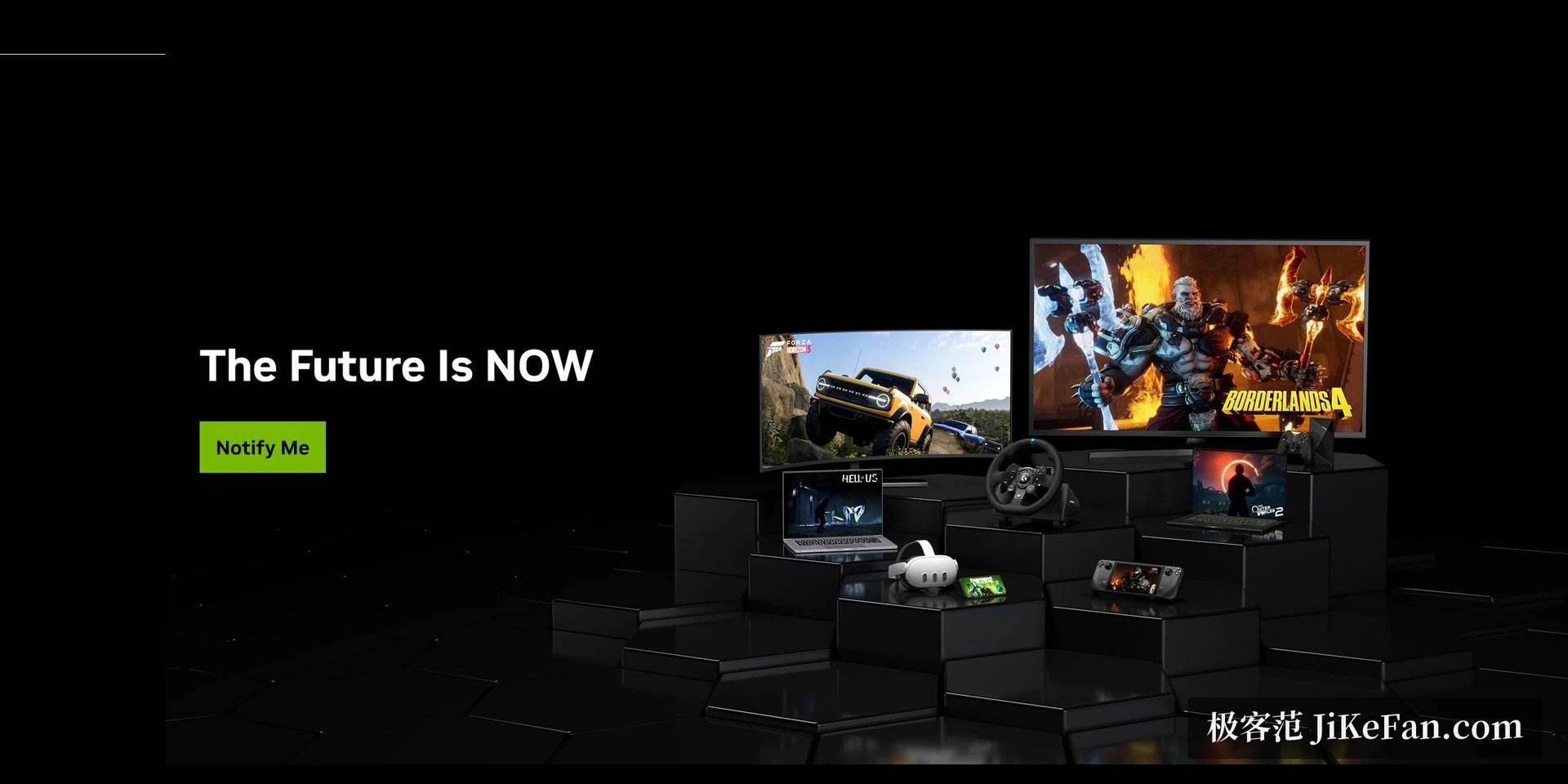
Playing a demanding title at high settings has always come down to one component, and it is not the one most people enjoy paying for. GeForce NOW proposes a different arrangement. The game runs on an RTX 5080 class machine inside an NVIDIA data centre, while the device in your hands only has to decode the picture and send back your input. It is NVIDIA's own cloud streaming service, and the list of clients is long enough to matter: a laptop, a phone, a Mac, a smart television, and handhelds that are supported all work, so an older machine ends up with flagship class rendering power behind it.
Your library stays your library
The usual worry about cloud gaming is that the games get locked to the platform. This service goes the other way. Existing accounts at Steam, Epic Games Store, Blizzard and GOG are linked rather than replaced, and the titles already bought there appear in the cloud library ready to launch. More than 4500 PC games are available this way, and a subscription such as Xbox Game Pass can be connected as well. The habit of buying games does not have to change; only the rendering moves elsewhere.
That distinction is worth stating plainly, because it decides what happens when you stop paying. Nothing in the library disappears from your own accounts, and saves that live in the cloud of each storefront stay where they were.
Blackwell hardware at your desk
This generation of the service is built on the Blackwell architecture. Members of the top tier have been moved across to RTX 5080 class servers, with support for DLSS 4, NVIDIA Reflex and Cloud G-Sync, streaming at up to 5K and 120 frames per second. A competitive mode pushes further in the other direction, running at 1080p and 360 frames per second for titles where reaction time decides the outcome.
The free tier has not been withdrawn. A session of 1 hour is long enough to judge whether the latency suits you and whether the picture holds up on your connection, which is a fair way to evaluate a service that depends entirely on the network between you and the data centre.
Paid plans are billed monthly, and what separates the tiers is concrete: resolution, frame rate, and how far ahead of the queue you stand at a busy hour. There is nothing mysterious in the pricing, and the practical question is which of those three limits actually bothers you.
Who the arithmetic works for
Anyone who has priced a current graphics card knows the number, and anyone who has read the requirements of a new release knows the second number. For a player with a limited hardware budget who keeps being talked out of new titles by the specifications, renting the flagship for the hours actually played is a calculation worth doing honestly, with the cost of a subscription on one side and the cost of a card plus its power draw on the other.
The arrangement is less attractive for someone who plays offline, or whose connection is unstable in the evening. Streaming cannot fix a network that drops packets when the neighbourhood comes home from work.
Latency is the part no specification sheet can settle. The distance to the nearest data centre, the quality of the local connection and the hour of the day all change the experience, which is why a trial session says more than a comparison table. A streamed game asks for a steady flow in both directions, and that is exactly what a shared household connection struggles with in the evening.
There is also the shape of the commitment to consider. A card is bought once and then slowly falls behind, while a subscription costs the same every month whether the service is used or not. Neither is automatically cheaper. What changes is when the money leaves, and a free session is the cheapest way to learn which shape suits the way you actually play.
The clever part is that the service respects what you already own. The library is still the one in Steam, the saves are still where they were, and only the place where rendering happens has moved. With a sound connection, an old laptop running a demanding title is no longer a joke.