
Freeplane 1.13.5 keeps a project inside one map
Version 1.13.5
Summary
Freeplane 1.13.5 is a maintenance build of this GPLv2 mind mapping tool, which now accepts several model providers and runs scripts on the canvas.
Recommend- Name
- Freeplane
- Version
- 1.13.5
- Pricing
- Free
- Open source
- Open source
- Operating system
- WindowsmacOSLinux
- Website
- https://www.freeplane.org/
- Updated
- 2026-11-19 16:42
Freeplane is a free, open-source mind mapping tool written in Java that runs on Windows, macOS and Linux and can even travel on a USB stick. It works the opposite way round from a folder: build the structure first, then fill it in, so one map spread open shows the skeleton of a whole project. The 1.13.5 build arrived on 2026-11-11.
A map that folds and does arithmetic
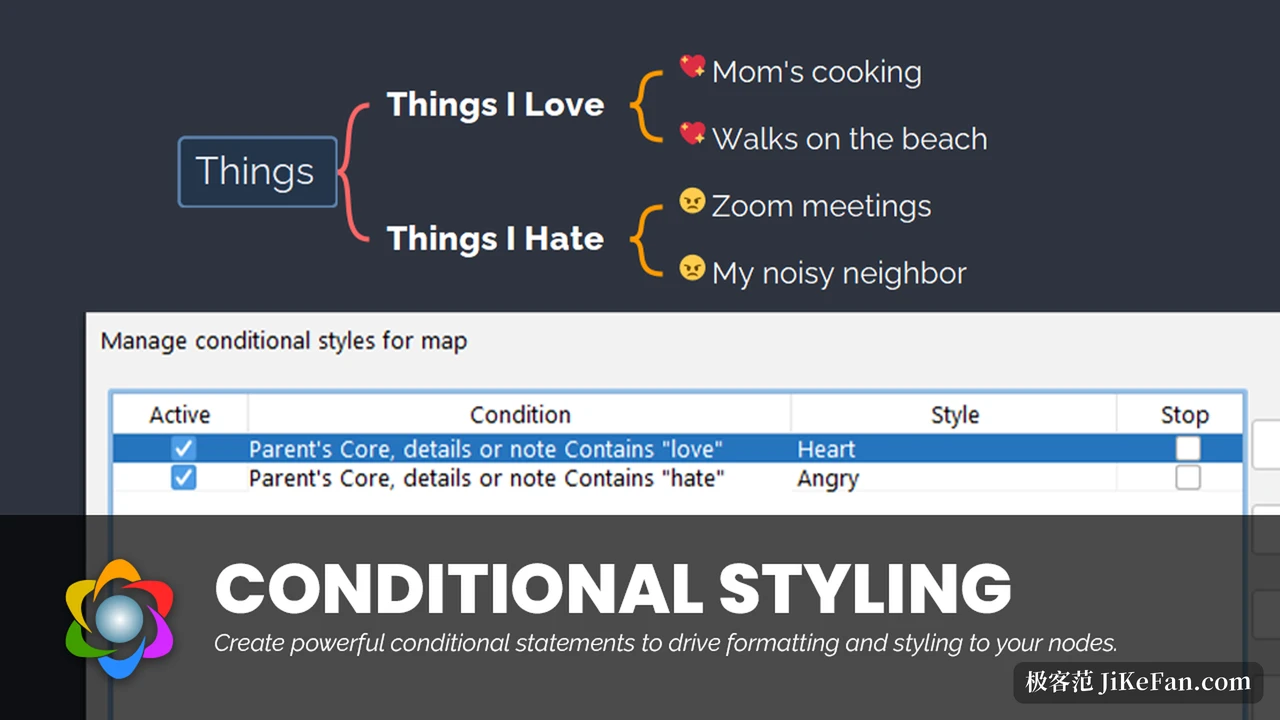
The unit is the node, nodes form a tree, and whole branches fold away. Folding a few dozen nodes keeps a map of three hundred nodes usable, and three tools carry that load: folding itself, filters that keep only the branches matching a keyword, and conditional styles that recolour a node from its own text, warm for one word and cool for another.
Formulas go deeper than expected. A node can hold an expression that reads the text of its parent, sums the values of its children or concatenates several nodes, much like dragging a formula across a spreadsheet. Mathematical typesetting is left to LaTeX, either below the node or inside the text. Images, links and icons sit in nodes, and a note-shaped node can be dropped anywhere on the canvas to hold the fragments that do not belong in the tree yet.
The 1.13 line wired models into the map
From 1.13.0 onward Freeplane talks to models directly. The settings hold configurations for OpenAI, OpenRouter, Requesty, self-hosted endpoints that speak the OpenAI protocol, Gemini and Ollama at the same time, each with its own address, model list and credentials. Model lists can be discovered automatically, showing only what confirms text output and tool calling, or pinned to a fixed list that narrows the choice.
Prompts are stored as reusable entries in a dialog shaped like an assistant profile, with reasoning effort and temperature adjustable per entry. Version 1.13.1 added chat history and assistant profiles, and 1.13.3 let a conversation be copied out as Markdown without formatting debris.
The more interesting part is that the AI can act on the map. The documentation separates AI formula and script editing from AI script execution: the first lets a model rewrite a formula, the second lets it write a script that runs on the map, so batch edits and rule-based reordering of branches get handed over. Version 1.13.4 fixed that into a writeAndRunCode tool. There is a second entrance to the same ability: Freeplane can present its map as a local MCP server, so an outside client connects and reads or writes nodes. The price is the Java version, since the AI part asks for Java 17 or newer from 1.13.2 onward and reports itself unavailable on 16 and earlier.
Scripts and the map are one object
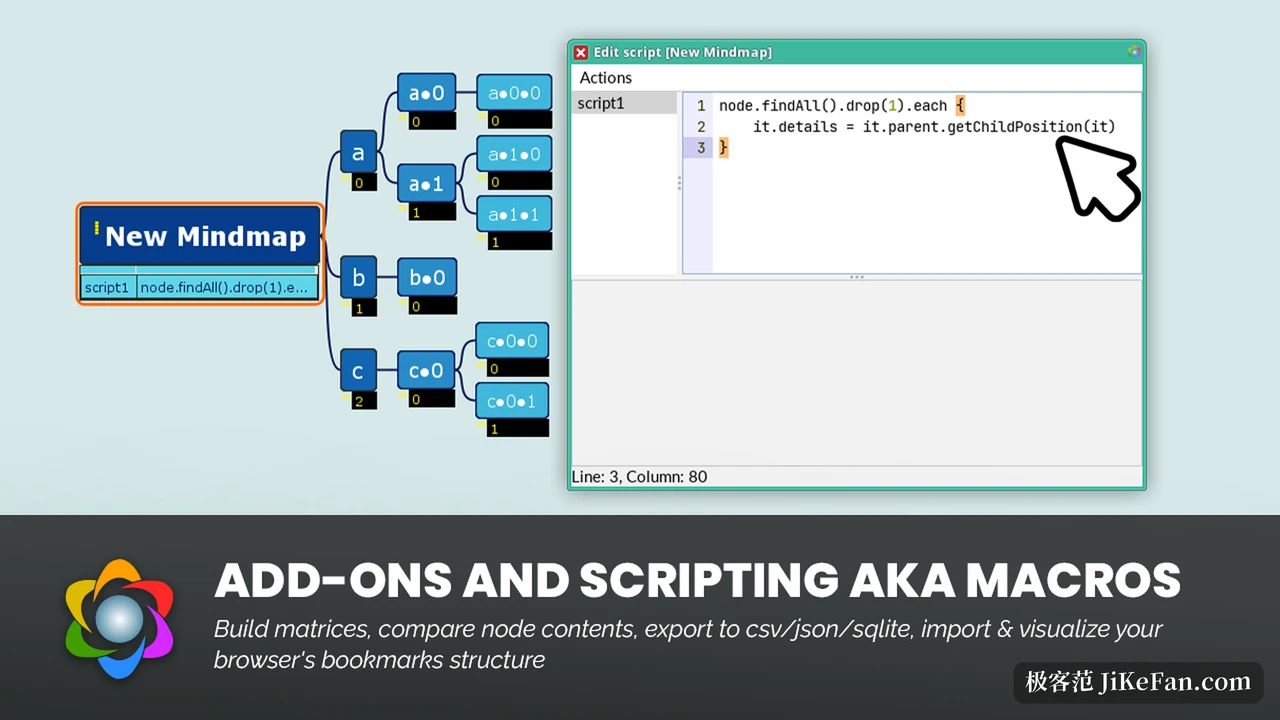
Groovy scripts reach nodes, attributes, connectors and styles, so writing one feels close to walking a tree. That gives Freeplane a hint of a platform: exporting node content to CSV or JSON, writing results back into SQLite, reordering a group of nodes by attribute, all of which people in the community have built. Menu items can also be called from the command line, and with a silent flag an entire tidy-up runs in the background, which suits a scheduled task.
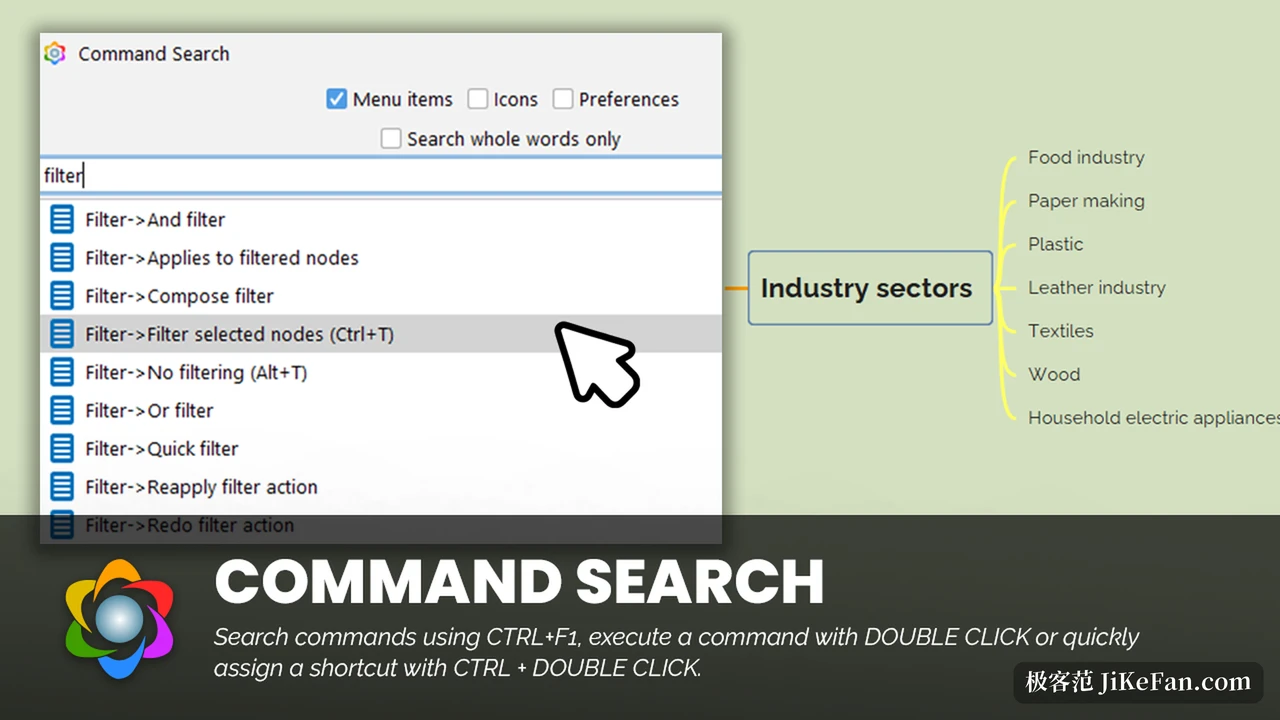
For daily use there is a shortcut: Ctrl+F1 opens the command search, half a word finds entries such as filtering by selected node or reapplying a filter, and a double click runs one or binds it to a key.
What 1.13.5 repairs
This build lists bug fixes and nothing else, a sweep of the faults that surfaced along the 1.13 line. The release that changed daily feel was the one before: branches matching a filter now expand by themselves, where a match hidden inside a folded branch used to leave what looked like an empty map and required clicking down level by level. Selection by content expands the same way. Logging and error reports for scripts and formulas were rewritten, so a failure points at a line and a node instead of a vague message, and the option to keep the status bar hidden after an error arrived in that same release.
Who it suits, and where it stops
Freeplane has no real-time collaboration and offers no answer for several people editing one map at once; handing work over relies on shared files, cloud sync or version control. What it does well is maintain one map over months: notes for a course, requirements for a project, the chapters of a book. The map keeps growing and folding plus filtering hold the complexity down.
It also wants a machine with Java installed, and the interface feels like a tool rather than a product; the light and dark themes came later and are not polished.
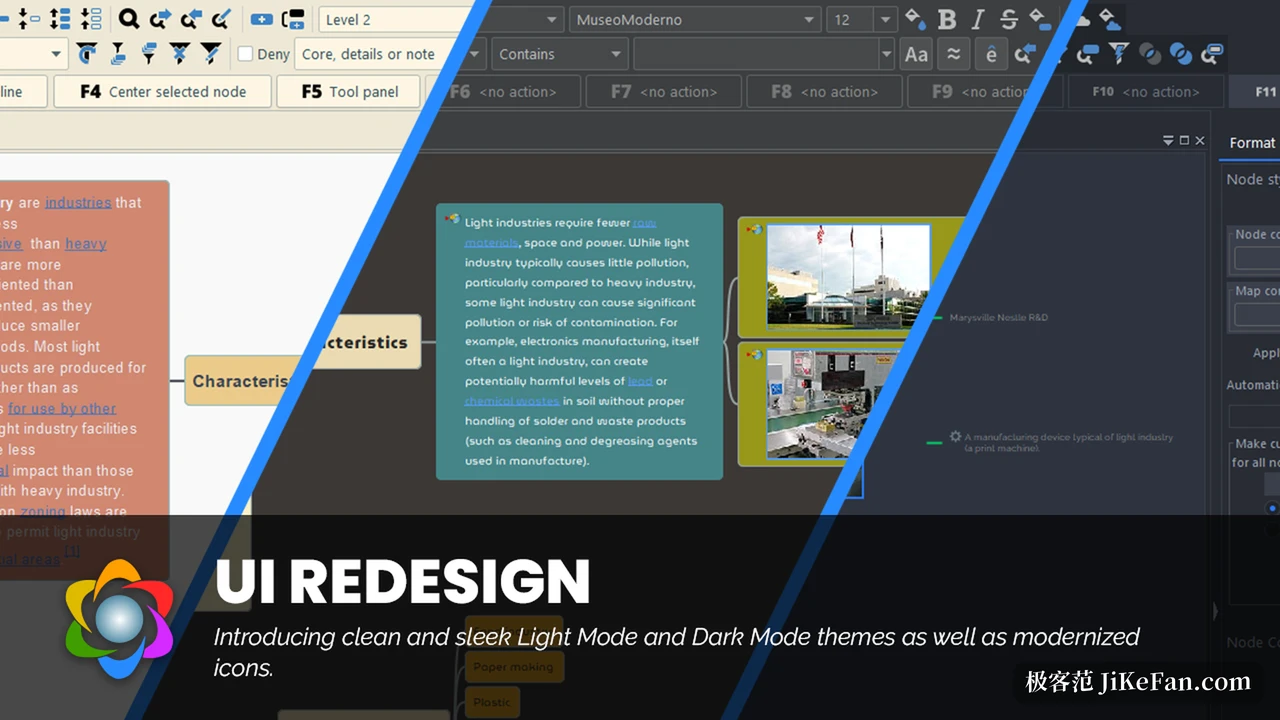
Its worth sits in accumulated control. A single node can show only its core text, or details, notes and images, switched by situation. A map opens in presentation mode and is talked through directly. One branch alone can be given a password. None of that is new, but together it lets someone keep up the habit of tidying, and that is the weight of the thing.
- Current release
- 1.13.5 from 2026-11-11
- Licence and language
- GPLv2, written in Java, multilingual interface
- Platforms
- Windows, macOS, Linux; needs a current Java
- AI part
- Java 17 or newer since 1.13.2