
ElevenLabs review: text to speech and voice cloning, starting from ten free minutes
Summary
ElevenLabs opens more than 11000 voices, synthesises speech in over 29 languages, answers in about 75 milliseconds with Flash v2.5, and clones a voice from one to five minutes of audio. The free tier offers 10000 characters a month without a commercial licence.
Recommend- Name
- ElevenLabs
- Version
- 2.5
- Open source
- Proprietary
- Operating system
- Web
- Website
- https://elevenlabs.io/
- Updated
- 2026-10-06 17:54
Anyone making podcasts, audiobooks or video narration eventually runs into the same piece of arithmetic: record it yourself, or hire a voice, and neither is cheap. Add a multilingual release and the cost multiplies again. ElevenLabs targets exactly that step — hand over text, get back a usable human voice, and copy a particular voice so it can be reused.
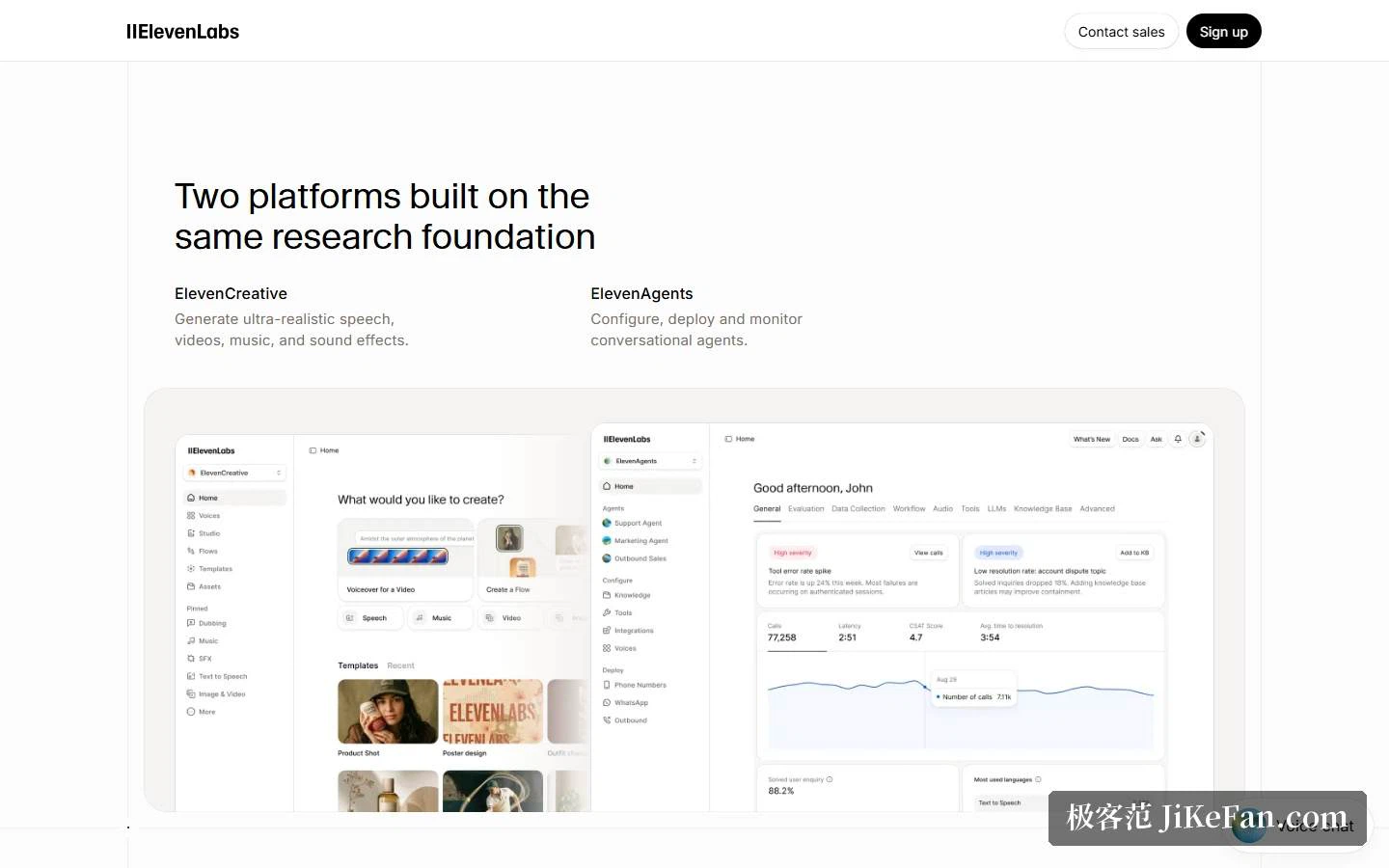
The official site splits the product three ways: ElevenCreative for content creation, covering speech, music, sound effects, images and video; ElevenAgents for conversational agents, across more than 70 languages; and ElevenAPI, which opens the same abilities to developers. All three share the same underlying models; only the entrance differs.
One content pipeline that covers the labour-heavy steps
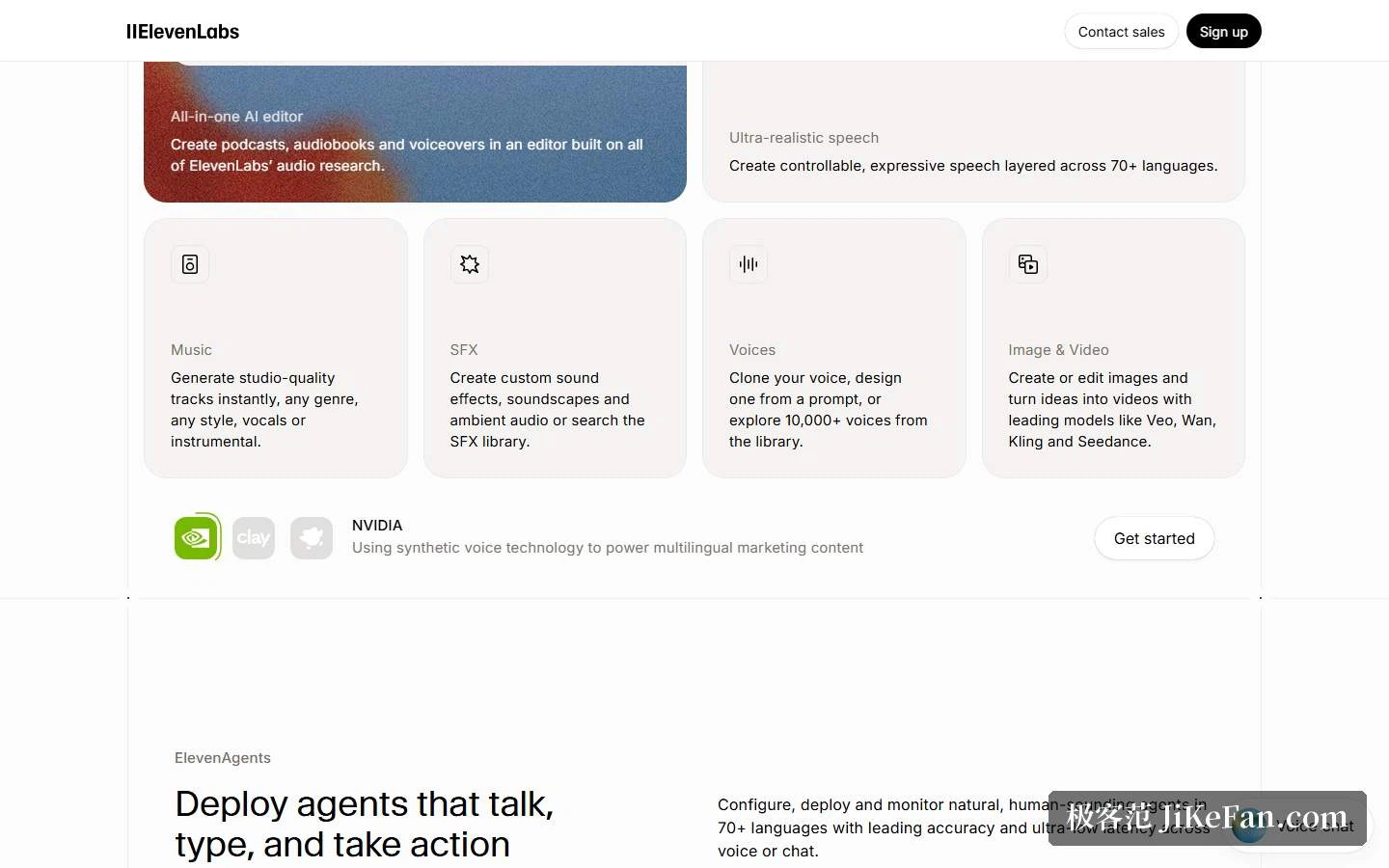
Laid out, ElevenCreative covers text to speech, speech recognition, sound-effect generation, music generation, voice design and dubbing, plus image and video. The official description is blunt: from podcast to audiobook to narration, everything can be finished in one editor without shuttling between a booth, a cutting tool and a stock site.
Choosing a model: latency and quality are two roads
The text-to-speech page carries a genuinely useful comparison: every model handles more than 29 languages, and the difference lies in which end you care about.
Multilingual v2 covers 29 languages with no latency figure published, and suits narration, audiobooks and post-production. Flash v2.5 covers 32 languages at roughly 75 milliseconds, built for real-time situations where speed matters. Turbo v2.5 lands at about 250 to 300 milliseconds, balances quality against speed, and costs 50 percent less per character.
What does 75 milliseconds mean? In a conversation, once a voice response drags into the hundreds of milliseconds, people notice that the other side is waiting. Flash v2.5 exists for that situation. For a finished track, spending a few hundred milliseconds more on better texture makes Turbo v2.5 or Multilingual v2 the better deal.
Voice library and cloning
The text-to-speech page states that more than 11000 voices are available on the platform. If that is not enough there are two more roads: Voice Design takes a written description of a timbre and generates a brand new AI voice, while cloning turns recorded material into a timbre you can call again and again.
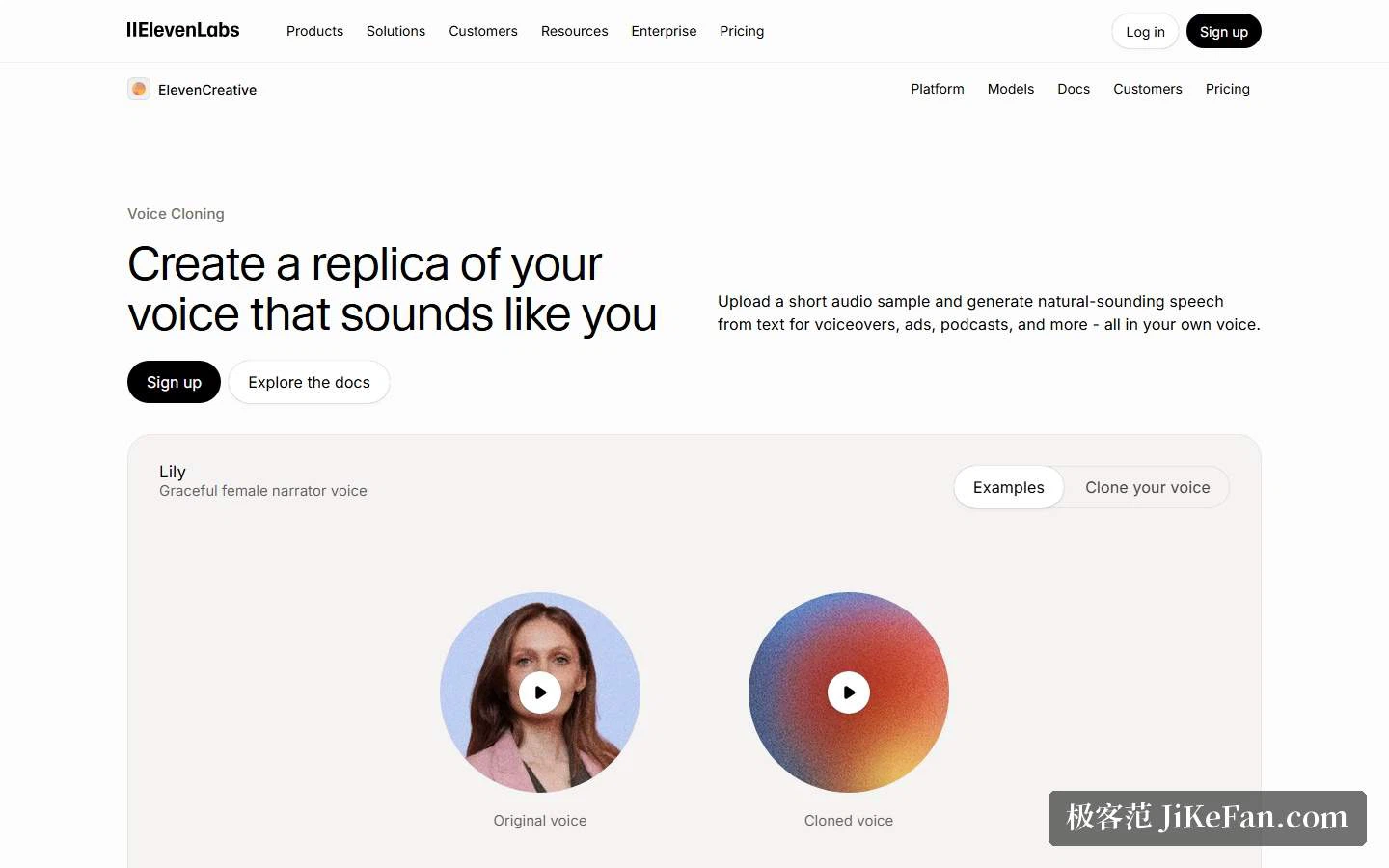
Cloning comes in two tiers. Instant cloning starts at Starter, professional cloning starts at Creator, and the latter needs one to five minutes of audio according to the cloning page. The more material you give, the closer the result gets to the real person, a trade-off that matches intuition.
Dubbing and recognition: the half people skip
Treat it as text-to-speech alone and you miss the second half. The dubbing model, Dubbing v2, handles more than 90 languages and accents, and the official notes stress that it conditions on the original audio rather than on a transcript: the tone, emotion and rhythm of the source travel into the target language instead of only the literal meaning. For teams turning courses, interviews or promotional films into several languages, that step saves the entire cost of re-recording.
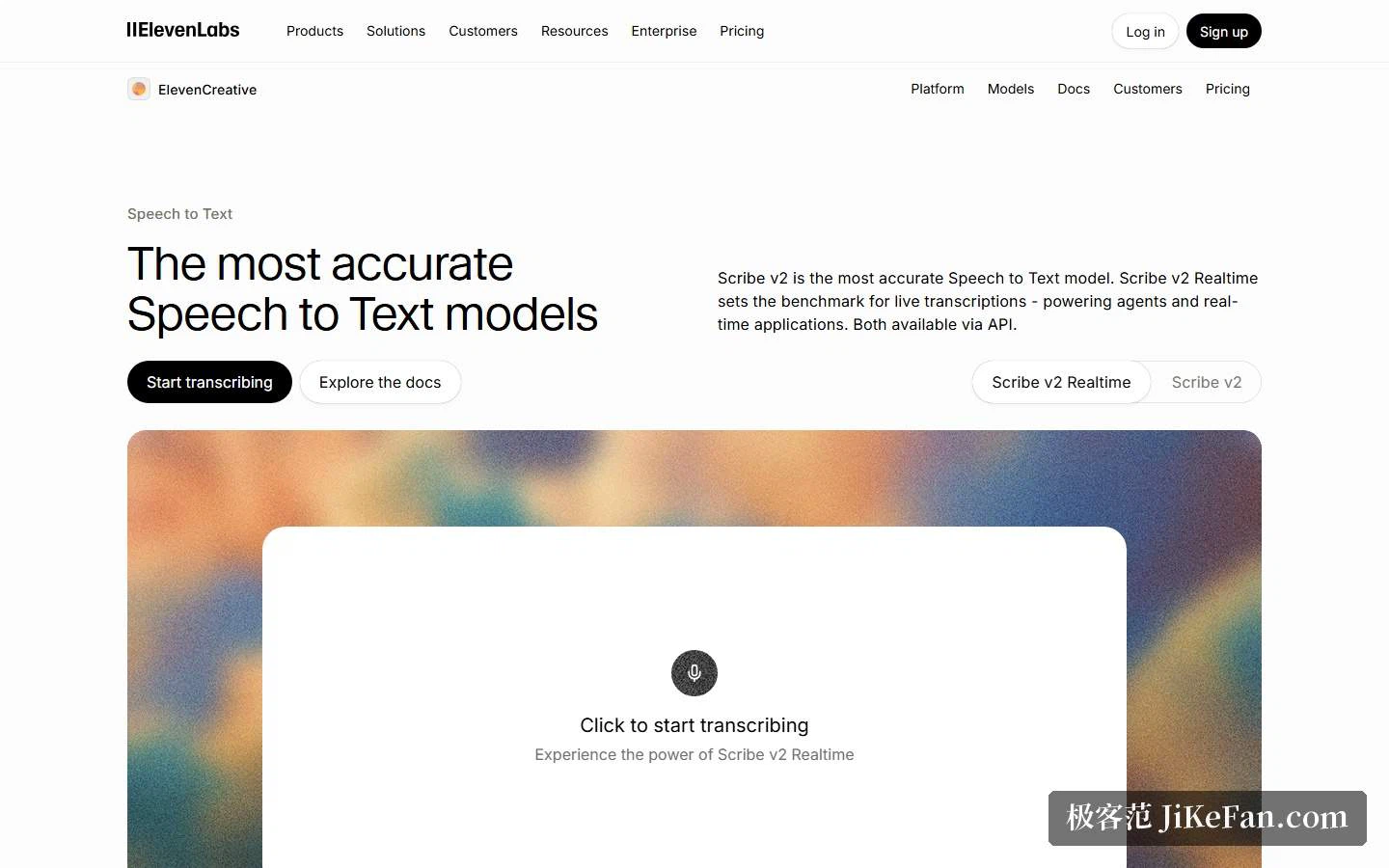
On recognition, Scribe v2 Realtime transcribes with latency under 150 milliseconds across more than 90 languages. Its position is clear: agents and meetings that need instant understanding, rather than offline transcription that uploads a file and collects a result minutes later.
Conversational agents: only real once they reach existing systems
ElevenAgents deserves its own paragraph. The site states that agents can talk to customers by voice or chat across more than 70 languages, with real-time language detection and switching. What matters more is the channel list — phone, chat, email and WhatsApp are all supported, and agents can connect to CRM, helpdesk, calendar, payment and telephony providers. In short, the usual payment, messaging and support systems are in scope.
For support and operations teams, whether a tool is good often depends less on the model than on whether it fits the existing ticket and payment flows. The site also mentions validating agent behaviour with simulated conversations before deployment and setting compliance guardrails against an SOP — two items that matter more for the pre-launch review than for the demo.
Price: start with the free ten minutes a month
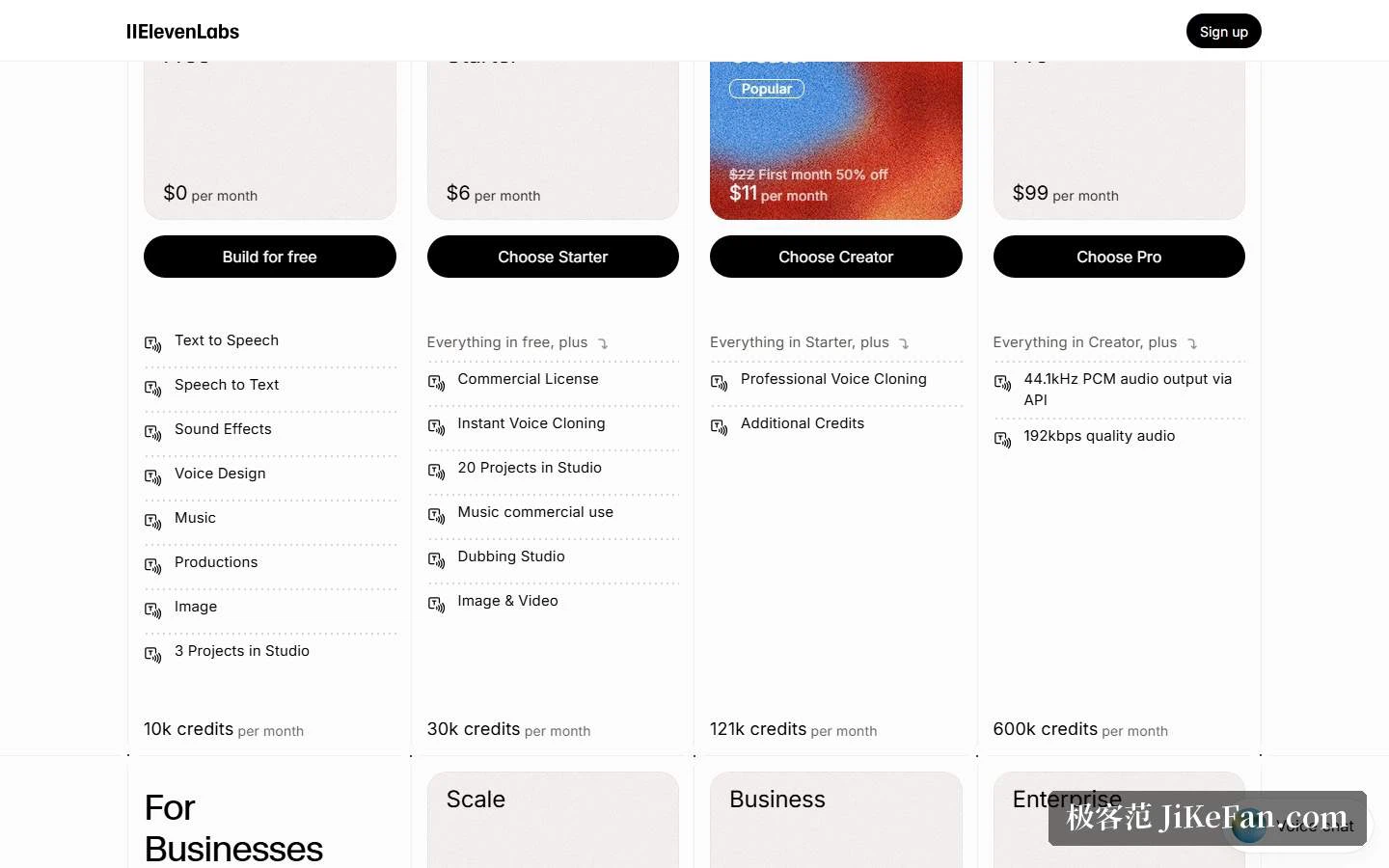
The free tier gives 10000 characters a month, which the site itself converts to roughly 10 minutes of audio — enough to check a timbre and a language, but it runs out fast once real content starts.
Starter is 6 dollars for 30000 characters and adds the commercial licence, instant cloning and a dubbing studio. Creator is 22 dollars, half price for the first month, for 121,000 characters, professional cloning and top-up credits. Pro is 99 dollars for 600000 characters, with 44.1 kHz PCM output and 192kbps audio. Scale is 299 dollars for 1,800,000 characters, three professional clones and three workspace seats. Business is 990 dollars for 6 million characters, ten professional clones and low-latency text to speech billed by the minute.
One detail is easy to miss: the commercial licence only starts at Starter. Whether audio produced on the free tier may be used commercially is worth confirming first — two minutes of reading before you start is time well spent.
Who it suits
If your output carries a lot of voice — podcasts, audiobooks, course narration, product video commentary — or needs the same content in several language versions, the efficiency gain is real: instead of booking a booth and assembling voice actors, you build a first version and then decide which passages deserve a human re-record.
Some things are worth settling in advance. Cloning involves a real person's timbre, so before replicating anyone's voice, confirm authorisation — it is both a legal question and a platform rule. And where content needs strong emotional performance or the local feel of a specific accent, generated audio still only reaches a usable draft, and a human pickup may remain necessary.
What a voice tool really changes is not whether dubbing is possible, but the arithmetic of how many language versions to make. Once the marginal cost of the second language and the tenth approaches zero, the reach of the content finally opens up.