
An AI worker that lives in your repository: one @ in CodeBuddy NPC and the pull request arrives
Summary
A cloud agent from Tencent Cloud: mention it in an issue or pull request and it reads the repository and CI context, plans, edits code, opens a pull request and gets the build green, on its own.
Recommend- Name
- CodeBuddy NPC
- Version
- 20260723
- Open source
- Proprietary
- Operating system
- Web
- Website
- https://www.codebuddy.cn/npc
- Updated
- 2026-10-09 22:02
CodeBuddy NPC is a cloud agent Tencent Cloud launched in July 2026. Give it a goal and it reads the repository, changes the code, opens the pull request and runs the tests until the work is actually delivered.
For two years the impression left by AI coding tools was mostly about typing code faster: you write in the editor and it completes the next line, you paste an error and it answers with a suggestion. Tencent Cloud turned the direction slightly. CodeBuddy NPC, released in July 2026, is not satisfied with being an assistant inside the editor. It lives inside the development process itself.
The official label is an AI employee inside the development process. You set the goal. It breaks the goal into tasks, finds the relevant code, makes the change, and brings the verification back. Process native is the phrase, and what it seems to mean is that the agent does not sit outside waiting to be fed context. It is already inside.
Its context comes from the team's own development record
NPC is built on CNB, Tencent Cloud's cloud native build platform, and that foundation decides what it can reach. You do not copy requirements, code and error logs across. It reads them: the issue is the memory of intent, the repository is the memory of engineering, the pull request is the memory of change, and CI is the memory of quality. The official name for this arrangement is AI native Git, where the Git repository becomes the agent's own memory.
The difference hides in those details. Handing over a job does not require retelling the project background, and does not require digging out the branch name and build number that failed, because this colleague was already inside those records.
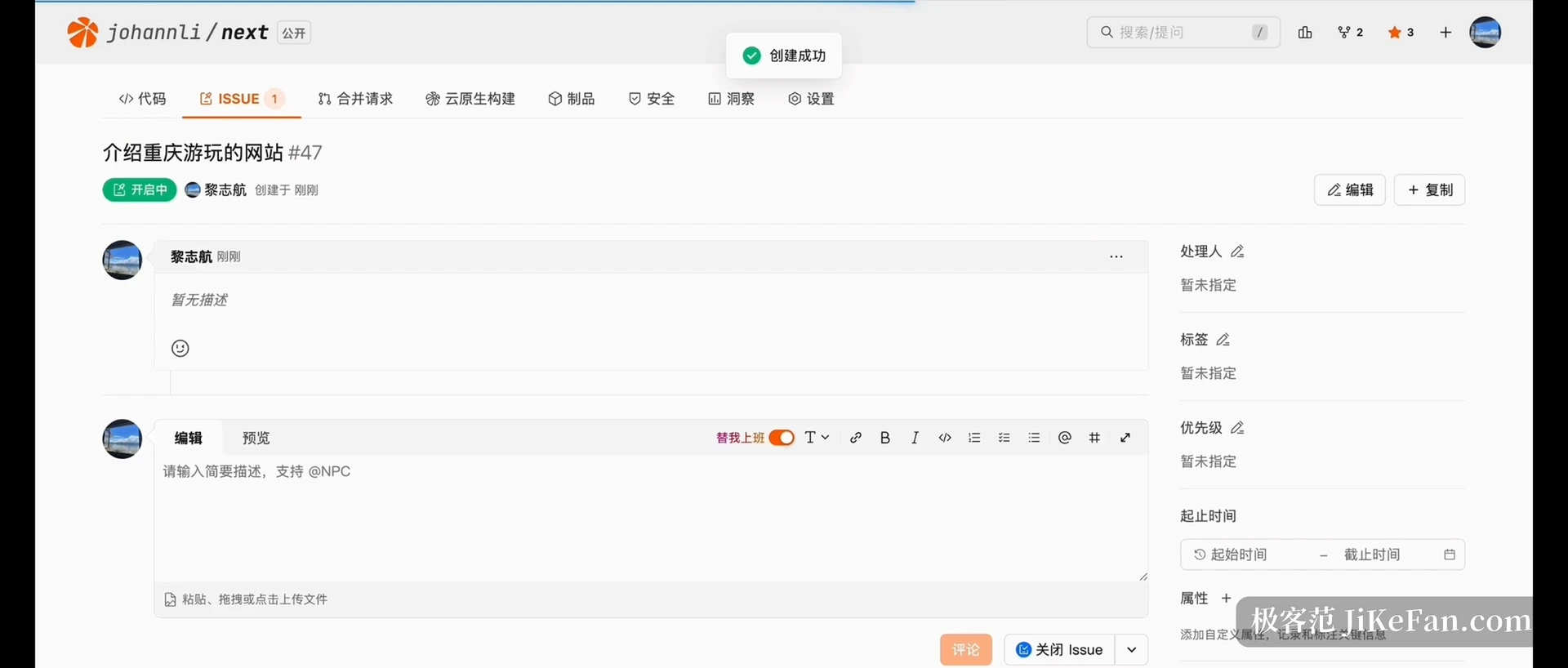
One mention is enough to hand over a job
The usage has almost no learning cost: mention CodeBuddy in a comment on an issue or a pull request and follow it with what you want. It can be as short as implementing this issue, or reviewing the code in this pull request.
The part that really matters is the switch next to the comment box, labelled as working on your behalf. Once it is on, the agent's permission moves from reading code and writing comments up to writing code, pushing branches and opening pull requests, and it keeps revising according to review comments. The switch has a threshold: you need at least developer permission in the repository.
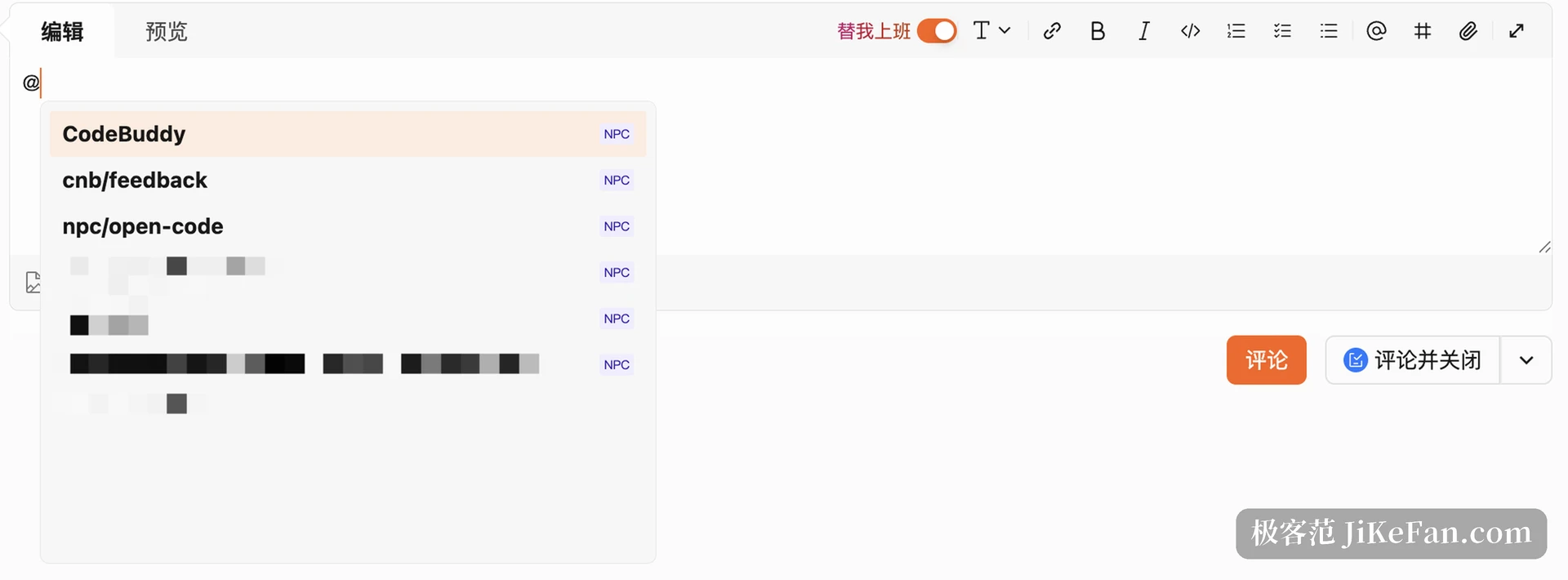
From requirement to pull request, it closes the loop itself
Once the task is handed over there is nothing to guard. The agent plans first, then touches the code, opens the pull request, gets the build through, and spins up a preview environment for you to accept, so you look at the result before deciding whether to merge.
When a build fails and everything stalls, it does not push the problem back either: read the log, inspect the code, submit a fix, until the gate passes. Another scenario the official material lists is resolving merge conflicts automatically, by understanding what both sides intended and producing a reasonable merge that moves the stuck branch forward again.
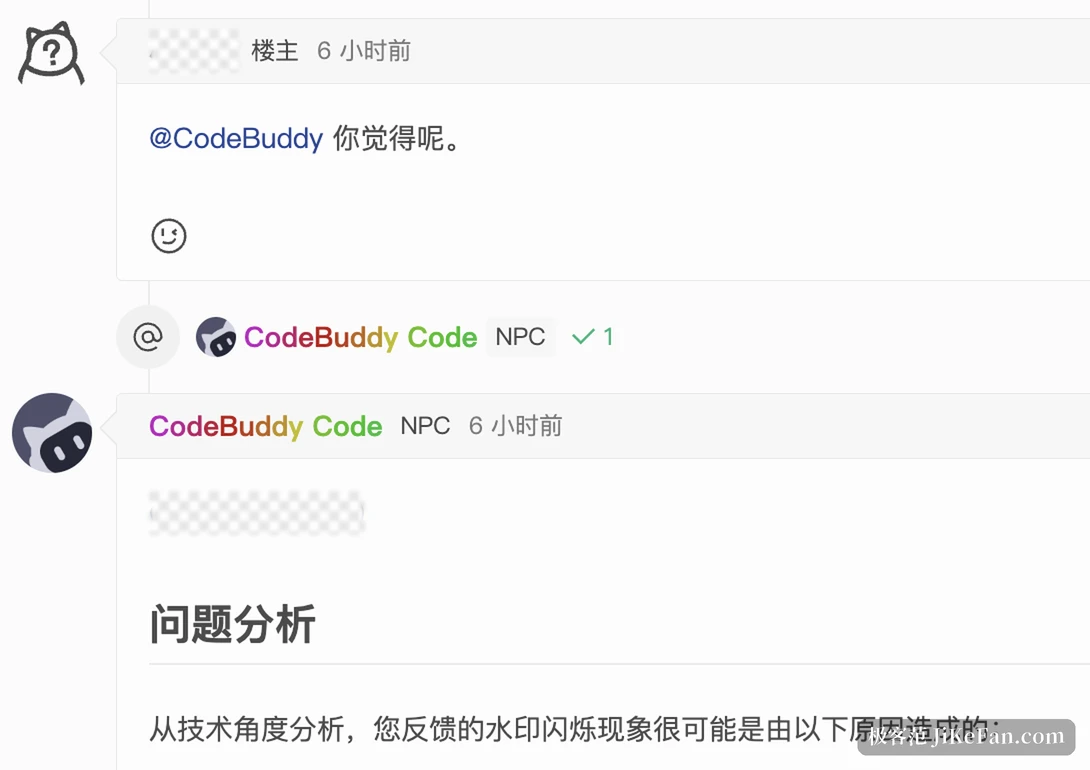
When one pair of hands is not enough, call in more
NPC is not only a single assistant. A team can write a role's name, tagline and instruction text into the repository settings, then call it out by mentioning the repository path with the role name. A default runtime is prepared, so it runs without configuration changes.
Above that sits the team. Several agents split by function: one writes features, one reviews, one tracks progress, each claims tasks, works in parallel and integrates automatically. The official demonstration showed a team of eight, a project manager, a script writer, an art designer, a score arranger, a narrator, an asset integrator and a code reviewer, taking a game from decomposed requirements all the way to final verification.

What it can do right now
The limits are stated clearly too. The working mode needs developer permission or above; one trigger handles at most ten agent events, and an issue or pull request with more than a hundred comments no longer triggers. Those boundaries look more like an engineering trade off made on purpose than an oversight.
On cost, by the official account, token consumption for the first round has been pushed down from more than twenty thousand early on to about two thousand, a drop of over ninety percent. Billing runs on CNB AI credits, the mainland site includes five hundred credits per month, a budget can be attached after that, and a simpler task can be pointed at a cheaper model so cost and quality are counted separately.
NPC is already wired to TAPD, Tencent Cloud's project tool, and the entry point is the CNB platform. The foundation underneath has been iterated inside Tencent since 2018, and the official figure is more than a hundred thousand developers served each month.
Its value is not writing code faster. It is taking over the process work that matters but is not valuable in itself: you set the goal, make the judgement call, accept the result, and the execution goes to it.