
Atoms: describe a business in one sentence and let an AI team build it
Summary
A platform that turns one sentence of ambition into a working product. Eight roles, from researcher and product manager to engineer and growth, hand work to one another and end with a deployed full-stack application with accounts, storage and payments built in. Free allowance plus subscription, in the browser.
Recommend- Name
- Atoms
- Version
- 20260904
- Open source
- Proprietary
- Operating system
- Web
- Website
- https://atoms.scilab.org/
- Updated
- 2026-10-06 01:06
Almost everyone has had the moment: an idea for a product arrives fully formed. A tool that helps independent podcasters find guests, a shop aimed at a small and overlooked audience, something a friend complained about last week that nobody has built. The idea is clear. Then reality asks its questions. Who does the market research? Who decides what the first version contains? Who writes the code? And after launch, who handles search visibility and advertising and reads the numbers?
For someone without a technical background, and without the means to hire four people, that list of questions is usually where the idea stops. Atoms exists to answer them. It is a platform for turning a business idea into a working product, run by a team that previously shipped an earlier version of the same idea, and built on an open multi-agent framework that has collected a very large following. You describe the ambition in a sentence; a small team of agents takes over from there.
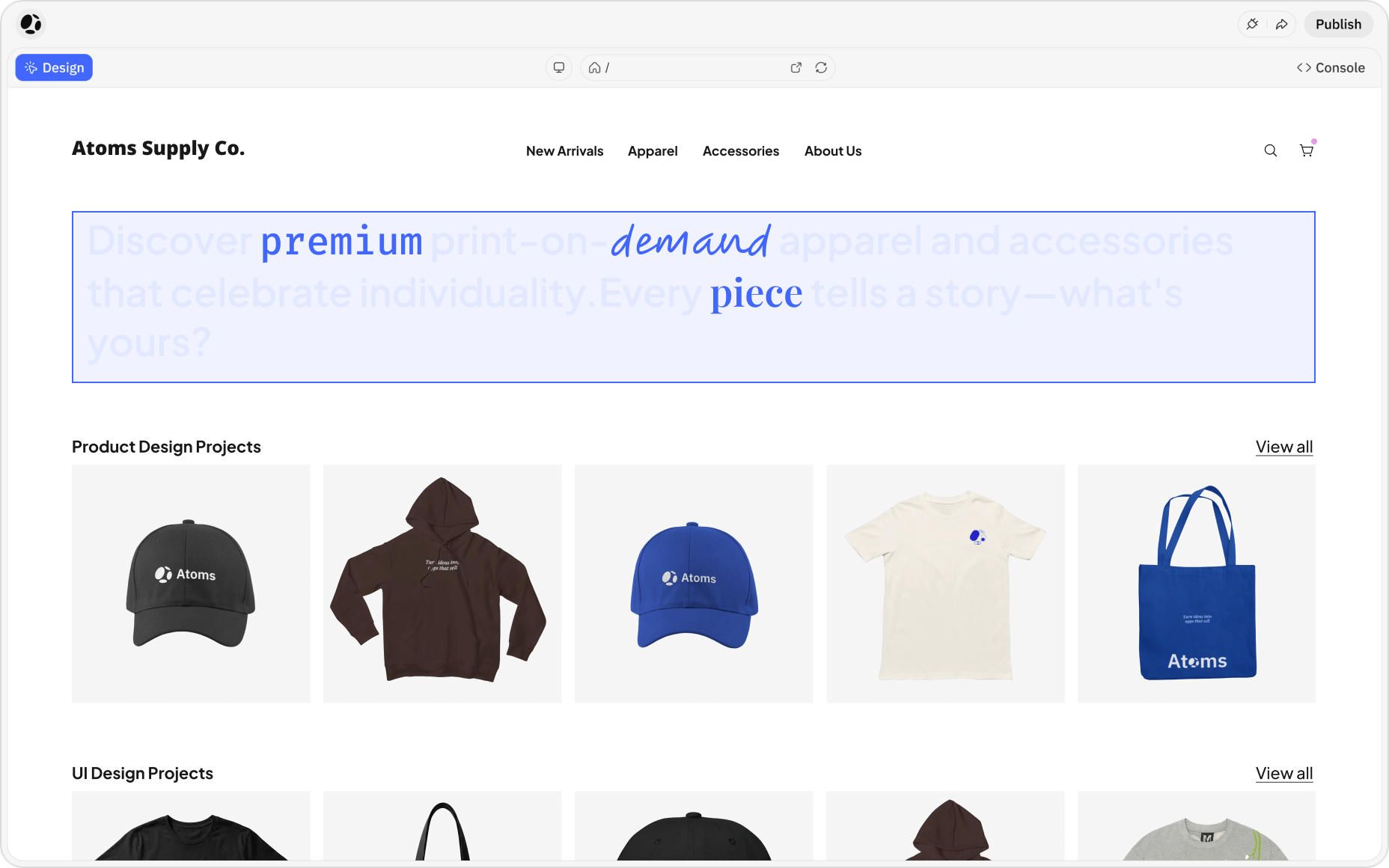
Eight roles, one product team
The team inside Atoms is organised the way a small company is. A researcher looks at real demand to find a niche worth entering. A product manager turns the idea into a specification with a clear scope. An architect designs a system blueprint that can grow. An engineer joins front end, back end, integrations and deployment into an application that could actually be operated. A search specialist makes sure the thing can be found. An advertising role runs and tunes campaigns. An analyst looks for growth opportunities in the numbers. And a team lead coordinates the whole run, stopping at key moments to ask you to decide.
The point of that division is compression. Work that used to need several people coordinating across several tools now goes through one conversational entrance. You are not chatting with an assistant that only writes code; you are dispatching a small product team in which each member has a speciality and a handoff.
Not a demo, a product that can take money
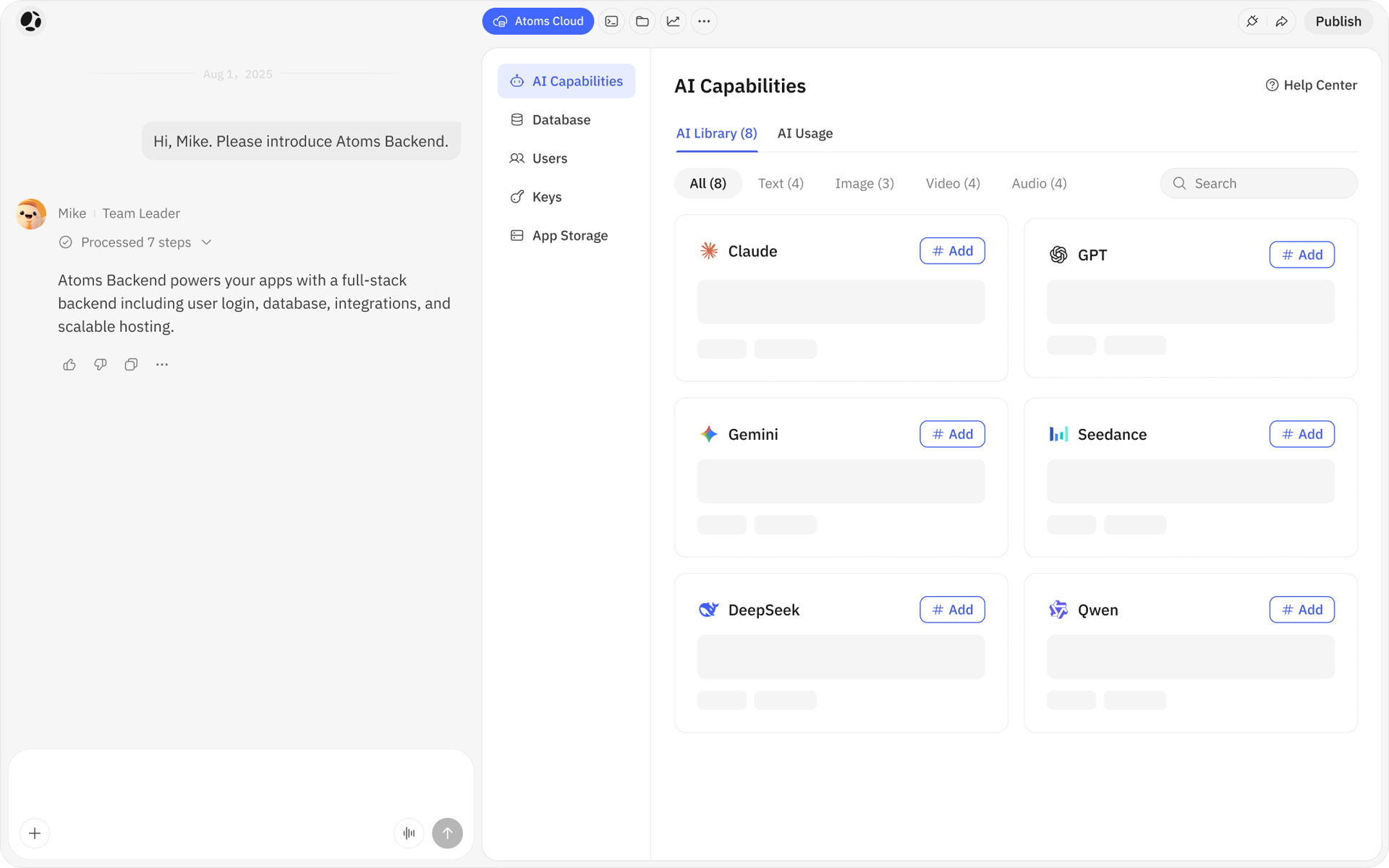
Most tools in this category stop at turning an idea into an interface that runs. Atoms pushes one step further toward a business. What comes out is not a set of screens but a full-stack application with accounts, data storage and online payments already wired in, deployable in minutes and immediately in a state where it can charge for something.
Research, design, programming and growth all move forward inside the same platform. After launch, the search pages, the ad campaigns and the analytics are handled by the corresponding roles rather than by you switching between a dozen tools and stitching the results together. For someone trying to turn a side project into a real business, what is saved is not only time but the integration work that usually kills enthusiasm in the second week.
Different modes for different stages
Beyond the default team arrangement there are other ways to work. One mode is for people who only want code quickly. Another runs several teams in parallel on different approaches, so the results can be compared and the best one carried forward. A third concentrates entirely on early research, for the stage when the question is whether the market exists at all. Pricing follows the same logic: a free allowance for the first attempts, a subscription once the work becomes serious, so the cost tracks what is actually used.
What it does and does not promise
No tool of this kind can promise that an idea will work. Most ideas do not, and a platform that generated a successful business on demand would be worth more than the businesses it generates. What can be promised is narrower and more useful: the distance between an idea and something a person can show to other people shrinks from months of assembling a team to an afternoon of describing what you want.
That changes the nature of the risk. Instead of betting months on one idea, you can put three in front of an audience in a week and find out which one anybody cares about. The role that remains yours is the one that matters most: deciding what to build and judging whether the result is worth continuing. The team will do the work; it will not have the taste.
For a solo founder, a designer with an idea and no engineer, or anyone who has a list of concepts and no way to test them, that is a meaningful shift. Not because the barrier to a business has disappeared, but because the first honest test of an idea no longer costs a team.