
Supermium 144: a Chromium browser for XP and Windows 7
Summary
Supermium rebuilds recent Chromium so it runs on Windows XP, Vista, 7 and 8, brings back a few removed interface details, keeps sandboxing and security backports, and refuses to drop support for older extensions.
Recommend- Name
- Supermium
- Version
- 144.0.7559.256
- Pricing
- Free
- Open source
- Open source
- Operating system
- Windows
- Website
- https://www.supermium.net/
- Updated
- 2026-10-06 22:01
The problem it exists to solve
Chromium stopped supporting Windows 7 and everything older some time ago. That leaves the machines still running those systems with two bad choices: stay on a browser that no longer receives fixes, or replace the operating system, which on a fifteen-year-old computer usually means replacing the computer. This project takes a recent Chromium source tree and builds it again with the lower-level calls adjusted, so that it runs on Windows XP with its last service pack, on the server edition of that era, on Vista, and on 7 and 8. The same installer also works on current systems, which is the quietly useful part: one file covers a whole fleet of mixed machines, and nobody has to keep two versions in a drawer.
It is worth being honest about what that means and does not mean. A browser carried onto an unsupported system is still a browser on an unsupported system, and no amount of patching at the browser level fixes the operating system underneath. What the project does offer is a rendering engine recent enough to open the modern web, which is more than the last official build can manage.
Which old details came back
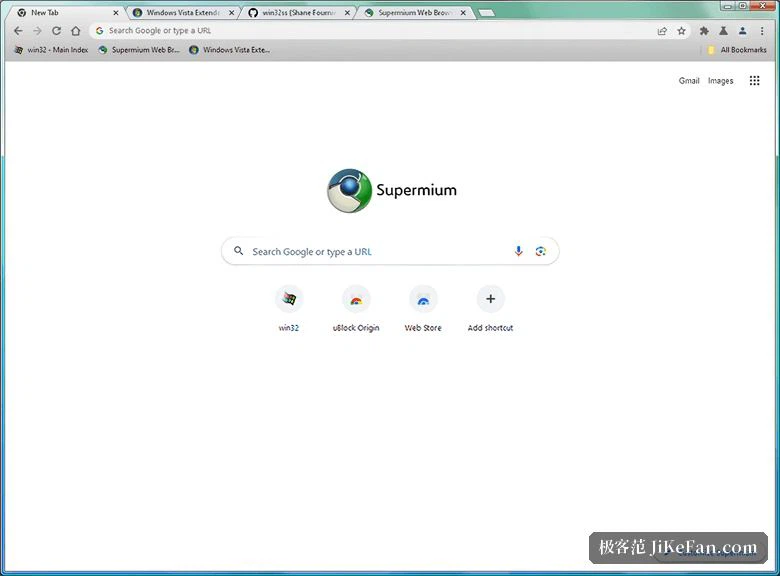
Compared with a current build of the mainstream browser, several things have been restored. The title bar can wear the translucent glass style of the Vista and 7 era again, tabs can be shaped, made transparent or given an outline, and text is drawn the older way, which many people find crisper on a low-density panel. A dark mode that persists across restarts is available, and a large set of switches from the branches that strip tracking components is exposed for anyone who wants them.
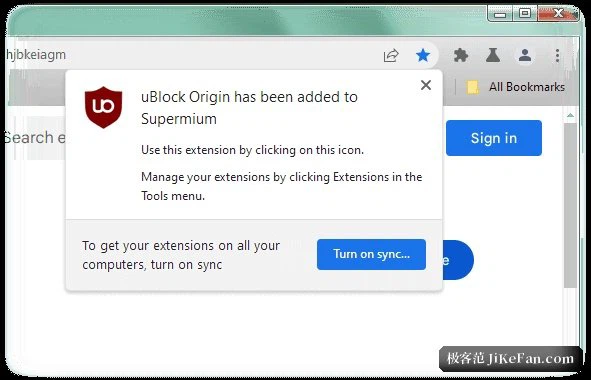
The change that gets the most attention is about extensions. The upstream project is retiring the older extension format, and this one has said plainly that it will not remove support for it. In practice that means an ad and content blocker at full strength can still be loaded from the project repository, side-loaded rather than fetched from a store, and keeps working the way it used to. For people whose browsing depends on that class of extension, this is the reason to care.
Security, and what carries over
Security fixes from upstream are followed on a rolling basis, and the stated response time for serious vulnerabilities is usually within a week of disclosure. The sandbox remains switched on, which matters more than any interface detail: a browser without it is a browser you should not use for anything that requires a password.
The extension mechanism is the same as the mainstream one, so extensions from the store install directly. Profiles can be brought across by copying the configuration folder from the original browser, after which bookmarks, saved passwords and extensions come with it. One caveat is offered by the project itself and deserves repeating: the mainstream browser is proprietary software while this is an open project built on the open source base, so features do not map one to one, and an expectation of identical behaviour will lead to disappointment.
Who this is actually for
The audience is people still maintaining old hardware: office and school computers that will not be replaced this year, a spare machine kept for light tasks, a rebuild done for nostalgia rather than need. The licence is a three-clause BSD one, the software is free to use, and there is nothing to buy or subscribe to.
The other half of that sentence is the part supporters tend to skip. If the device can run a current system, the upstream browser is the easier answer, with more frequent updates and fewer edge cases. The value here is not that this is better, but that it exists at all for machines that would otherwise have nothing.
The point is not to compete with the mainstream browser on features, and it would lose that comparison. The point is that a batch of old machines still has a browser to open, running a reasonably recent engine, with an extension ecosystem that still works.