
MuseScore Studio 4.7.7 smooths the audio path
Summary
MuseScore Studio 4.7.7 keeps the rebuilt audio engine and repairs the extra MIDI note on macOS, cloud scores that would not open and MP4 export under Fedora.
Recommend- Name
- MuseScore Studio
- Version
- 4.7.7
- Pricing
- Free
- Open source
- Open source
- Operating system
- WindowsmacOSLinux
- Website
- https://musescore.org/
- Updated
- 2026-11-19 16:42
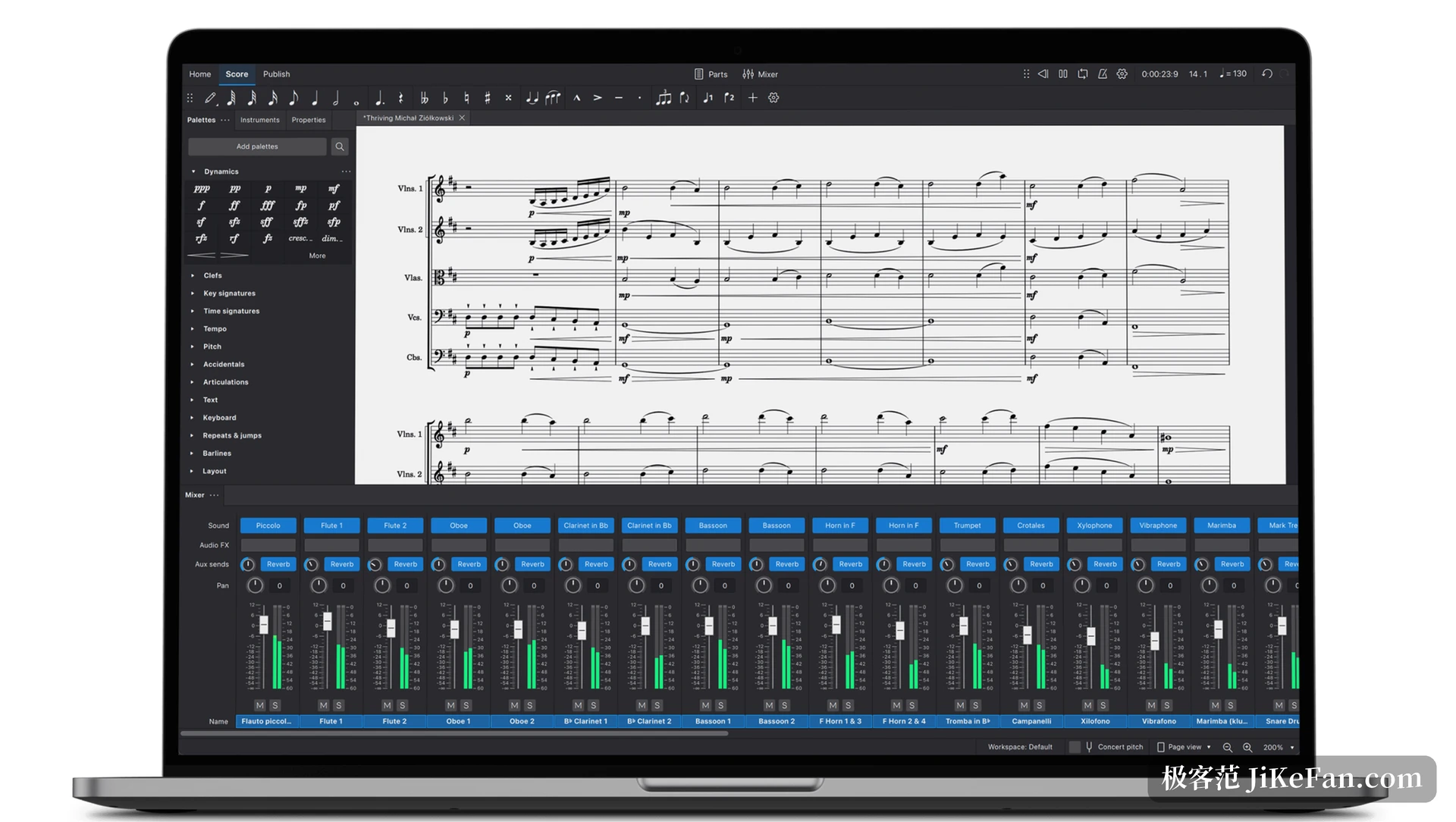
MuseScore Studio is a free, open-source notation tool that keeps writing, playback and audio export inside one window, and it looks like a modern desktop app rather than a typesetting machine from the last century. Builds exist for Windows, macOS and Linux, and in 2026-11 the project shipped 4.7.7 under build number 261109195.
The barrier is the interface, not the features
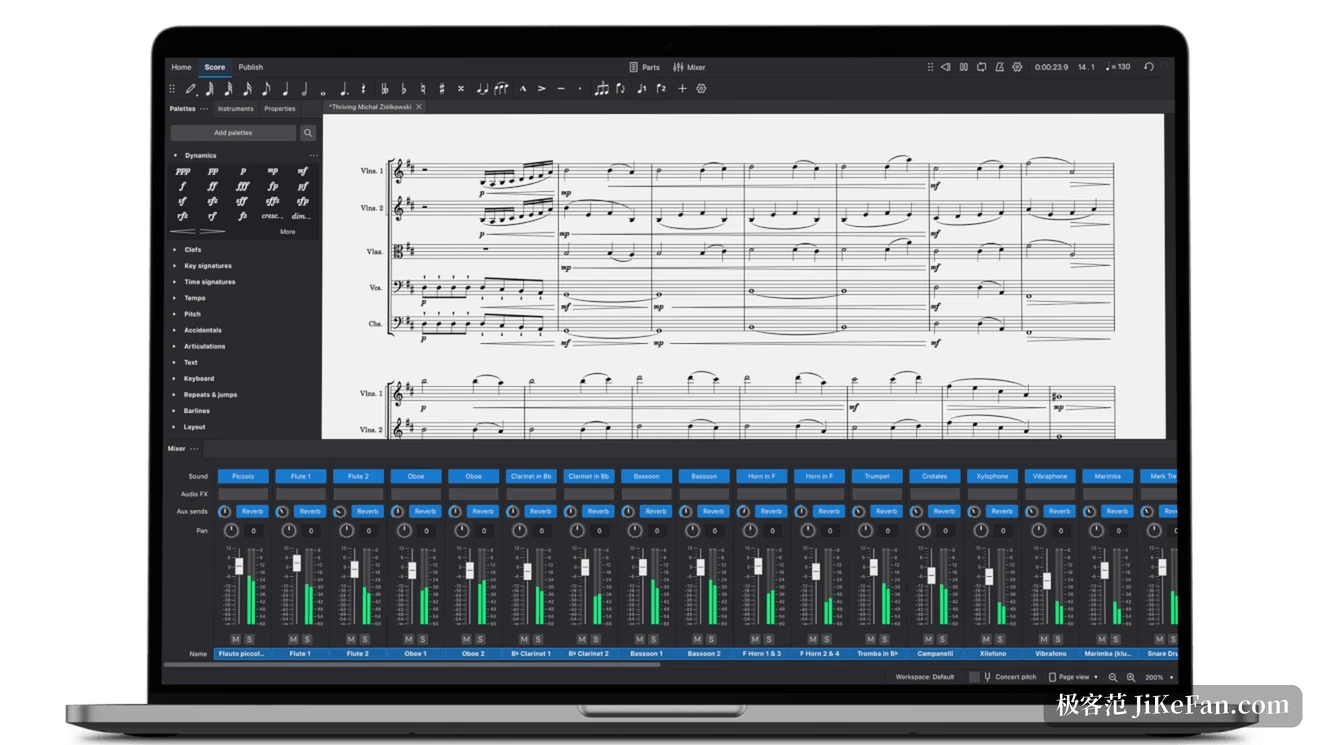
Notation editors carry much the same list: note entry, slurs, dynamics, parts, transposition. What makes people give up is the number of steps between an idea and the page. MuseScore Studio spreads the frequent actions into sidebars, with sounds and symbols on the left and properties on the right, so selecting a note lets you change its duration, its tie or its articulation without walking three menus deep.
Entry itself has several routes. You can click with the mouse, type letters on the computer keyboard, or plug in a MIDI keyboard and play the line. A sequencer and a synthesiser come with the program, so pressing play is enough to hear the result without wiring up a sample library.
4.7 rebuilt the audio engine
The 4.7 line was the largest change on this branch. Its notes mention new notation tools, a noticeably smoother workflow, features aimed at guitarists, and a substantial upgrade of the audio engine. That last item carries weight for anyone writing: the engine decides whether a string line sounds joined up, whether a dynamic change is audible, and whether an exported file clips.
Guitar work also filled in with this release. Fingering diagrams, chord diagrams and technique markings used to be assembled from plugins, and now they live in the main program. Arranging pop songs or folk tunes costs far fewer switches.
4.7.7 repairs daily friction
The smaller release stays close to everyday use. Text boxes and text areas gained context menus, so copying no longer depends on a shortcut. The tool that converts a file into a score now asks for confirmation of its terms and reports when an upload quota is spent instead of failing quietly. FFmpeg 9 is supported, the provider selection is more reliable, and MP4 export trips over fewer obstacles.
Several long-standing faults deserve a mention. Releasing a key on a MIDI keyboard under macOS inserted an extra note, and that offset is finally handled. Cloud scores that refused to open or display while the application stayed running are fixed, and so is a Fedora build whose video export failed because the FFmpeg library was not found. Instrument descriptions for the double bass and the acoustic bass guitar were rewritten, and the lowest range of the baritone horn was adjusted.
Where the free part ends
MuseScore Studio itself ships under the GPL and puts no paywall in front of notation, playback, PDF and PNG export, MusicXML and MIDI export, or plugins. Money changes hands on the online side, where a PRO membership of the community score site adds cloud and sharing rights. Writing at the desk has stayed free.
Exchanging scores does not lock anyone in. MusicXML is a common format, a finished score can move to another tool, and the exported PDF goes straight to a printer. Version 4.7.7 refreshed the translations, and the wording of the Chinese interface reads better than in earlier builds.
Parts are another request that comes up often. A full score can yield the individual parts directly, edits to the score flow into them, and the layout of a single part can be adjusted before printing. Choir and wind band scores tend to stall at exactly this step, and the time saved leaves room to revise the harmony twice.
- Current release
- 4.7.7 from 2026-11
- Build number
- 261109195
- Platforms
- Windows, macOS, Linux
- Exchange formats
- MusicXML, MIDI, PDF, PNG
- Licence
- GPL; free and open source
Whether to move to this build
Anyone on the 4.7 branch can upgrade without worry, because 4.7.7 touches details only and leaves the project file format alone, so old scores open unchanged. Coming from 4.6 or something older brings a bigger gain: the distance in the audio engine and in the guitar features is audible across a whole major version.
Migrating from another notation program is best started with a short piece. The logic of notation is similar everywhere; what resists is muscle memory, meaning shortcuts, panel positions and the order in which dynamics are entered.
MuseScore Studio 4.7.7 has no earth-shaking feature. It sands down the small irritations of writing, one at a time, and for people who face staves every day that is worth more than one more flashy addition.