
-
Privacy Browser 3.20.1: every privacy switch starts off, and sites are opened one rule at a time
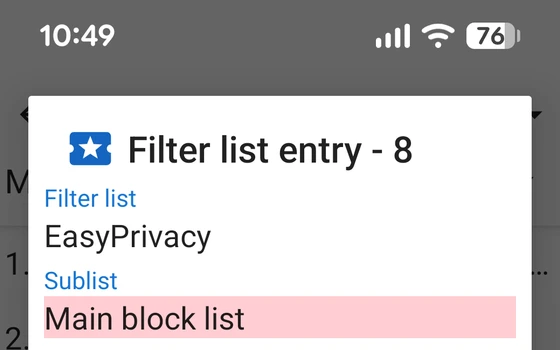
Privacy Browser 3.20.1 keeps scripts, cookies and DOM storage off by default and lets each domain opt in. Version 3.20 rewrote the block list engine so filtering lands more precisely, and the cache is no longer left on the device.
-
FOSS Browser: an Android browser that keeps privacy in profiles
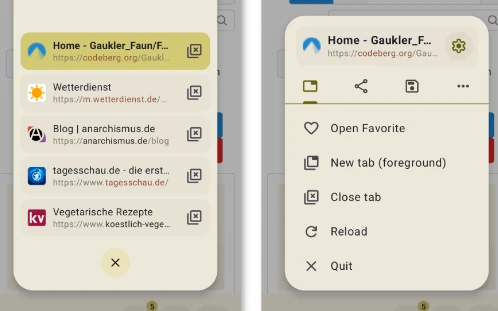
A privacy minded open source browser for Android that uses profiles to control ad blocking, scripts, cookies and fingerprint protection separately, and lets a profile be bound to specific domains. Bookmarks and history can be backed up. Current version 24.
-
NoScript 13.6.36: a browser extension that trusts nothing by default
An open security extension for browsers that starts from a conservative trust level for unclassified sites and lets the user decide which ones may run scripts. Permissions can be set per site, and the same component ships inside the Tor Browser. Version 13.6.36.

-
Chromium: the upstream project that several browsers share
An open source browser project maintained mainly by Google, with core code under a permissive licence and test oriented builds published alongside release channels. Design documents, architecture notes and test material sit next to the source, across Windows, macOS and Linux.

-
Waterfox: a cross-platform Gecko browser with built-in filtering and vertical tree tabs
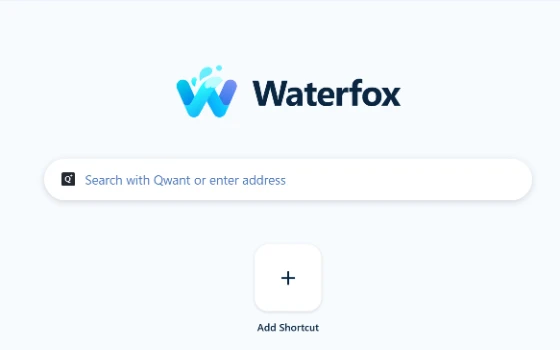
Waterfox is a cross-platform browser on the Gecko engine with built-in content filtering and vertical tree tabs, and tabs that can be unloaded by hand. Version 6.7.4 brought RSS and live bookmarks back, and 6.7.5 added a subscription manager.
-
Min Review: A Browser That Wins by Leaving Things Out
Min treats the browser as something to be reduced rather than expanded: one address bar for search, navigation and quick arithmetic, tabs that fade when idle, and a focus mode that clears the screen. Open source, light on memory, three desktop platforms.

-
Falkon: a light browser with a serious foundation
The browser arms race keeps eating memory, and not everyone needs the heavy equipment. Falkon starts quickly, loads pages responsively and stays restrained on memory, while still shipping blocking rules, vertical tabs and a feed reader.
-
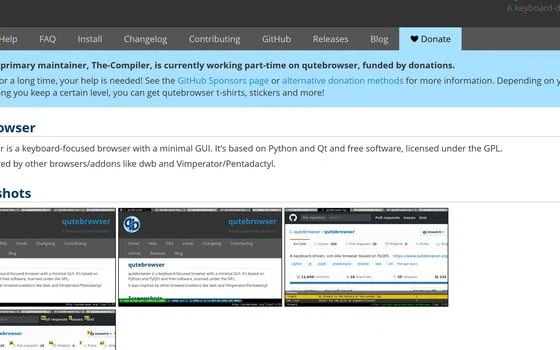
qutebrowser: browsing without lifting your hands off the keys
The mouse is the default accessory of a browser, and for people who live on the keyboard, reaching for it is itself an interruption. qutebrowser turns navigation into typed commands: press a key, every link gets a label, type the label.
-
Ungoogled Chromium: a browser that explains itself
Ungoogled Chromium patches the Chromium source at build time, replacing company domains with invalid ones and blocking internal requests, and publishes every change as a readable patch.
-
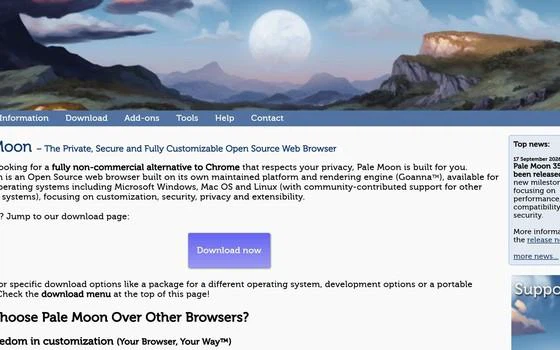
Pale Moon: an independent browser that keeps its own engine and its own rules
Pale Moon is an independently maintained browser with its own Goanna engine, no telemetry and a surviving XUL extension system that lets add-ons reshape the interface.
-
Konqueror 26.08.1: the browser that is also a file manager
An old name in the KDE line that still does two jobs at once: pages rendered by a modern engine, and a file manager that borrows most of the desktop's abilities, including a working client for remote directories that behaves like a local folder.

-
Supermium 144: a Chromium browser for XP and Windows 7
Supermium rebuilds recent Chromium so it runs on Windows XP, Vista, 7 and 8, brings back a few removed interface details, keeps sandboxing and security backports, and refuses to drop support for older extensions.
-
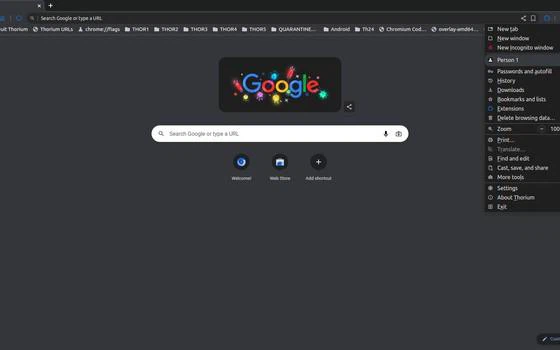
Thorium: a Chromium build with parallel downloads, full addresses and privacy defaults
Thorium keeps the Chromium engine but changes how it is compiled, ships per instruction set, and turns on parallel downloads, full addresses and privacy defaults.
-
Luakit: a browser assembled from scripts, small and entirely yours
An open source browser framework built on a common rendering engine, in which the behaviour of the browser is assembled from scripts. Keys, tabs, blocking and proxies are modules chosen in a configuration file, and a few edited lines change how the whole thing works. Very small, quick to start, and aimed at Linux and BSD.
-
Cromite 151: filtering built into the browser core, privacy shut tight by default
An open-source browser that filters advertising inside its own core instead of relying on extensions. Tracking and fingerprinting countermeasures are tightened on a fresh install, and the address bar will list the requests and scripts behind the page in front of you. It runs on Android, Windows and Linux under a GPL licence.
-
第 1 / 2 页